A common moth around the area often seen on the Coastal Wattles (Acacia longifolia sophorae)
At a glance
Omnivorous Tussock Moth at a glance
Habitat
Can be found amongst Acacia, Eucalyptus, Pultenaea, Dodonaea, Choretrum, Myoporum species and also pine plantations.
Size
The wingspan is about 30 mm
Origin
Endemic
Distribution
It is found along most of the coast of Australia, including from WA To Qld including around Tasmania
Descriptions
Distribution
It is found along most of the coast of Australia, including from WA To Qld including around Tasmania
Habitat
Can be found amongst Acacia, Eucalyptus, Pultenaea, Dodonaea, Choretrum, Myoporum species and also pine plantations.
Size
The wingspan is about 30 mm
Identification
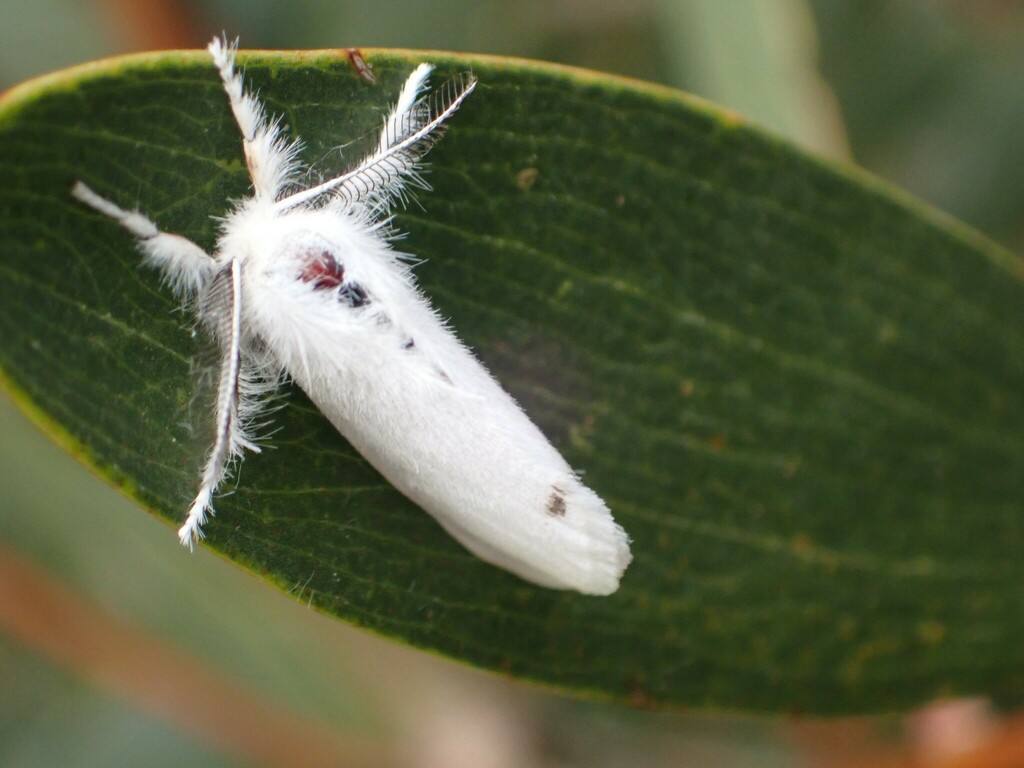
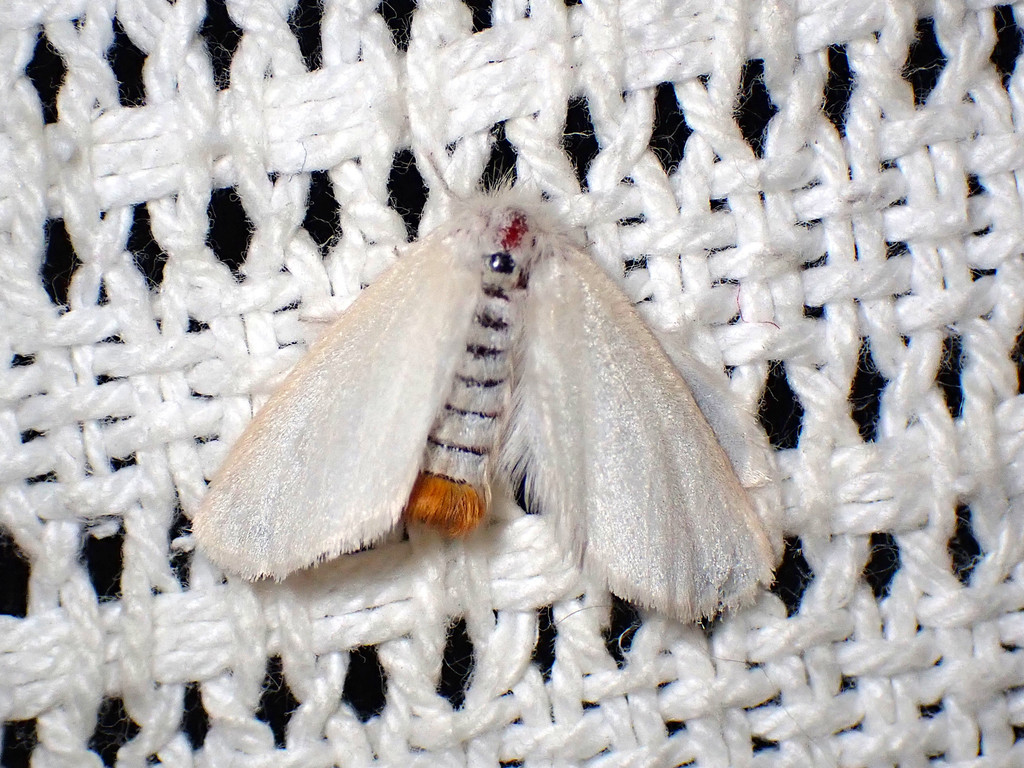
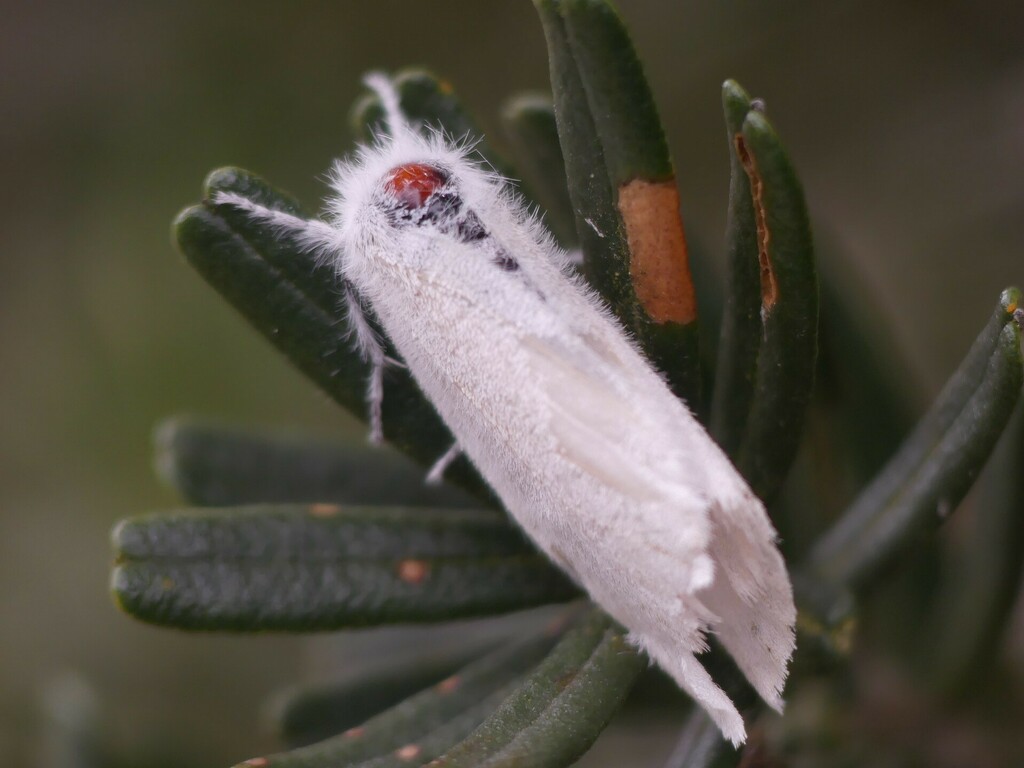
Adult females are white and have an orange tuft on the tail. Males are also white but sometimes have a dark mark at the tornus of each forewing or a broad dark band along the margin of each forewing. The hairs around the thorax are sometimes yellowish. Sometimes the black skin of the thorax and/or abdomen shows through between the white hairs.
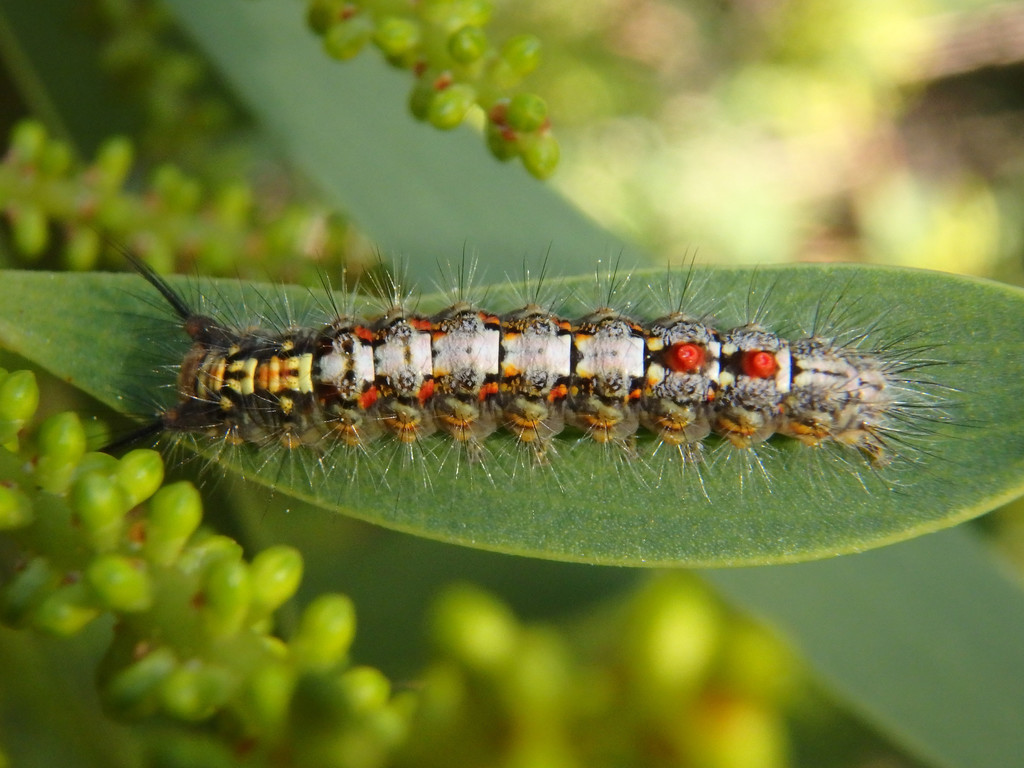
The caterpillars are brown and hairy, with a pencil of black hairs each side of its head and a hairy tail.
The caterpillars are brown and hairy, with a pencil of black hairs each side of its head and a hairy tail.
Distribution and map
Distribution provided by The Atlas of Living Australia
Classification
Classification
KingdomAnimalia
PhylumArthropoda
SubphylumHexapoda
ClassInsecta
SubclassPterygotes
OrderLepidoptera
SuborderDitrysia
SuperfamilyNoctuoidea
FamilyErebidae
SubfamilyLymantriinae
GenusAcyphas
SpeciesAcyphas semiochrea
Synonyms
Synonyms
There are no known synonyms for this species
References and dates
Original
No original text available
Bibliography
View page references
Added
Mon 14 Nov 2022 @ 23:00 PM
Updated
Mon 14 Nov 2022 @ 23:00 PM
Surveys
View Survey List
Photos
Files
External Links
4 External Links
View External
Links
Disclaimer: A lot of work goes into trying to identify and ensure accurate identifications are made, and that the listed Descriptions, Sizes, Habitats and Distribution information is as accurate and valid as possible. Unfortunately, information in this arena is ever changing and as such no guarantee can be offered that it is correct or currently valid — the information is provided as a guide, and it is always suggested that you do a little research to ensure you have the latest and most accurate information. View the references or bibliography. Feedback and comments on the information provided are always welcome.
From Our Tasmania · https://ourtasmania.au/species-guide/view-species/acyphas-semiochrea/