At a glance
Bald Shrimp at a glance
Identification
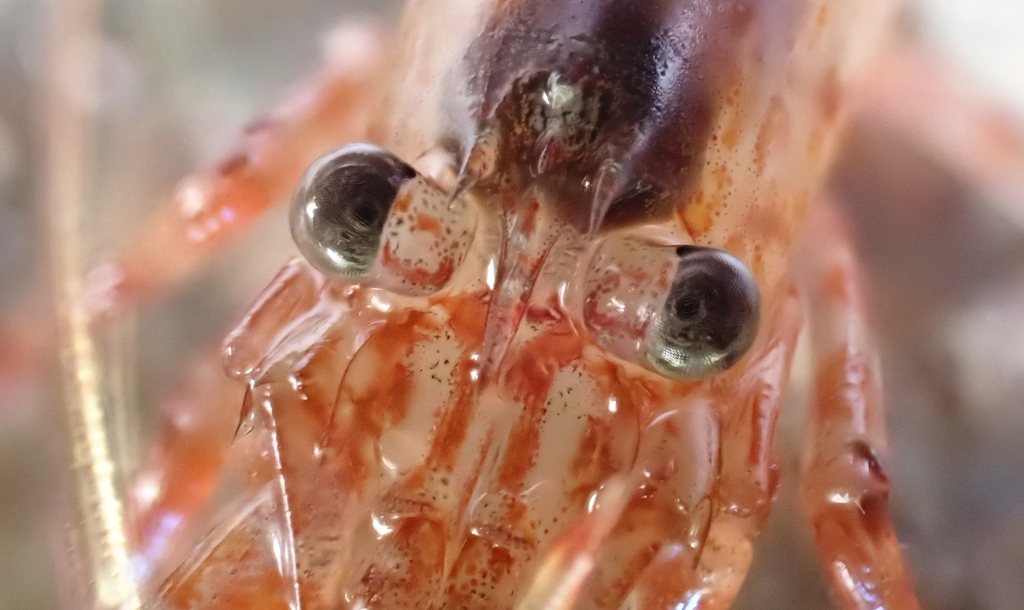
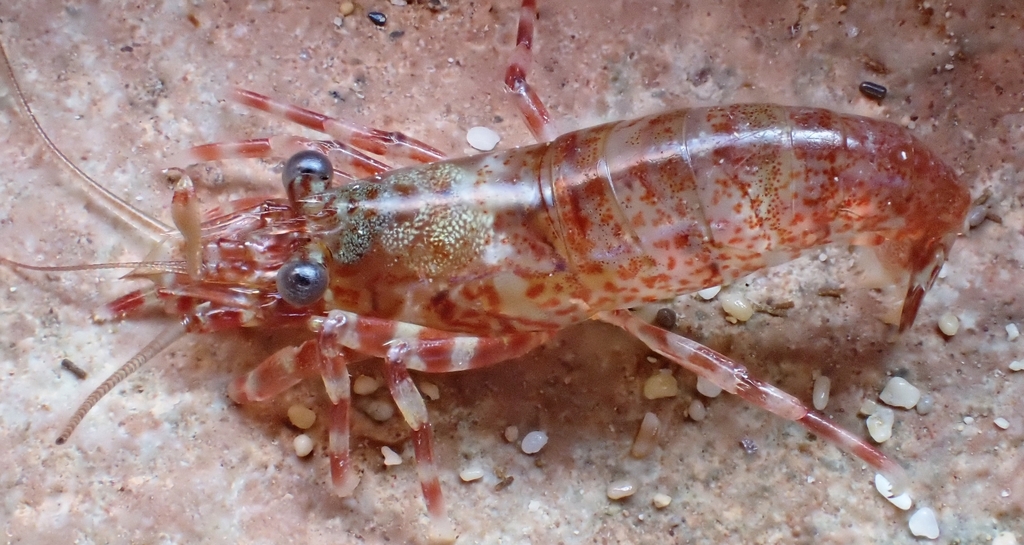
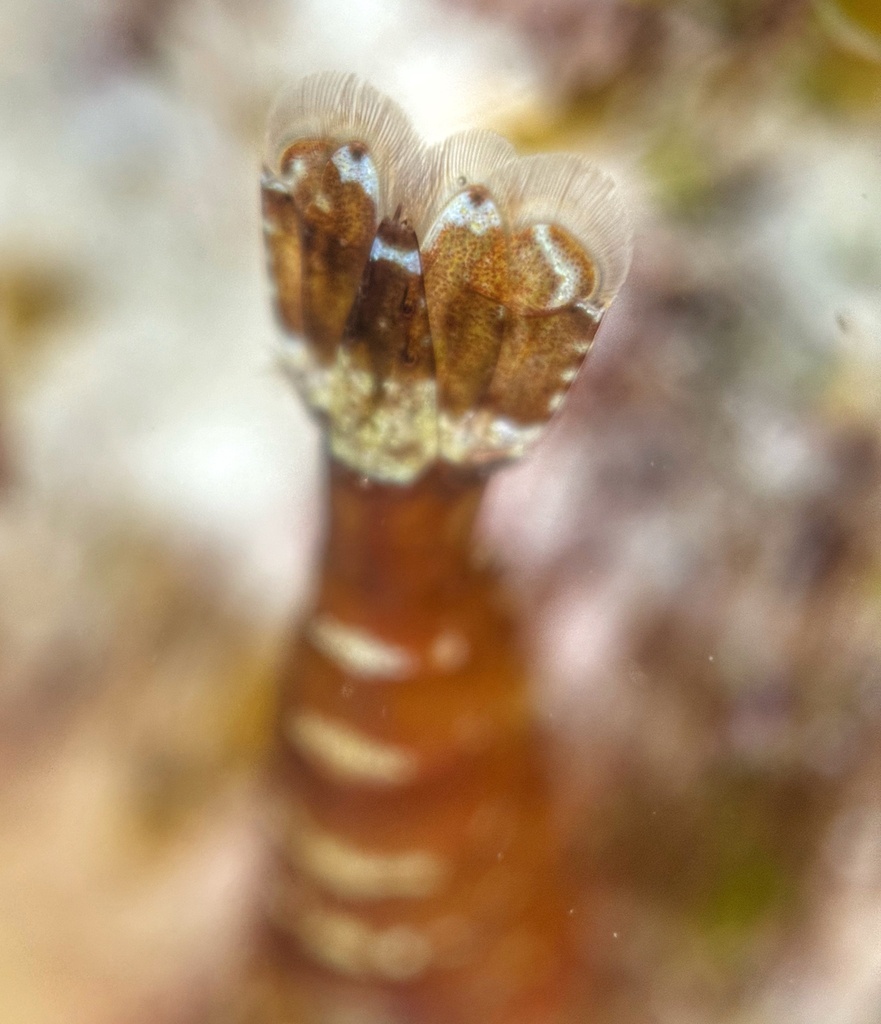
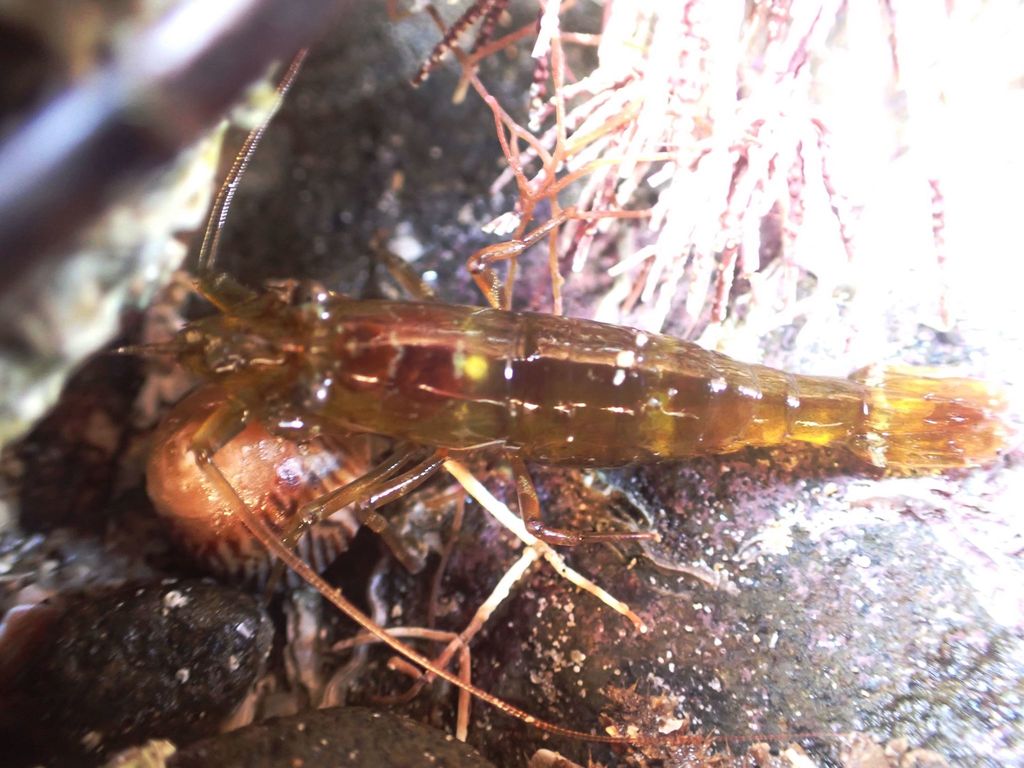
This shrimp can grow to around 30mm in length normally with a mottled reddish colouration with white flecks and white banding on the legs with a broad white band on the telson, More anatomically the rostrum is a little longer than the eyes stalks and features 4 to 7 teeth on the upper margin, The carapace has a small spine above the orbit of the eye
Distribution and map
Distribution provided by The Atlas of Living Australia
Classification
Classification
Synonyms
Synonyms
References and dates
Disclaimer: A lot of work goes into trying to identify and ensure accurate identifications are made, and that the listed Descriptions, Sizes, Habitats and Distribution information is as accurate and valid as possible. Unfortunately, information in this arena is ever changing and as such no guarantee can be offered that it is correct or currently valid — the information is provided as a guide, and it is always suggested that you do a little research to ensure you have the latest and most accurate information. View the references or bibliography. Feedback and comments on the information provided are always welcome.
From Our Tasmania · https://ourtasmania.au/species-guide/view-species/alope-orientalis/