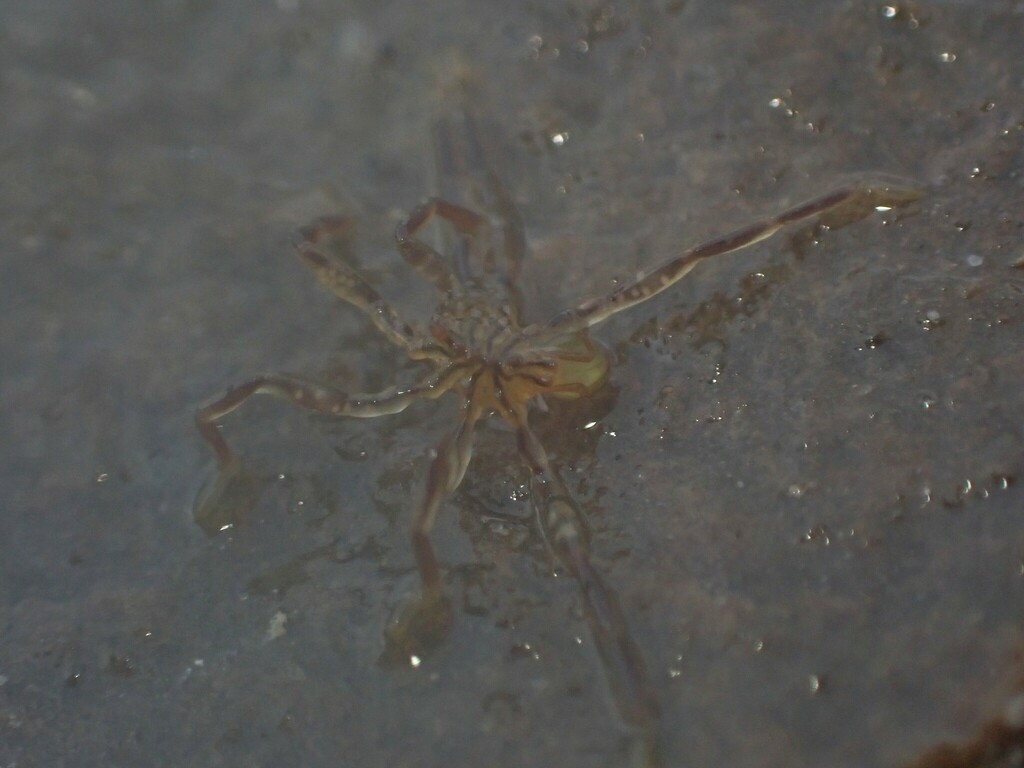
The most common marine spider (not actually a spider) found around the southern coasts locally they burry deep into tight rock crevices and not easyily seen

At a glance

Pycnogonid at a glance

Habitat On exposed coast with high energy waves, they shelter in crevices, gullies or areas away from the main tidal surge and out to a depth of around 10m
Size Can have a leg span of up to 20mm
Origin Native
Distribution Sounthern Australian coastline including around Tasmania
Descriptions
Distribution
Sounthern Australian coastline including around Tasmania
Habitat
On exposed coast with high energy waves, they shelter in crevices, gullies or areas away from the main tidal surge and out to a depth of around 10m
Size
Can have a leg span of up to 20mm

Identification

Body pale yellow to light brown, usually without markings. Mouth parts at front of body (proboscis) longer than the body. Eight segmented walking legs attached to the sides of the trunk
Common Name Pycnogonid
Aliases No Known Aliases
Origin Native
Share
Distribution and map

Distribution provided by The Atlas of Living Australia

Classification

Classification

KingdomAnimalia
SubphylumChelicerata
SuperfamilyAscorhynchoidea
Synonyms

Synonyms

There are no known synonyms for this species
References and dates
Original No original text available
Bibliography View page references
Added Tue 3 Jan 2023 @ 23:00 PM
Updated Tue 3 Jan 2023 @ 23:00 PM
Files
Type Details Version Size Added Updated Links
There are no downloads or Files for this species at the moment

Disclaimer: A lot of work goes into trying to identify and ensure accurate identifications are made, and that the listed Descriptions, Sizes, Habitats and Distribution information is as accurate and valid as possible. Unfortunately, information in this arena is ever changing and as such no guarantee can be offered that it is correct or currently valid — the information is provided as a guide, and it is always suggested that you do a little research to ensure you have the latest and most accurate information. View the references or bibliography. Feedback and comments on the information provided are always welcome.