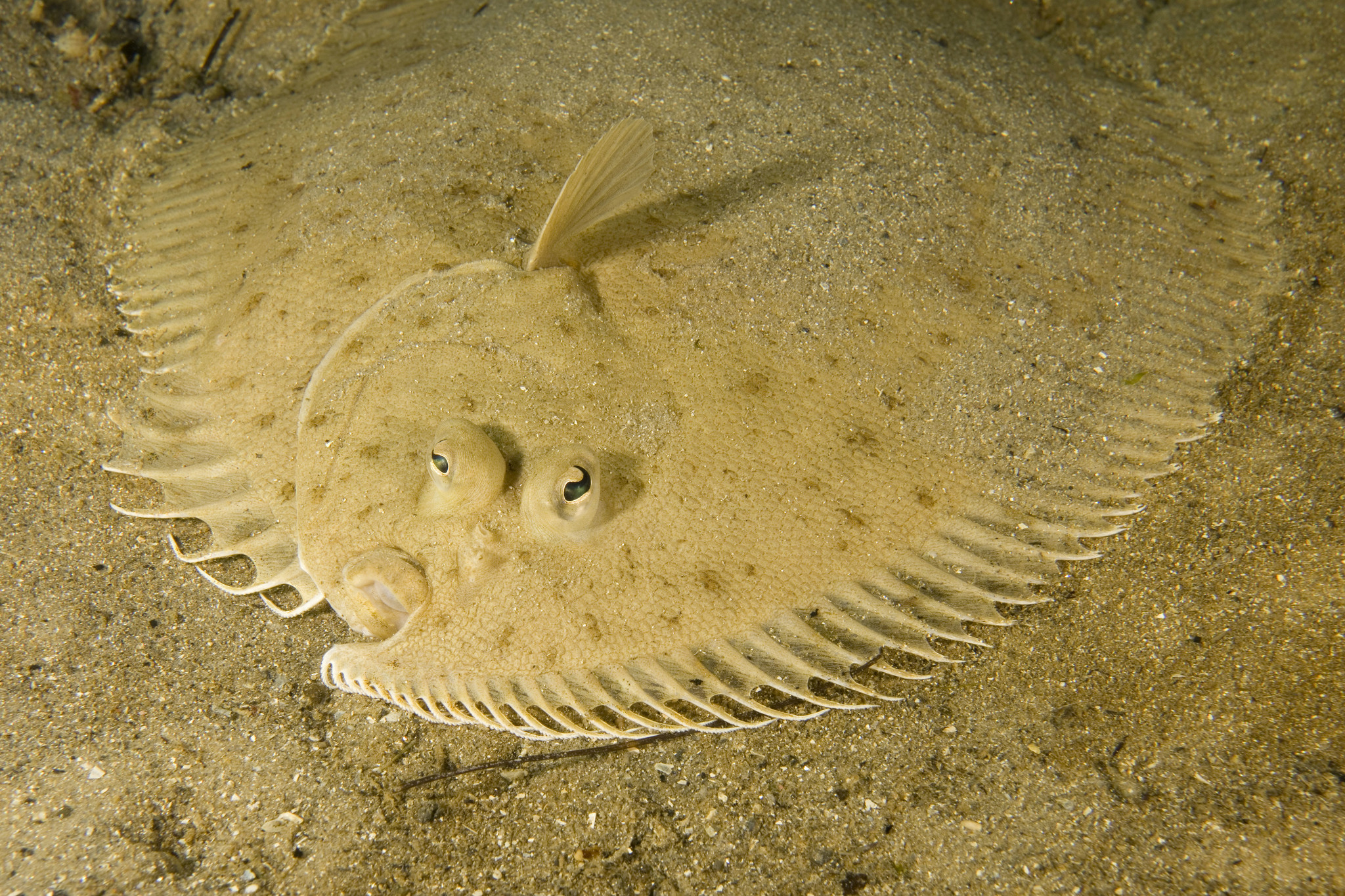
A sandy-coloured to pale brown flounder speckled with variable darker spots, and a whitish pectoral fin on the blind side (underside). The Longsnout Flounder has both eyes on the right side of the head, the dorsal fin originating at the tip of the hooked snout, and two pelvic fins This is the most common flounder in Port Phillip, Victoria - mostly extremely well-camouflaged juveniles that are difficult to see

At a glance

Longsnout Flounder at a glance

Habitat Inhabits broken shelly and sandy areas in bays, estuaries and coastal waters, in depths to 80 m
Size Can grow to around 30cm
Origin Endemic
Distribution Southern Australia from NSW to WA including Tasmania
Descriptions
Distribution
Southern Australia from NSW to WA including Tasmania
Habitat
Inhabits broken shelly and sandy areas in bays, estuaries and coastal waters, in depths to 80 m
Size
Can grow to around 30cm
Common Name Longsnout Flounder
Aliases Bay Flounder, Long-nosed Flounder,
Origin Endemic
Tags
Share
Distribution and map

Distribution provided by The Atlas of Living Australia

Classification
Synonyms

Synonyms

There are no known synonyms for this species
References and dates
Original No original text available
Bibliography View page references
Added Sun 13 Sep 2020 @ 00:00 AM
Updated Wed 31 Aug 2022 @ 00:00 AM
Files
Type Details Version Size Added Updated Links
There are no downloads or Files for this species at the moment

Disclaimer: A lot of work goes into trying to identify and ensure accurate identifications are made, and that the listed Descriptions, Sizes, Habitats and Distribution information is as accurate and valid as possible. Unfortunately, information in this arena is ever changing and as such no guarantee can be offered that it is correct or currently valid — the information is provided as a guide, and it is always suggested that you do a little research to ensure you have the latest and most accurate information. View the references or bibliography. Feedback and comments on the information provided are always welcome.