Males their coats are a gray-brown and they have a thick mane about their neck region which is slightly lighter. Females vary greatly in size and their coat is a silver-gray with a yellow colored throat and brown underside. An external ear is visible behind each eye.
Australian Fur Seals change their diet from season to season, eating squid, octopus and fish. Killer Whales and White Sharks are probably their main predators.
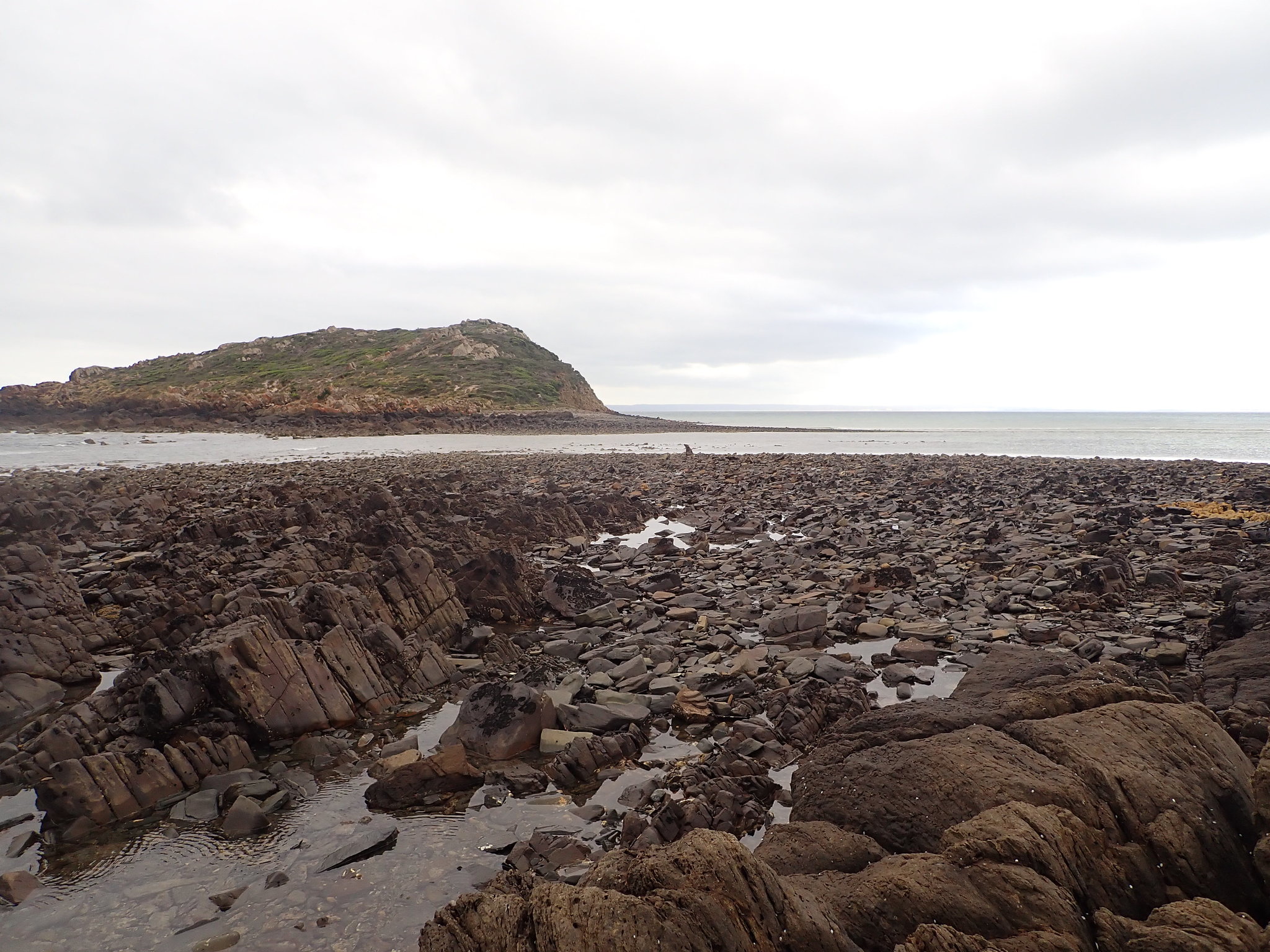
Locally only seen randomly normally only one animal at a time
At a glance
Australian Fur Seal at a glance
Habitat
Coastal and continental shelf waters, up to 180 km offshore
Size
Males can weigh anywhere from 218-360 kg and are 2-2.2 meters in length. Females weighing between 36 and 110 kg and measuring between 1.2 and 1.8m in length.
Origin
Native
Distribution
South-eastern mainland Australia and Tasmania
Descriptions
Distribution
South-eastern mainland Australia and Tasmania
Habitat
Coastal and continental shelf waters, up to 180 km offshore
Size
Males can weigh anywhere from 218-360 kg and are 2-2.2 meters in length. Females weighing between 36 and 110 kg and measuring between 1.2 and 1.8m in length.
Distribution and map
Distribution provided by The Atlas of Living Australia
Classification
Classification
KingdomAnimalia
PhylumChordata
SubphylumVertebrata
SuperclassGnathostomata
ClassMammalia
SubclassEutheria
OrderCarnivora
FamilyOtariidae
GenusArctocephalus
Synonyms
Synonyms
There are no known synonyms for this species
References and dates
Original
No original text available
Bibliography
View page references
Added
Fri 5 Jun 2020 @ 00:00 AM
Updated
Tue 16 Nov 2021 @ 23:00 PM
Surveys
View Survey List
Photos


Files
External Links
5 External Links
View External
Links
Disclaimer: A lot of work goes into trying to identify and ensure accurate identifications are made, and that the listed Descriptions, Sizes, Habitats and Distribution information is as accurate and valid as possible. Unfortunately, information in this arena is ever changing and as such no guarantee can be offered that it is correct or currently valid — the information is provided as a guide, and it is always suggested that you do a little research to ensure you have the latest and most accurate information. View the references or bibliography. Feedback and comments on the information provided are always welcome.
From Our Tasmania · https://ourtasmania.au/species-guide/view-species/arctocephalus-pusillus-doriferus/