The largest of all the cuttlefish and an expert at colour change and camouflage. They can change colour in an instant, and by raising parts of their skin, they can also change shape and texture to imitate rock, sand or seaweed. These displays have various interpretations to other marine creatures and may be used for camouflage, mating or even hypnotising prey.
It can be identified by two rows of three skin flap-like papillae over each eye.
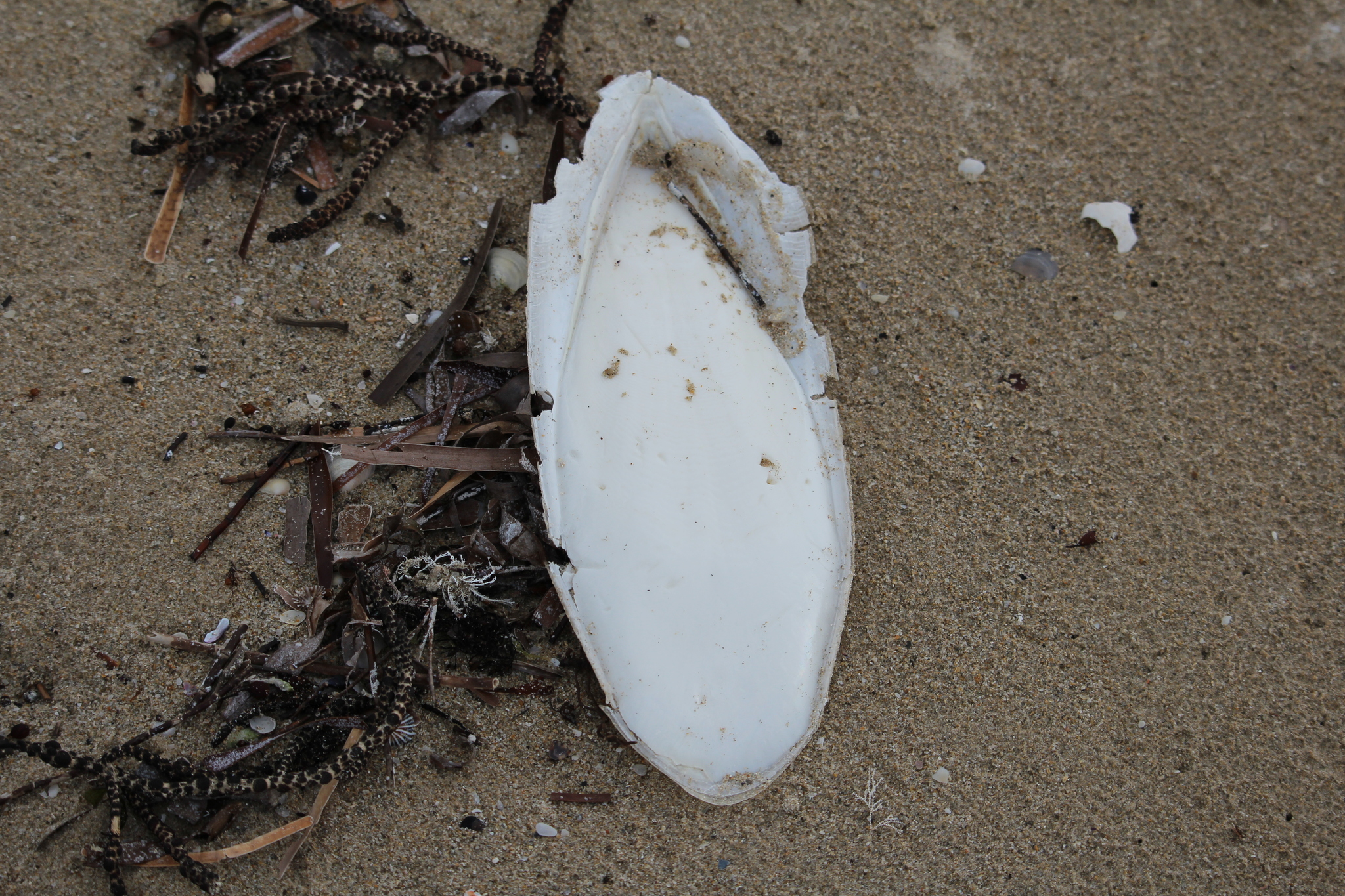
Their cuttlebones can be identified by the lack of a spine and a rough V-shaped thickening (callus) at posterior end. The outer cone is wide and flared in the adult
At a glance
Giant Australian Cuttlefish at a glance
Habitat
Rocky reefs, kelp forests and seagrass meadows to a depth of 100 m
Size
Can grow to a mantel length of around 50cm
Origin
Native
Distribution
From Brisbane in Queensland to Shark Bay in Western Australia including Tasmania
Descriptions
Distribution
From Brisbane in Queensland to Shark Bay in Western Australia including Tasmania
Habitat
Rocky reefs, kelp forests and seagrass meadows to a depth of 100 m
Size
Can grow to a mantel length of around 50cm
Distribution and map
Distribution provided by The Atlas of Living Australia
Classification
Classification
KingdomAnimalia
PhylumMollusca
ClassCephalopoda
SubclassColeoidea
SuperorderDecapodiformes
OrderSepiida
FamilySepiidae
GenusAscarosepion
SpeciesAscarosepion apama
Synonyms
Synonyms
There are no known synonyms for this species
References and dates
Original
No original text available
Bibliography
View page references
Added
Sat 11 Jul 2020 @ 00:00 AM
Updated
Thu 3 Apr 2025 @ 08:42 AM
Surveys
View Survey List
Photos


Files
External Links
5 External Links
View External
Links
Disclaimer: A lot of work goes into trying to identify and ensure accurate identifications are made, and that the listed Descriptions, Sizes, Habitats and Distribution information is as accurate and valid as possible. Unfortunately, information in this arena is ever changing and as such no guarantee can be offered that it is correct or currently valid — the information is provided as a guide, and it is always suggested that you do a little research to ensure you have the latest and most accurate information. View the references or bibliography. Feedback and comments on the information provided are always welcome.
From Our Tasmania · https://ourtasmania.au/species-guide/view-species/ascarosepion-apama/