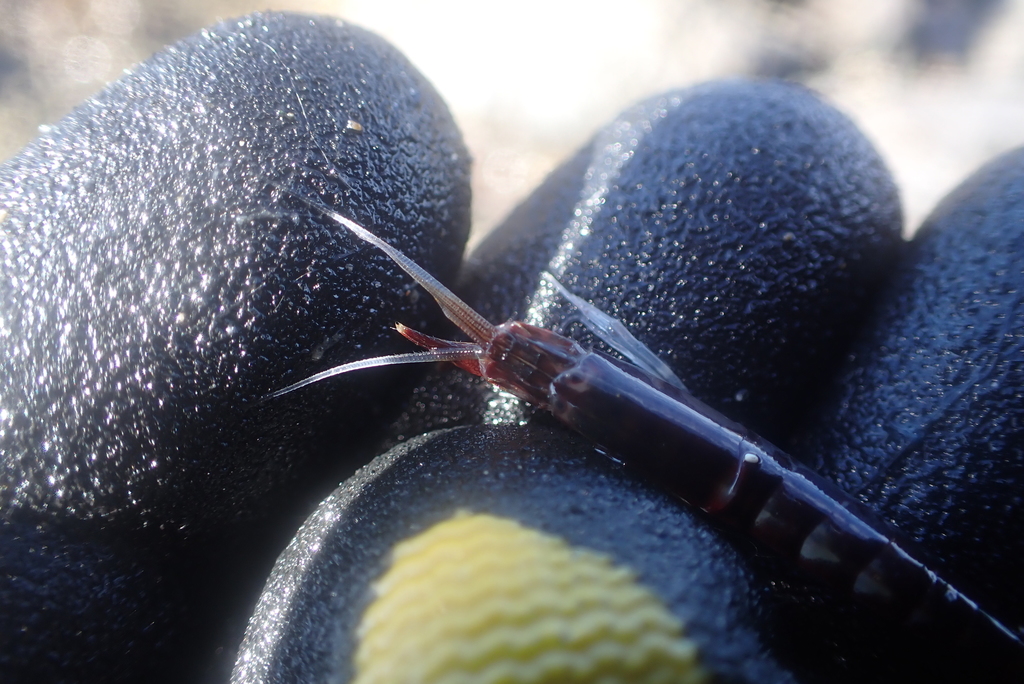
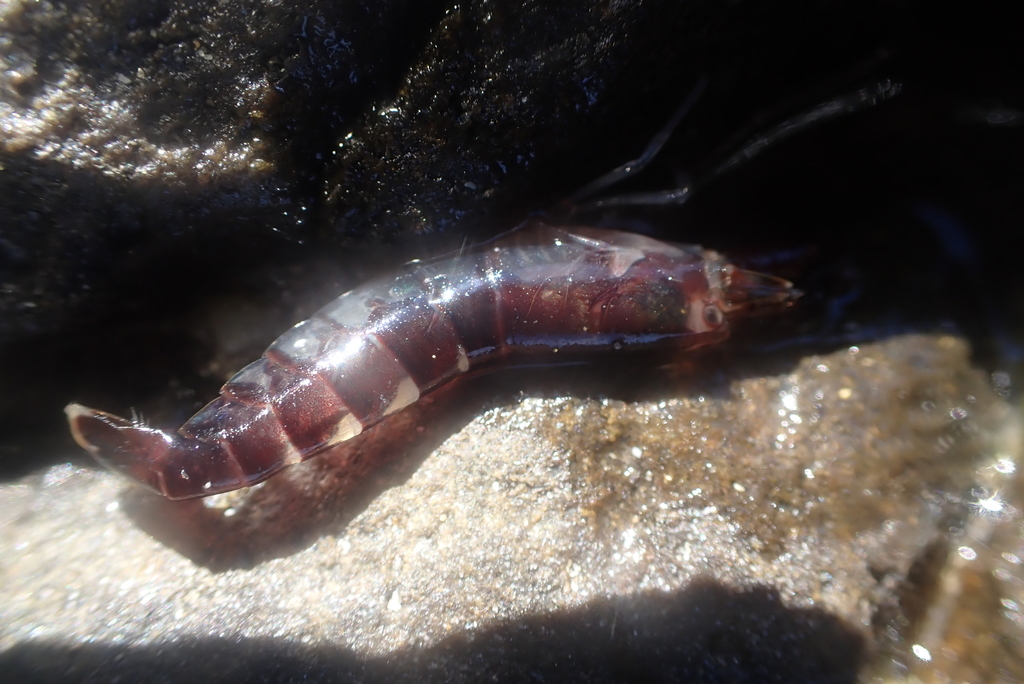
Known locally from a specimen found along the rocks from Tomahawk Point to West Tomahawk Beach but more likely present amongst the intertidal and subtidal rocky areas

At a glance

Snapping Shrimp at a glance

Habitat Can be found intertidally amongst sponges and algae and is often found amongst sea urchins
Size Can grow to a length of around 20mm
Origin Native
Distribution Southern Australia from WA to NSW including around Tasmania
Descriptions
Distribution
Southern Australia from WA to NSW including around Tasmania
Habitat
Can be found intertidally amongst sponges and algae and is often found amongst sea urchins
Size
Can grow to a length of around 20mm

Identification

Colour is normally a deep red but can vary slightly, the rostrum reaches past the middle of third article of antennule and the carapace does not have a supraorbital tooth, and does have a small tooth just to the outside the eye and slightly below the rostrum (extraorbital) described as being sharp, Chelipeds not sexually dimorphic (very similar on both sexes)
Common Name Snapping Shrimp
Aliases No Known Aliases
Origin Native
Tags
Share
Distribution and map

Distribution provided by The Atlas of Living Australia

Classification

Classification

KingdomAnimalia
SubphylumCrustacea
SuperclassMulticrustacea
SuperorderEucarida
SuborderPleocyemata
InfraorderCaridea
SuperfamilyAlpheoidea
FamilyAlpheidae
GenusAthanas
Synonyms

Synonyms

There are no known synonyms for this species
References and dates
Original No original text available
Bibliography View page references
Added Sat 31 Dec 2022 @ 23:00 PM
Updated Sat 31 Dec 2022 @ 23:00 PM
Files
Type Details Version Size Added Updated Links
There are no downloads or Files for this species at the moment

Disclaimer: A lot of work goes into trying to identify and ensure accurate identifications are made, and that the listed Descriptions, Sizes, Habitats and Distribution information is as accurate and valid as possible. Unfortunately, information in this arena is ever changing and as such no guarantee can be offered that it is correct or currently valid — the information is provided as a guide, and it is always suggested that you do a little research to ensure you have the latest and most accurate information. View the references or bibliography. Feedback and comments on the information provided are always welcome.