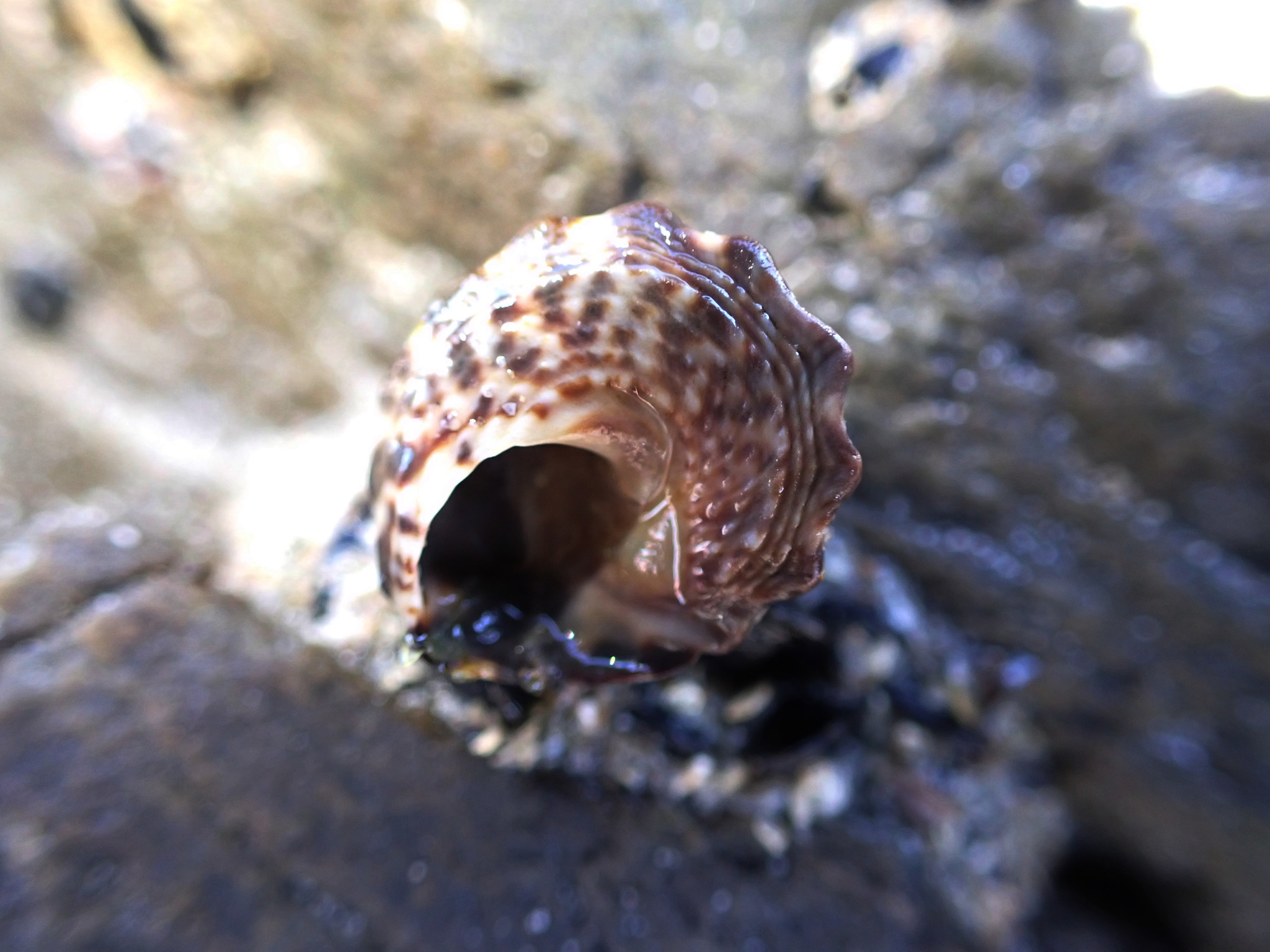
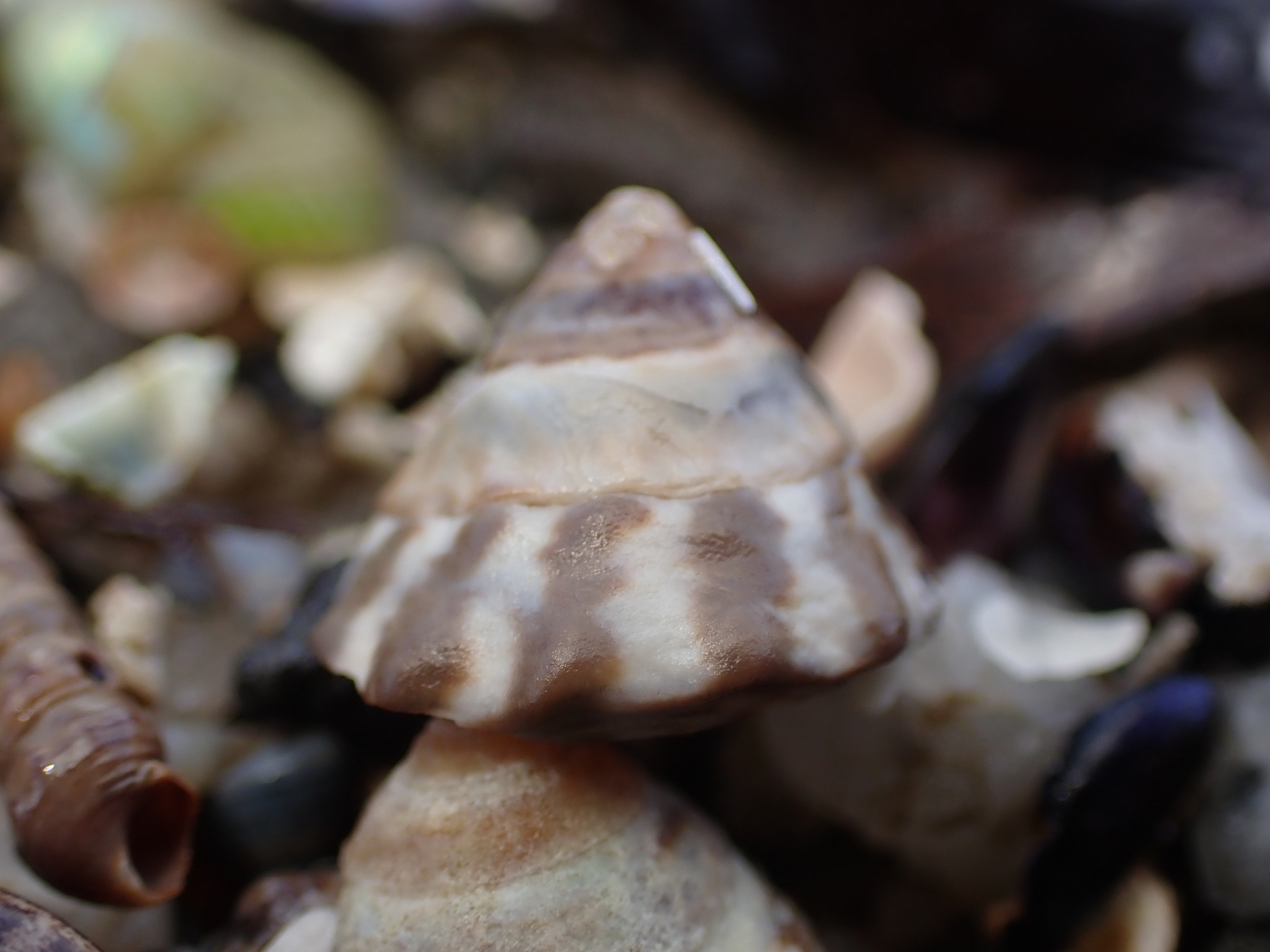
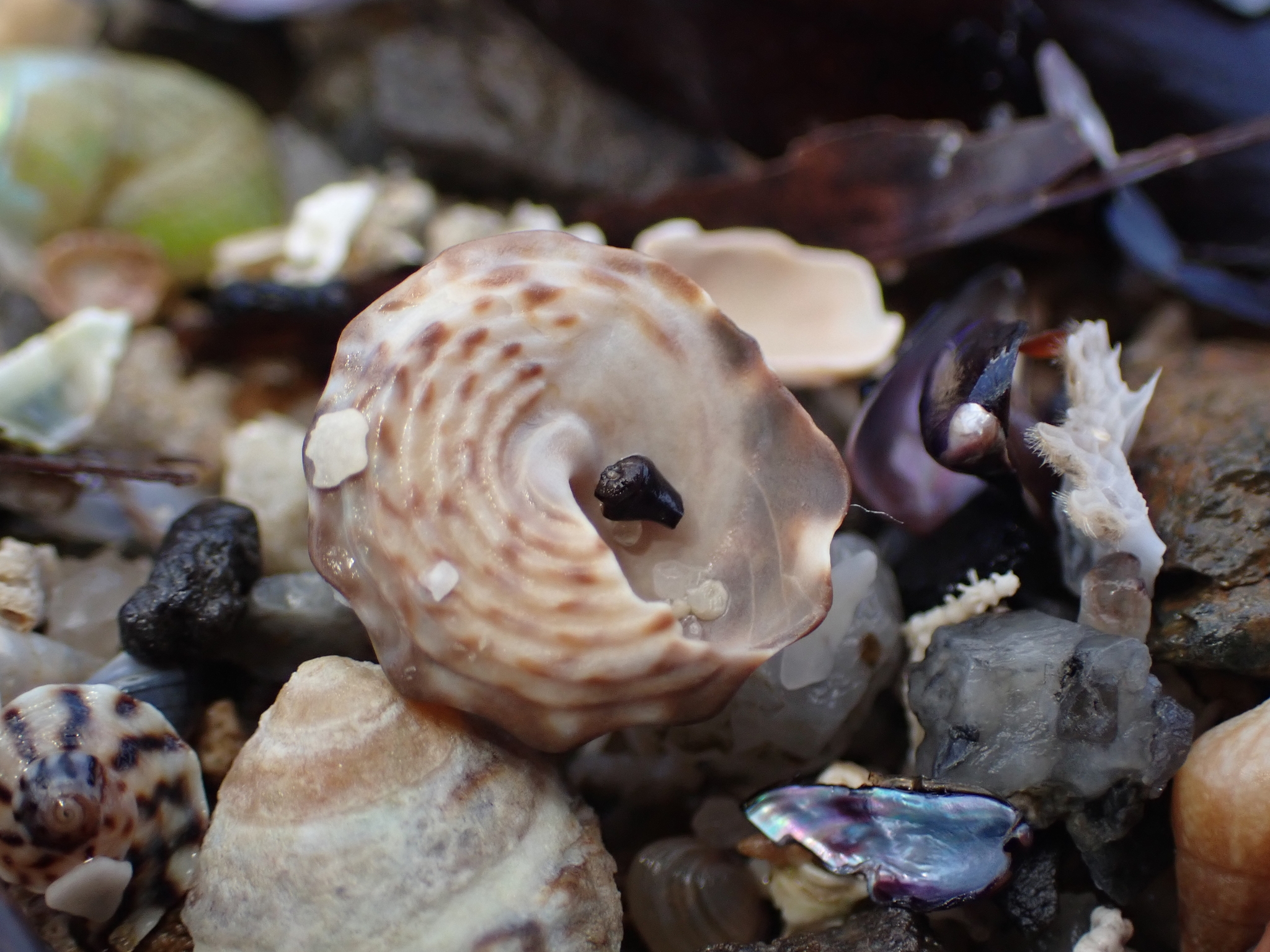
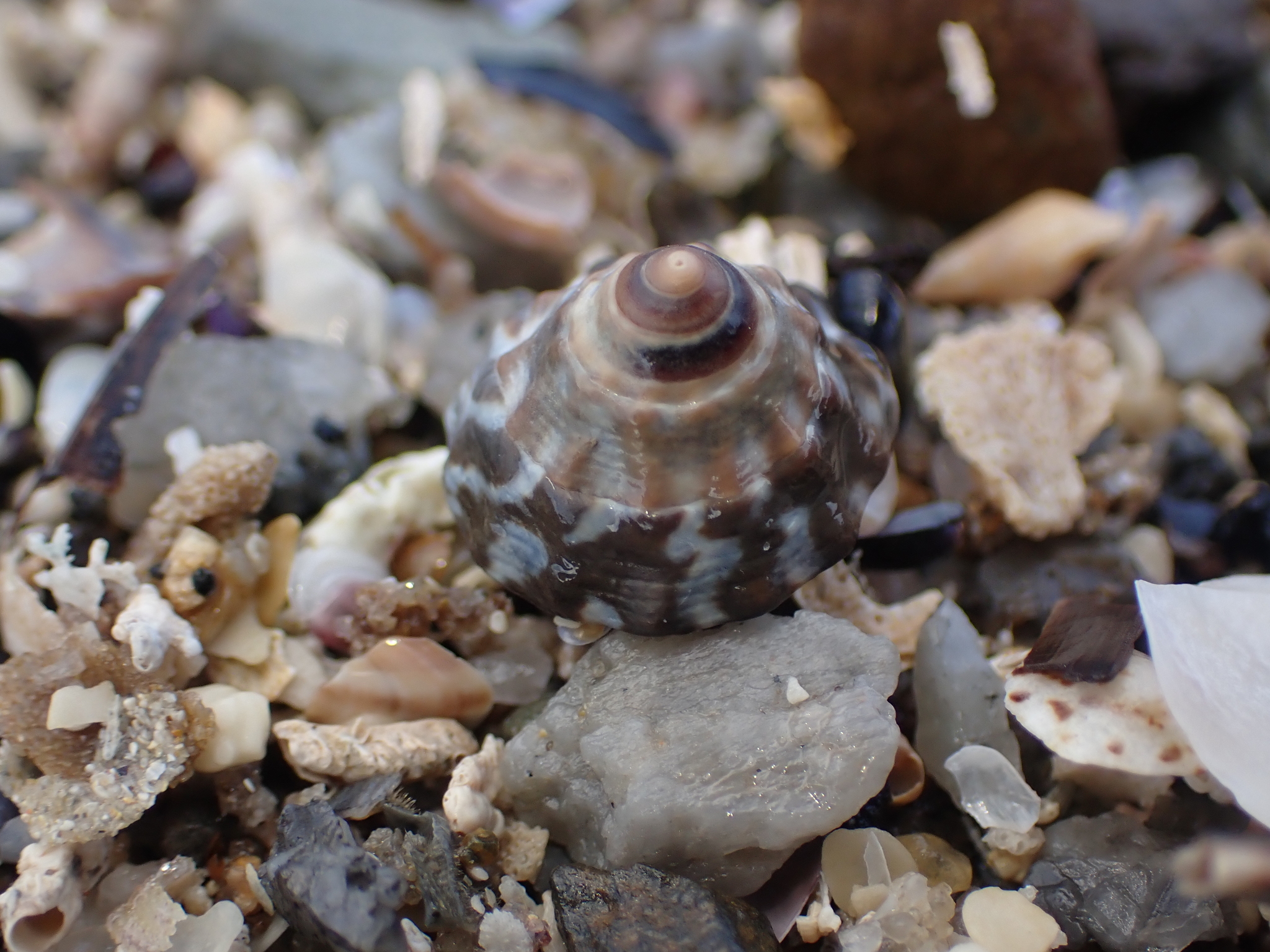
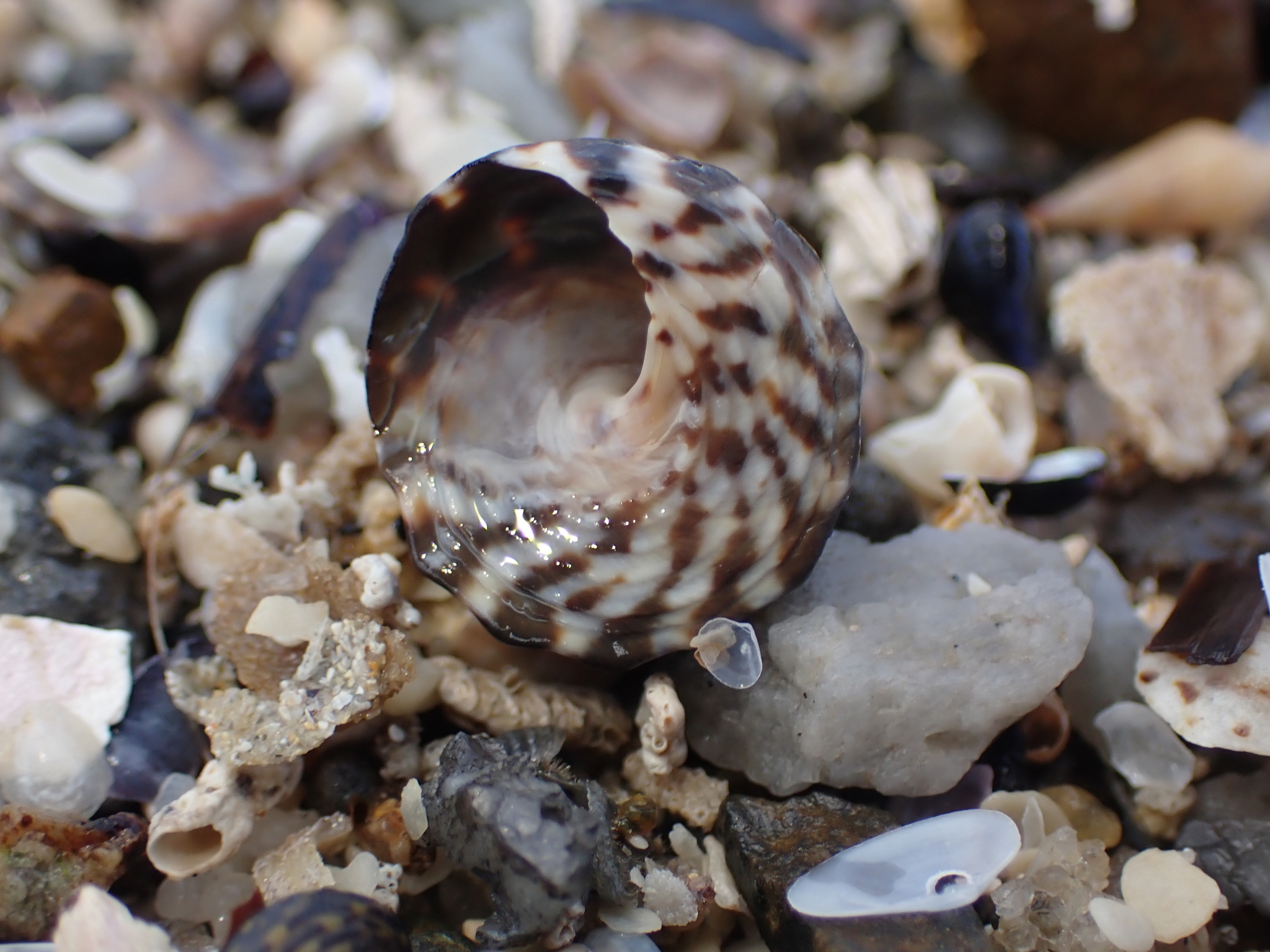
A solid, conical, straight-sided shell. Lower half of each whorl bears a row of low nodules. Shell colour off-white with darker brown blotches; the blotches usually coincide with the nodules, giving rise to a wavy, spiral arrangement of alternating dark and pale patches. Periphery of body-whorl forming a sharp transition to the flattened base of the shell, which bears a series of shallow spiral grooves. The dark blotches on the base are more distinct than on the rest of the shell

At a glance

Gold-mouthed Conniwink at a glance

Habitat Lives intertidally on various substrates, even mud, especially on sheltered shores
Size Can grow to around 15mm
Origin Endemic
Distribution Southern Australia from WA to QLD including Tasmania
Descriptions
Distribution
Southern Australia from WA to QLD including Tasmania
Habitat
Lives intertidally on various substrates, even mud, especially on sheltered shores
Size
Can grow to around 15mm
Common Name Gold-mouthed Conniwink
Aliases Estuarine Conniwink,
Origin Endemic
Share
Distribution and map

Distribution provided by The Atlas of Living Australia

Classification

Classification

KingdomAnimalia
PhylumMollusca
SuperorderSorbeoconcha
SuperfamilyLittorinoidea
SubfamilyLacuninae
Synonyms

Synonyms

There are no known synonyms for this species
References and dates
Original No original text available
Bibliography View page references
Added Thu 15 Oct 2020 @ 23:00 PM
Updated Sun 4 Sep 2022 @ 00:00 AM
Files
Type Details Version Size Added Updated Links
There are no downloads or Files for this species at the moment

Disclaimer: A lot of work goes into trying to identify and ensure accurate identifications are made, and that the listed Descriptions, Sizes, Habitats and Distribution information is as accurate and valid as possible. Unfortunately, information in this arena is ever changing and as such no guarantee can be offered that it is correct or currently valid — the information is provided as a guide, and it is always suggested that you do a little research to ensure you have the latest and most accurate information. View the references or bibliography. Feedback and comments on the information provided are always welcome.