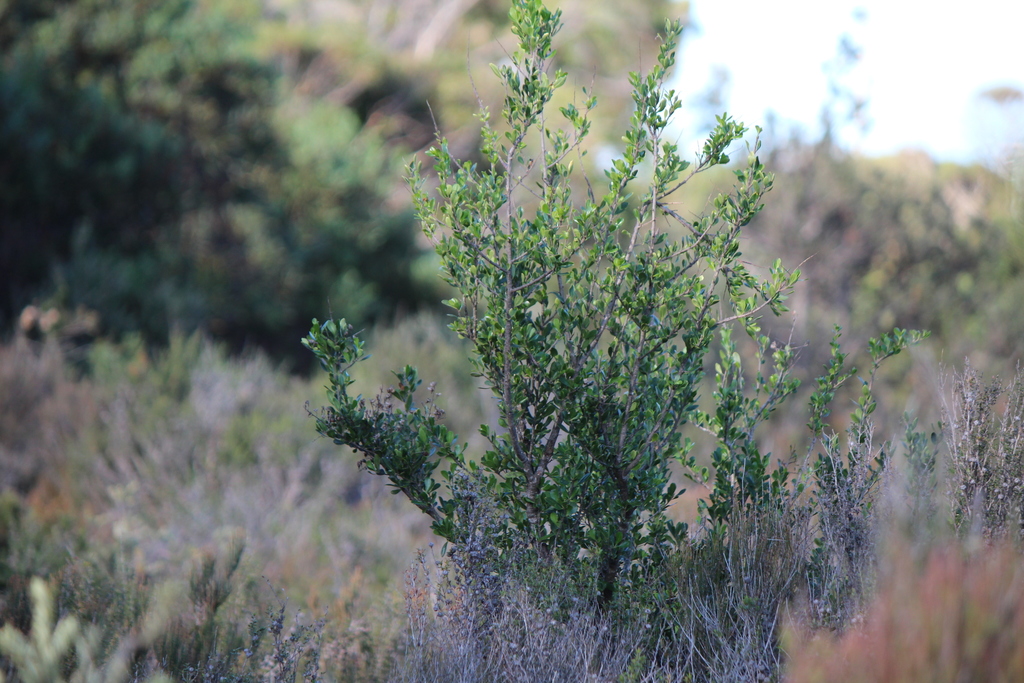
The coastal forms are known for being rather tall, while those found in subalpine areas can be almost prostrate. It is often multi-stemmed and has a rhizomatous root system, from which is can readily re-sprout after disturbance. The branches are usually spiny. The leaves are small (1–5 cm long), obovate and often clustered on the branches. In spring to summer it produces numerous small (1 cm across) white to cream flowers, which are nicely fragrant. Following this it produces characteristic purse-/heart-shaped seed capsule

At a glance

Sweet Bursaria at a glance

Habitat This species grows from coastal to subalpine areas
Size Drowing to 5–10 metres high
Origin Native
Distribution South Eastern Australia From QLD to SA including Tasmania
Descriptions
Distribution
South Eastern Australia From QLD to SA including Tasmania
Habitat
This species grows from coastal to subalpine areas
Size
Drowing to 5–10 metres high
Common Name Sweet Bursaria
Aliases No Known Aliases
Origin Native
Share
Distribution and map

Occurrences shown for the family Pittosporaceae. Distribution provided by The Atlas of Living Australia.

Classification

Classification

KingdomPlantae
SubclassMagnoliidae
SuperorderAsteranae
OrderApiales
Synonyms

Synonyms

There are no known synonyms for this species
References and dates
Original No original text available
Bibliography View page references
Added Sat 12 Dec 2020 @ 23:00 PM
Updated Sat 4 Dec 2021 @ 23:00 PM
Files
Type Details Version Size Added Updated Links
There are no downloads or Files for this species at the moment

Disclaimer: A lot of work goes into trying to identify and ensure accurate identifications are made, and that the listed Descriptions, Sizes, Habitats and Distribution information is as accurate and valid as possible. Unfortunately, information in this arena is ever changing and as such no guarantee can be offered that it is correct or currently valid — the information is provided as a guide, and it is always suggested that you do a little research to ensure you have the latest and most accurate information. View the references or bibliography. Feedback and comments on the information provided are always welcome.