Males their coats are a gray-brown and they have a thick mane about their neck region which is slightly lighter. Females vary greatly in size and their coat is a silver-gray with a yellow colored throat and brown underside. An external ear is visible behind each eye.
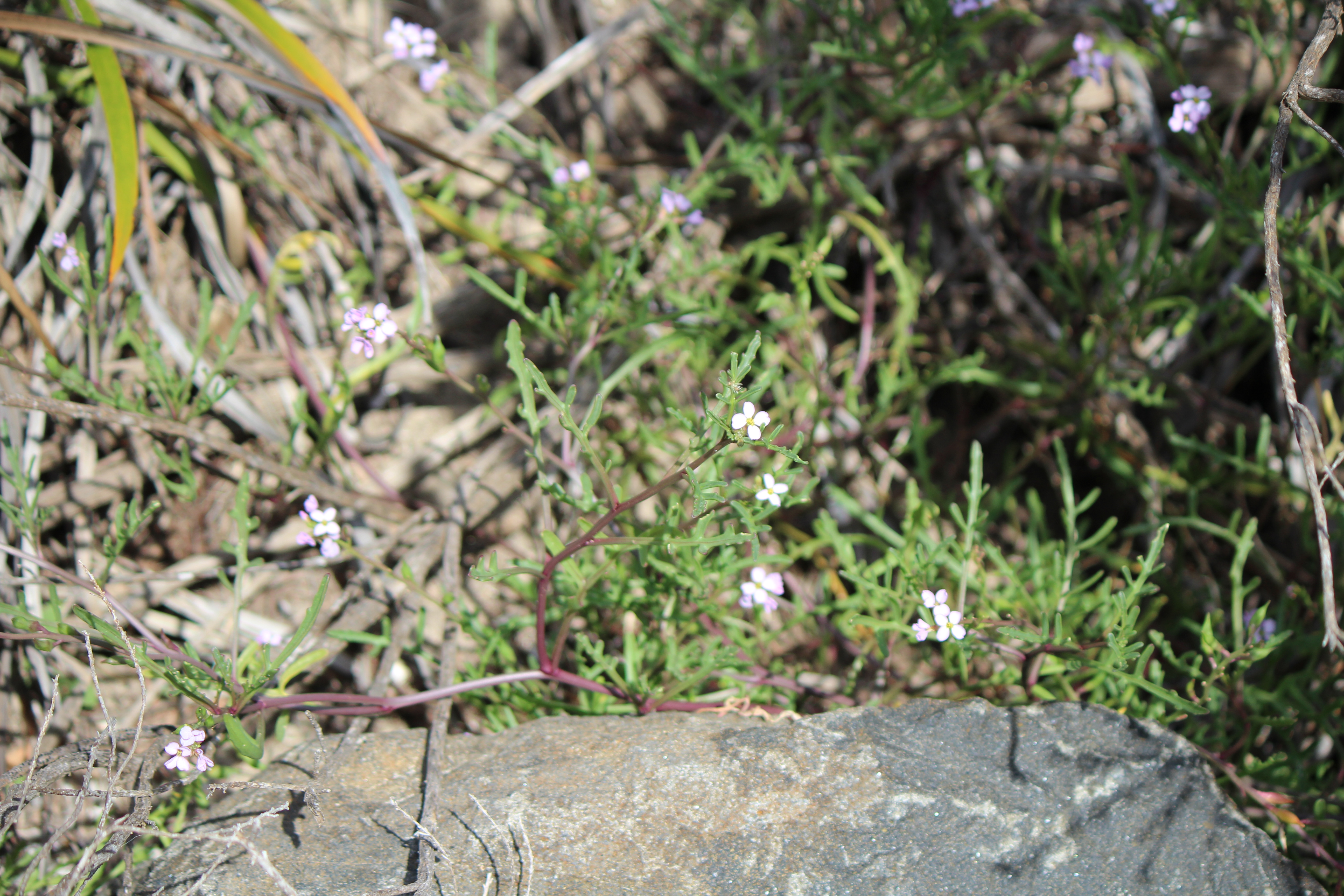
This plant is native to North America. Individuals of this species low growing succulent plants with thick, edible leaves. This plant grows as a short shrub on beaches they branch extensively and sometimes spread along the sand. Leaves are one per node, alternately grow on the stem and have various teeth and lobe patterns.
Flowers are separate, radially symmetrical, and contain four petals. These flowers can be pink to red, blue to purple, or white. Fruit are small and green, about 1-2 centimeters in diameter. These fruit are dry and do not split open when ripe. Fruit are released at the end of each growing seasonIt is a non-native, invasive species in parts of the world, especially Japan and Australia
At a glance
Sea Rocket at a glance
Habitat
Grows on the dunes of coastal beaches, as well as shorelines. Well drained, sandy soil is preferred. It is likely to be found in areas midway up beaches, out of the range of waves and tides, which can destroy individuals, especially through storm events
Size
Can grow up to 80 cm
Origin
Introduced
Distribution
Sea Rocket is widespread on beaches and sand dunes throughout Tasmania
Descriptions
Distribution
Sea Rocket is widespread on beaches and sand dunes throughout Tasmania
Habitat
Grows on the dunes of coastal beaches, as well as shorelines. Well drained, sandy soil is preferred. It is likely to be found in areas midway up beaches, out of the range of waves and tides, which can destroy individuals, especially through storm events
Size
Can grow up to 80 cm
Distribution and map
Distribution provided by The Atlas of Living Australia
Classification
Classification
KingdomPlantae
PhylumCharophyta
ClassEquisetopsida
SubclassMagnoliidae
SuperorderRosanae
OrderBrassicales
FamilyBrassicaceae
GenusCakile
SpeciesCakile edentula
Synonyms
Synonyms
There are no known synonyms for this species
References and dates
Original
No original text available
Bibliography
View page references
Added
Fri 5 Jun 2020 @ 00:00 AM
Updated
Sun 7 Nov 2021 @ 23:00 PM
Surveys
View Survey List
Photos

Files
External Links
2 External Links
View External
Links
Disclaimer: A lot of work goes into trying to identify and ensure accurate identifications are made, and that the listed Descriptions, Sizes, Habitats and Distribution information is as accurate and valid as possible. Unfortunately, information in this arena is ever changing and as such no guarantee can be offered that it is correct or currently valid — the information is provided as a guide, and it is always suggested that you do a little research to ensure you have the latest and most accurate information. View the references or bibliography. Feedback and comments on the information provided are always welcome.
From Our Tasmania · https://ourtasmania.au/species-guide/view-species/cakile-edentula/