Protected:Limpets are protected in Tasmania you are not allowed to collect or use them for bait
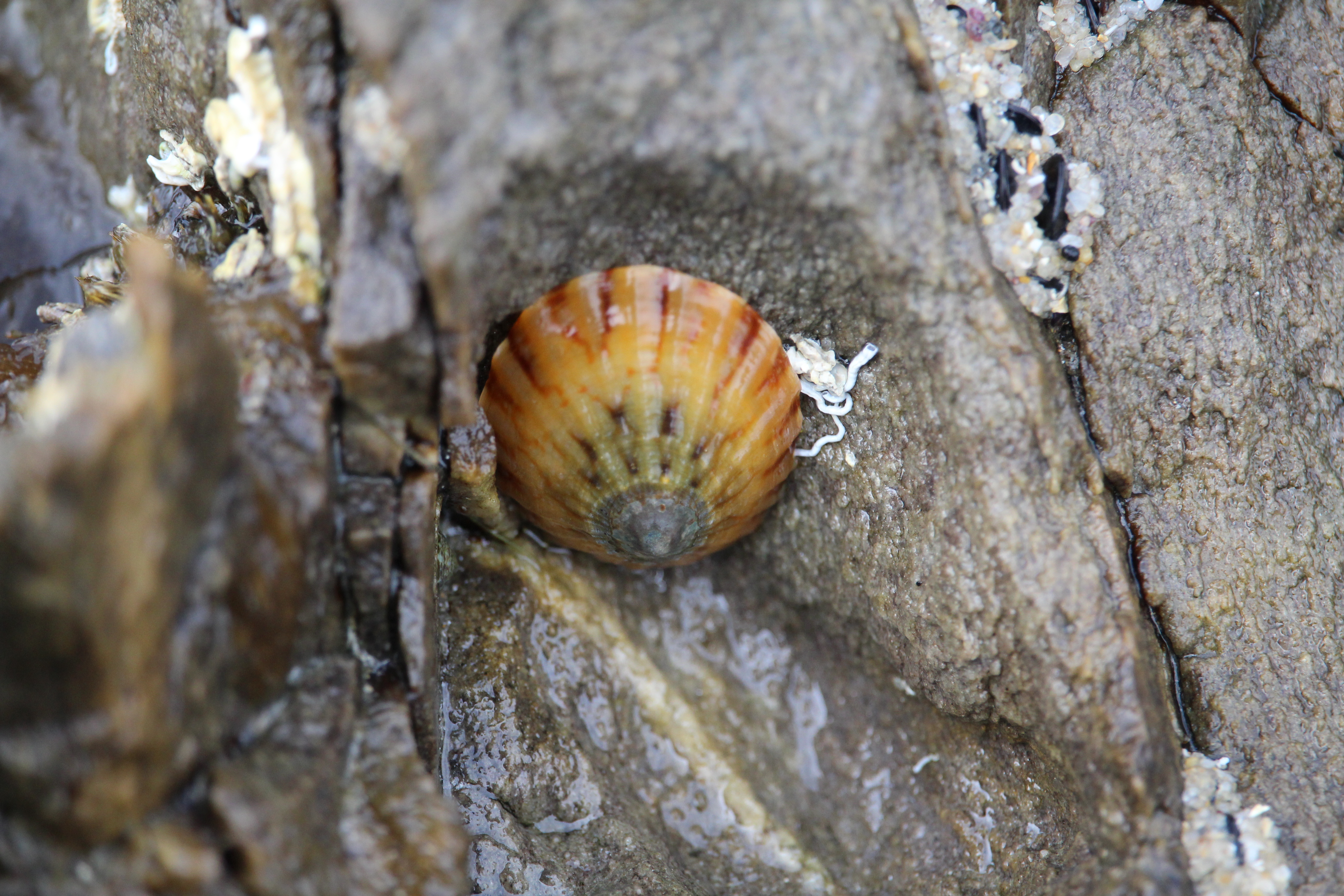
A large, oval, conical limpet with about 30 radial ribs or flutes and with the apex slightly off-centre. Colour usually grey-brown with darker flecks and with concentric banding sometimes evident. Apex tends to be eroded and paler in colour, as do the radial ribs. Internally the shell is usually somewhat pearly (nacreous), and in adults often bears a prominent orange band separating the uniformly grey apical region from the more variegated margin
At a glance
Orange-Edged Limpet at a glance
Habitat
Rocky shores from low-tide to almost high-tide level, particularly on exposed coasts.
Size
Can grow up to around 6.5cm
Origin
Native
Distribution
South-eastern Australia
Descriptions
Distribution
South-eastern Australia
Habitat
Rocky shores from low-tide to almost high-tide level, particularly on exposed coasts.
Size
Can grow up to around 6.5cm
Distribution and map
Distribution provided by The Atlas of Living Australia
Classification
Classification
KingdomAnimalia
PhylumMollusca
ClassGastropoda
SubclassPatellogastropoda
SuperfamilyLottioidea
FamilyNacellidae
GenusCellana
SpeciesCellana solida
Synonyms
Synonyms
There are no known synonyms for this species
References and dates
Original
No original text available
Bibliography
View page references
Added
Wed 12 Aug 2020 @ 00:00 AM
Updated
Thu 13 May 2021 @ 00:00 AM
Surveys
View Survey List
Photos


Files
External Links
3 External Links
View External
Links
Disclaimer: A lot of work goes into trying to identify and ensure accurate identifications are made, and that the listed Descriptions, Sizes, Habitats and Distribution information is as accurate and valid as possible. Unfortunately, information in this arena is ever changing and as such no guarantee can be offered that it is correct or currently valid — the information is provided as a guide, and it is always suggested that you do a little research to ensure you have the latest and most accurate information. View the references or bibliography. Feedback and comments on the information provided are always welcome.
From Our Tasmania · https://ourtasmania.au/species-guide/view-species/cellana-solida/