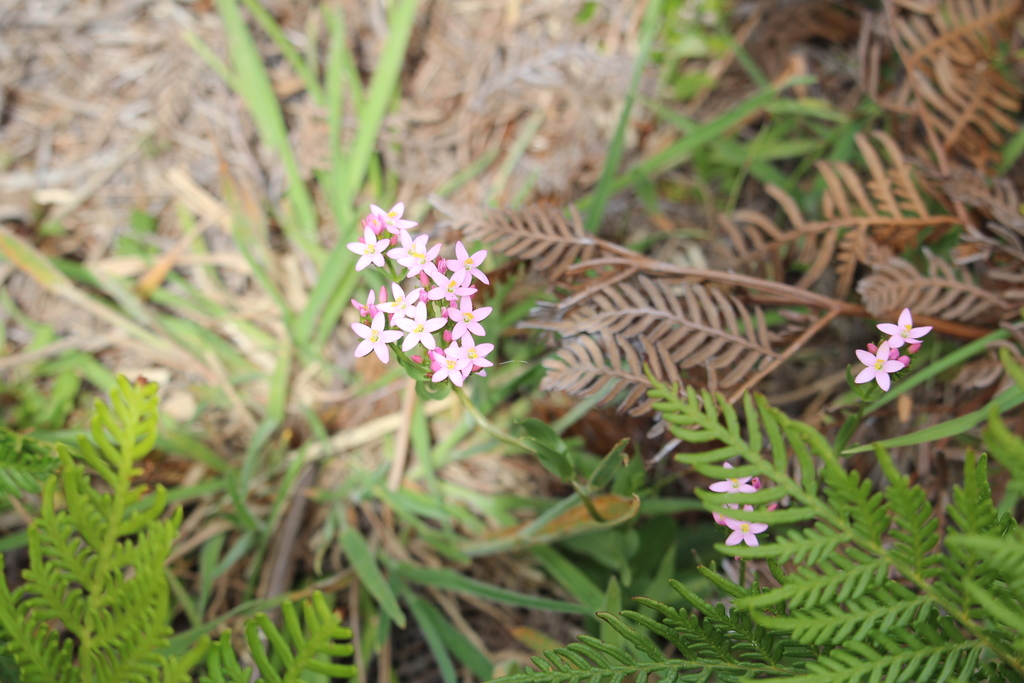
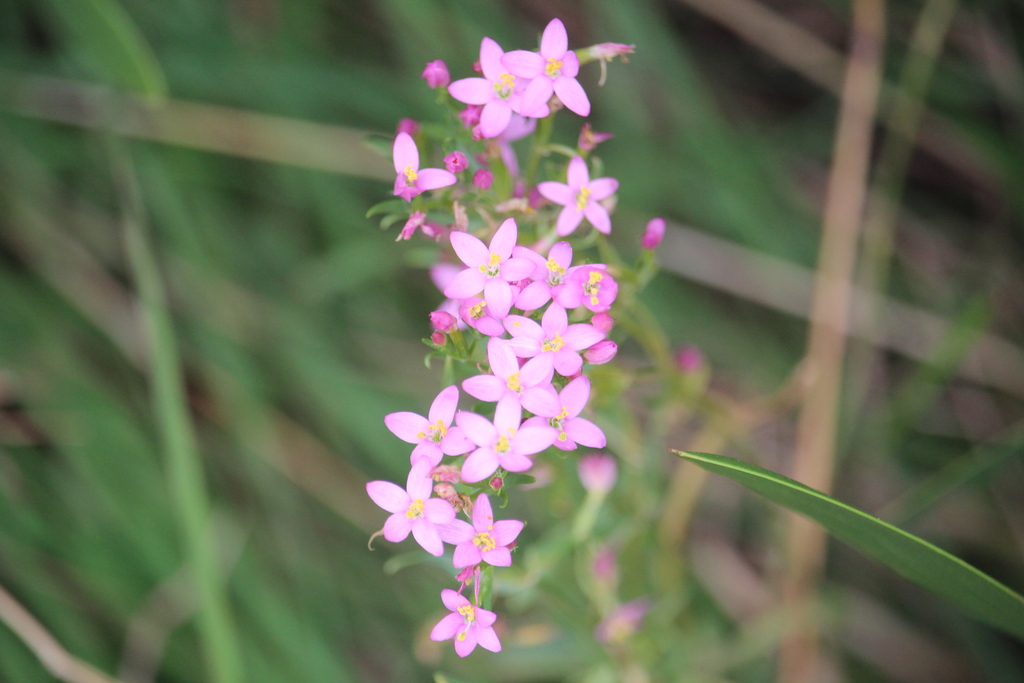
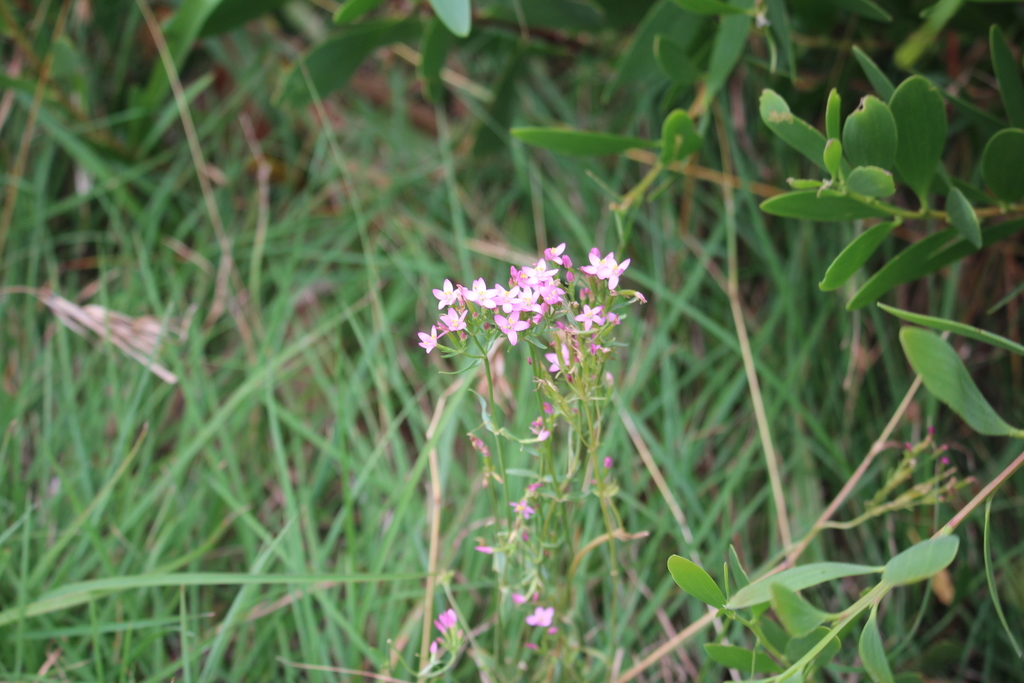
Biennial herb with an erect leafy stem often much-branching towards top, arising from small persistent rosette. Triangular leaves arranged oppositely decreasing in size up the stem. Multiple flat-faced flowers about 1 cm across, five pinkish-lavender petals, on stalks from stem and tangling with leaves. Flowers that open only in fine weather and not after mid-day.
Prepared as medicinal tea for patients with gastric and liver diseases. A powerful antioxidant. The Aboriginal people in Tasmania used the leaves of Centurium spicatum for treatment of bilious headaches and haemorrhoids.
At a glance
Common Centaury at a glance
Habitat
Naturalised through eastern Australia. Widespread, especially in pastures. Listed as threatened in Tas
Size
Can Grow to around 50 cm high
Origin
Introduced
Distribution
It is native to the Mediterranean area. Now considered natrilised through out Australia
Descriptions
Distribution
It is native to the Mediterranean area. Now considered natrilised through out Australia
Habitat
Naturalised through eastern Australia. Widespread, especially in pastures. Listed as threatened in Tas
Size
Can Grow to around 50 cm high
Distribution and map
Distribution provided by The Atlas of Living Australia
Classification
Classification
KingdomPlantae
PhylumCharophyta
ClassEquisetopsida
SubclassMagnoliidae
SuperorderAsteranae
OrderGentianales
FamilyGentianaceae
GenusCentaurium
SpeciesCentaurium erythraea
Synonyms
Synonyms
There are no known synonyms for this species
References and dates
Original
No original text available
Bibliography
View page references
Added
Wed 23 Dec 2020 @ 23:00 PM
Updated
Sat 4 Dec 2021 @ 23:00 PM
Surveys
View Survey List
Photos
Files
External Links
3 External Links
View External
Links
Disclaimer: A lot of work goes into trying to identify and ensure accurate identifications are made, and that the listed Descriptions, Sizes, Habitats and Distribution information is as accurate and valid as possible. Unfortunately, information in this arena is ever changing and as such no guarantee can be offered that it is correct or currently valid — the information is provided as a guide, and it is always suggested that you do a little research to ensure you have the latest and most accurate information. View the references or bibliography. Feedback and comments on the information provided are always welcome.
From Our Tasmania · https://ourtasmania.au/species-guide/view-species/centaurium-erythraea/