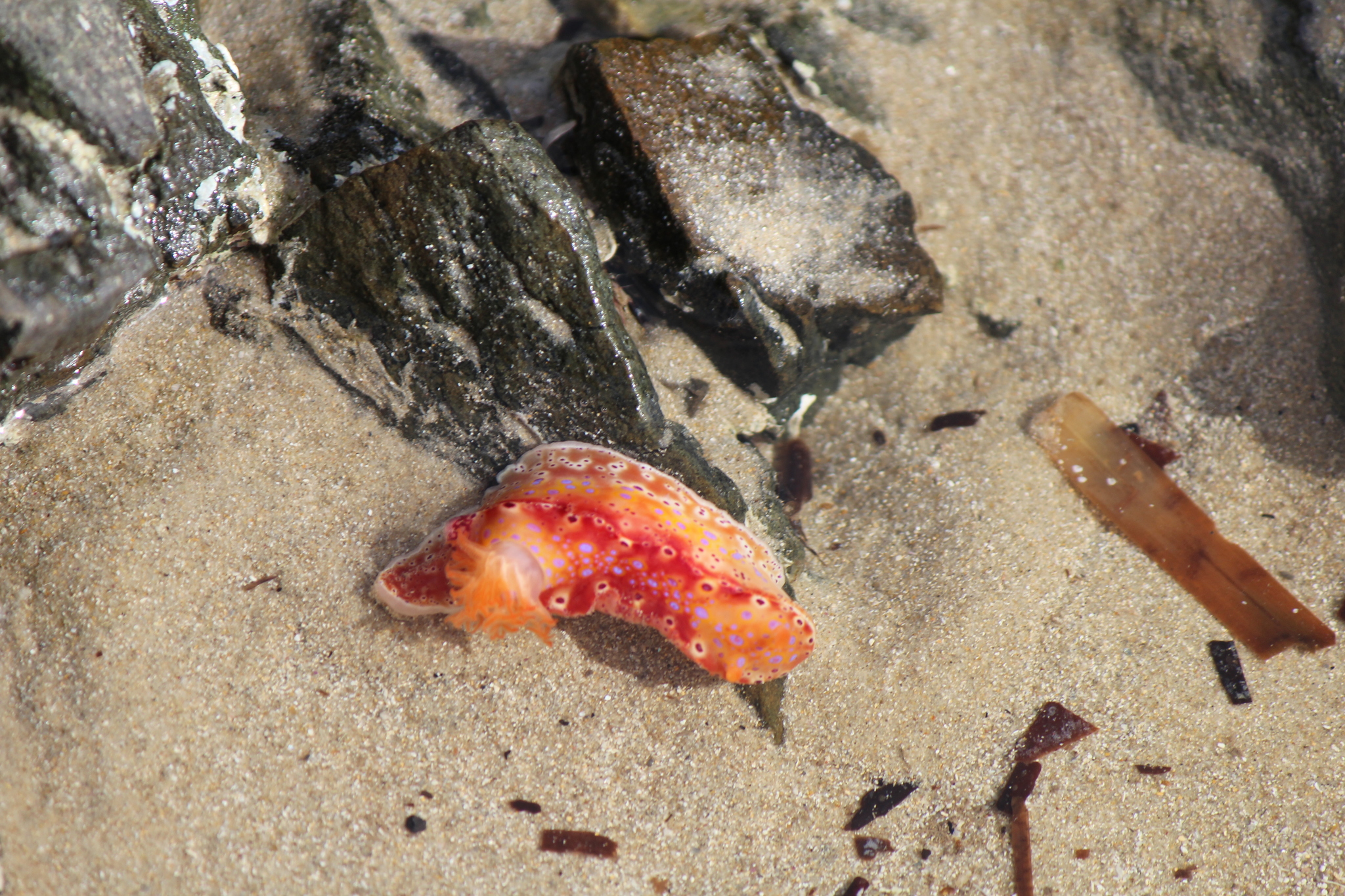
It is a species of colourful dorid nudibranch, a sea slug, a shell-less marine gastropod mollusk. With gill structures visible as a single cluster on back of the animal. Patterns includes shades or colours of white, orange and or red and varies significantly.

At a glance

Short-tailed Ceratosoma at a glance

Habitat Intertidal to deeper waters, to depth of 120 m
Size Maximum recorded length of 15 centimetres
Origin Native
Distribution south-eastern Australia from Houtman Abrolhos, Western Australia, across South Australia and Victoria to Cape Byron, New South Wales, and around Tasmania
Descriptions
Distribution
south-eastern Australia from Houtman Abrolhos, Western Australia, across South Australia and Victoria to Cape Byron, New South Wales, and around Tasmania
Habitat
Intertidal to deeper waters, to depth of 120 m
Size
Maximum recorded length of 15 centimetres
Common Name Short-tailed Ceratosoma
Aliases No Known Aliases
Origin Native
Share
Distribution and map

Distribution provided by The Atlas of Living Australia

Classification

Classification

KingdomAnimalia
PhylumMollusca
SuperorderEuthyneura
SuborderDoridina
InfraorderDoridoidei
SuperfamilyChromodoridoidea
SubfamilyMiamirinae
Synonyms

Synonyms

There are no known synonyms for this species
References and dates
Original No original text available
Bibliography View page references
Added Sat 13 Jun 2020 @ 00:00 AM
Updated Sun 30 Jan 2022 @ 23:00 PM
Files
Type Details Version Size Added Updated Links
There are no downloads or Files for this species at the moment

Disclaimer: A lot of work goes into trying to identify and ensure accurate identifications are made, and that the listed Descriptions, Sizes, Habitats and Distribution information is as accurate and valid as possible. Unfortunately, information in this arena is ever changing and as such no guarantee can be offered that it is correct or currently valid — the information is provided as a guide, and it is always suggested that you do a little research to ensure you have the latest and most accurate information. View the references or bibliography. Feedback and comments on the information provided are always welcome.