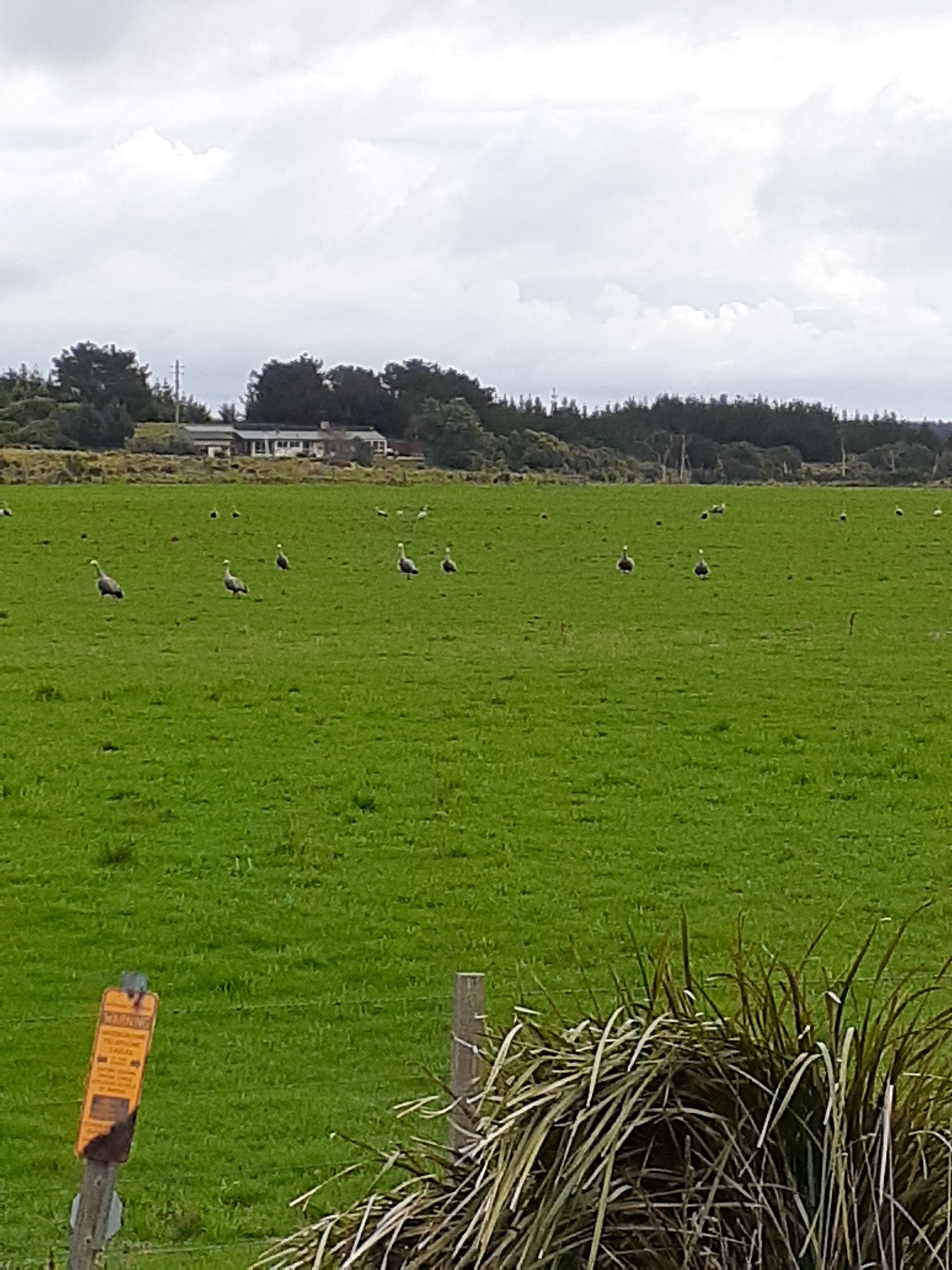
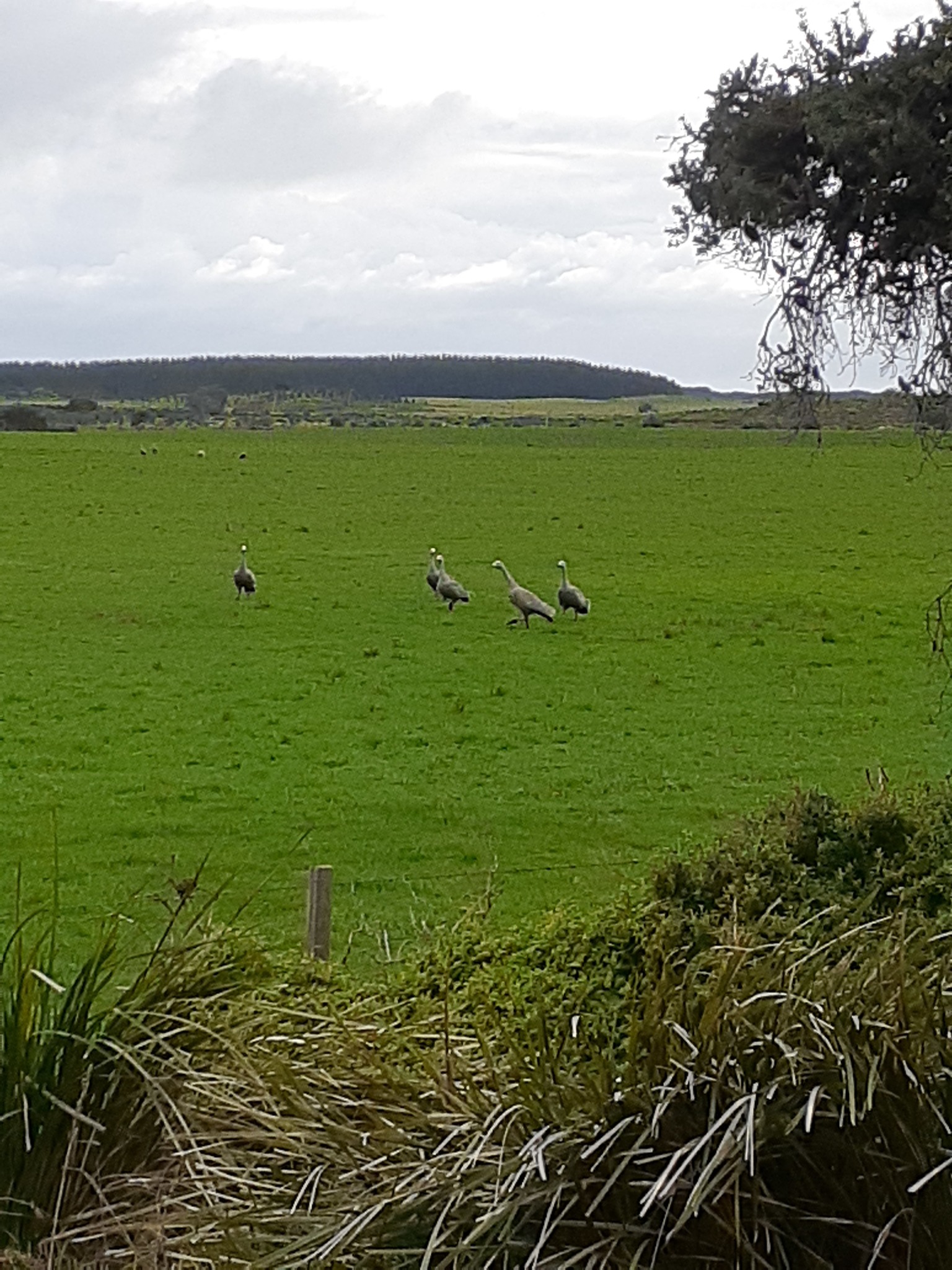
The Cape Barren Goose is a very large, pale grey goose with a relatively small head. Its stubby triangular bill is almost concealed by a very prominent greenish-yellow cere (skin above the bill). It has rows of large dark spots in lines across the scapulars (shoulders) and wing coverts. The legs are pink to deep red and the feet black. In flight it shows dark wingtips and along the trailing edge of the wings.

At a glance

Cape Barren Goose at a glance

Habitat The Cape Barren Goose is a grazing bird and is often found in areas of pasture, tussock grass or low heathy scrub.
Size 75 - 100 cm with a wingspan of 150 to 190 cm
Origin Endemic
Distribution The Cape Barren Goose is found on the south-eastern coast of Australia, the southern coast of Western Australia and in south-eastern Victoria. It is locally dispersive and has been introduced to Kangaroo Island.
Descriptions
Distribution
The Cape Barren Goose is found on the south-eastern coast of Australia, the southern coast of Western Australia and in south-eastern Victoria. It is locally dispersive and has been introduced to Kangaroo Island.
Habitat
The Cape Barren Goose is a grazing bird and is often found in areas of pasture, tussock grass or low heathy scrub.
Size
75 - 100 cm with a wingspan of 150 to 190 cm
Common Name Cape Barren Goose
Aliases No Known Aliases
Origin Endemic
Conservation Least Concern
Share
Distribution and map

Distribution provided by The Atlas of Living Australia

Classification

Classification

KingdomAnimalia
PhylumChordata
SubphylumVertebrata
SuperclassGnathostomata
ClassAves
FamilyAnatidae
SubfamilyAnserinae
Synonyms

Synonyms

There are no known synonyms for this species
References and dates
Original No original text available
Bibliography View page references
Added Sun 17 May 2020 @ 00:00 AM
Updated Sun 31 Jul 2022 @ 00:00 AM
Files
Type Details Version Size Added Updated Links
There are no downloads or Files for this species at the moment

Disclaimer: A lot of work goes into trying to identify and ensure accurate identifications are made, and that the listed Descriptions, Sizes, Habitats and Distribution information is as accurate and valid as possible. Unfortunately, information in this arena is ever changing and as such no guarantee can be offered that it is correct or currently valid — the information is provided as a guide, and it is always suggested that you do a little research to ensure you have the latest and most accurate information. View the references or bibliography. Feedback and comments on the information provided are always welcome.