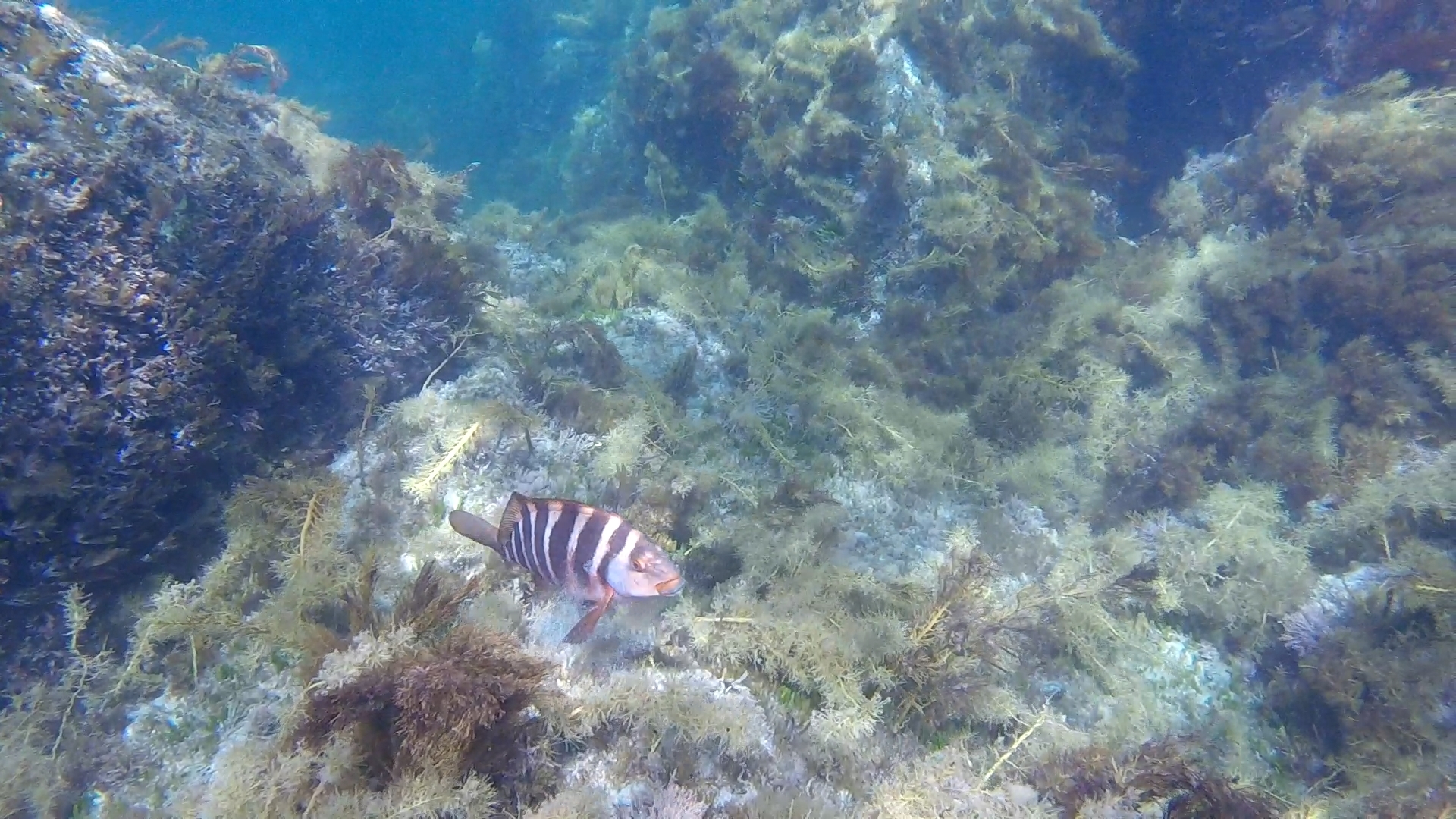
Their rate of growth is fast in the first 5 years and then slows. Males grow larger than females and mature banded morwong may be as old as 90 years, and has an extremely small home range size (often found associated with a single large boulder), so is extremely vulnerable to over-fishing

At a glance

Banded Morwong at a glance

Habitat Banded morwong are normally found around shallow exposed rocky reef areas in depths between 3-50 meters.
Size They can grow up 70cm and 15kg in weight
Origin Native
Distribution Banded morwong inhabit exposed rocky headlands and coastal reefs, from Seal Rocks in NSW, throughout Victorian and Tasmanian waters to Robe in South Australia
Descriptions
Distribution
Banded morwong inhabit exposed rocky headlands and coastal reefs, from Seal Rocks in NSW, throughout Victorian and Tasmanian waters to Robe in South Australia
Habitat
Banded morwong are normally found around shallow exposed rocky reef areas in depths between 3-50 meters.
Size
They can grow up 70cm and 15kg in weight

Identification

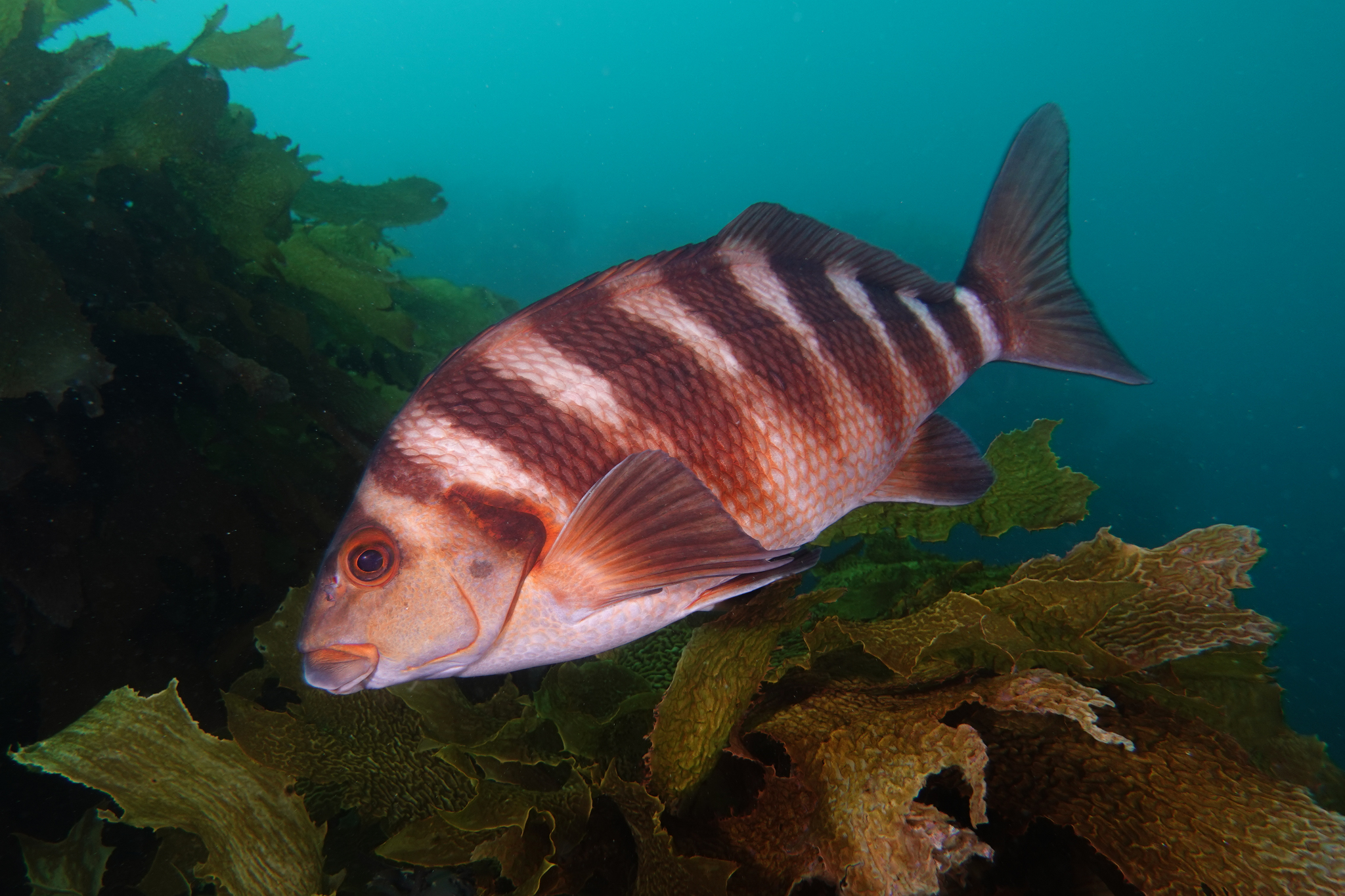
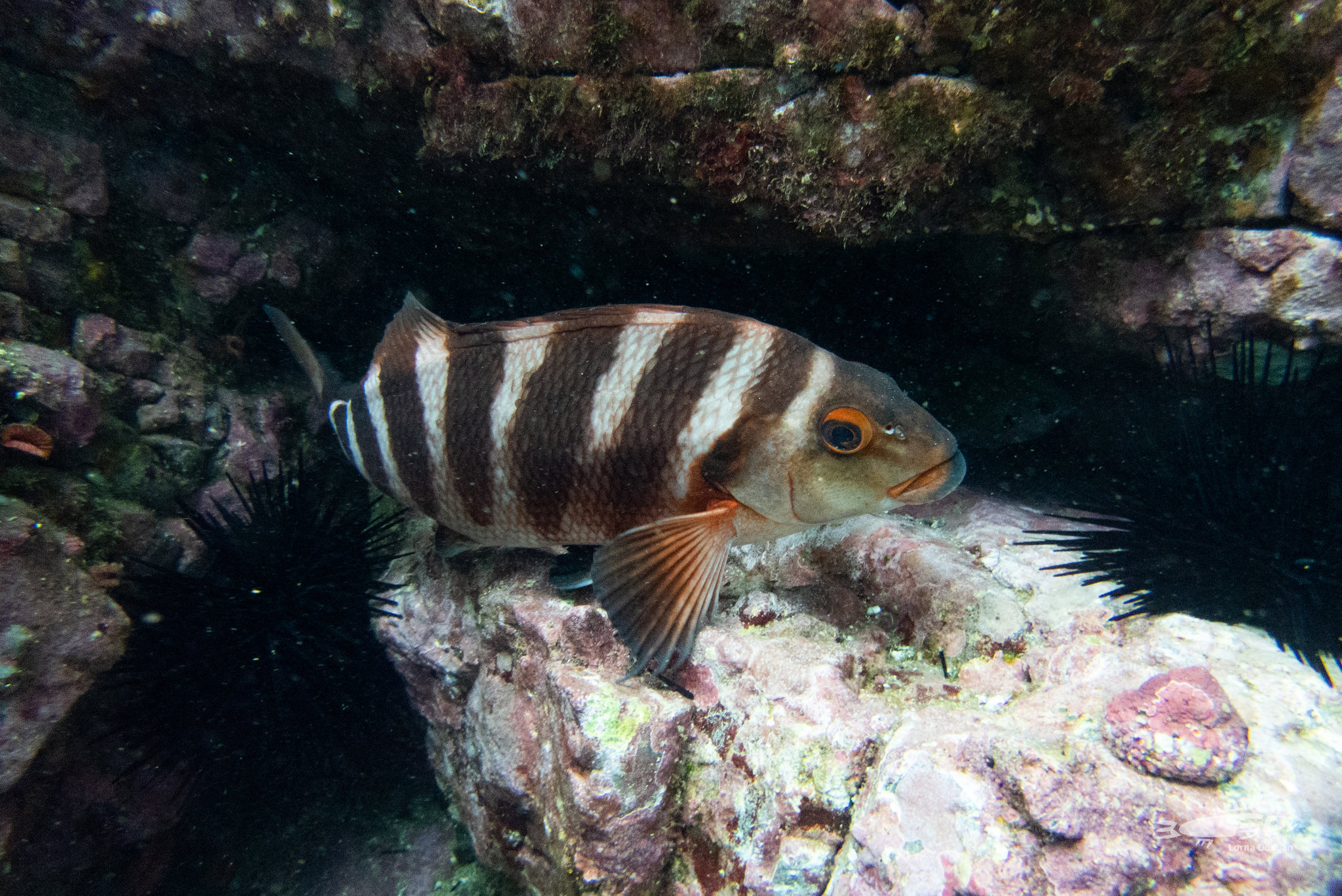
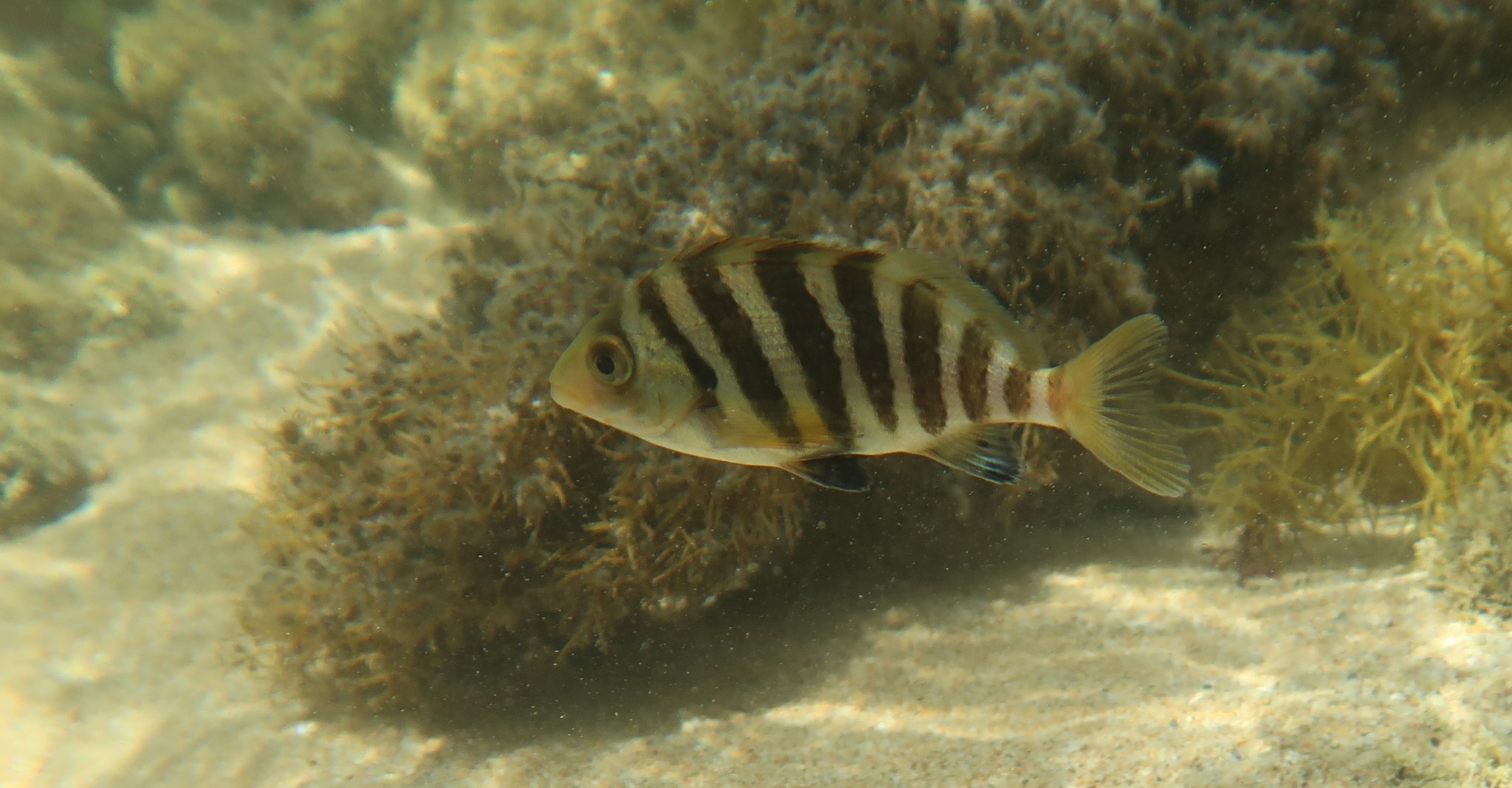
The Largest of the Morwong species the Banded morwong has dark brick red to brown bars on a lighter background, and usually with red or orange around the eye, pectoral fin base and lips. Individuals in deeper water or at night can sometimes 'turn off' some of the bars and appear mostly pale.
Common Name Banded Morwong
Aliases Brown Banded Morwong, Nanua, Red Moki, sea carp,
Origin Native
Share
Distribution and map

Distribution provided by The Atlas of Living Australia

Classification
Synonyms

Synonyms

There are no known synonyms for this species
References and dates
Original No original text available
Bibliography View page references
Added Fri 22 May 2020 @ 00:00 AM
Updated Tue 16 Nov 2021 @ 23:00 PM
Files
Type Details Version Size Added Updated Links
There are no downloads or Files for this species at the moment

Disclaimer: A lot of work goes into trying to identify and ensure accurate identifications are made, and that the listed Descriptions, Sizes, Habitats and Distribution information is as accurate and valid as possible. Unfortunately, information in this arena is ever changing and as such no guarantee can be offered that it is correct or currently valid — the information is provided as a guide, and it is always suggested that you do a little research to ensure you have the latest and most accurate information. View the references or bibliography. Feedback and comments on the information provided are always welcome.