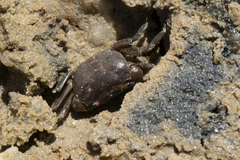
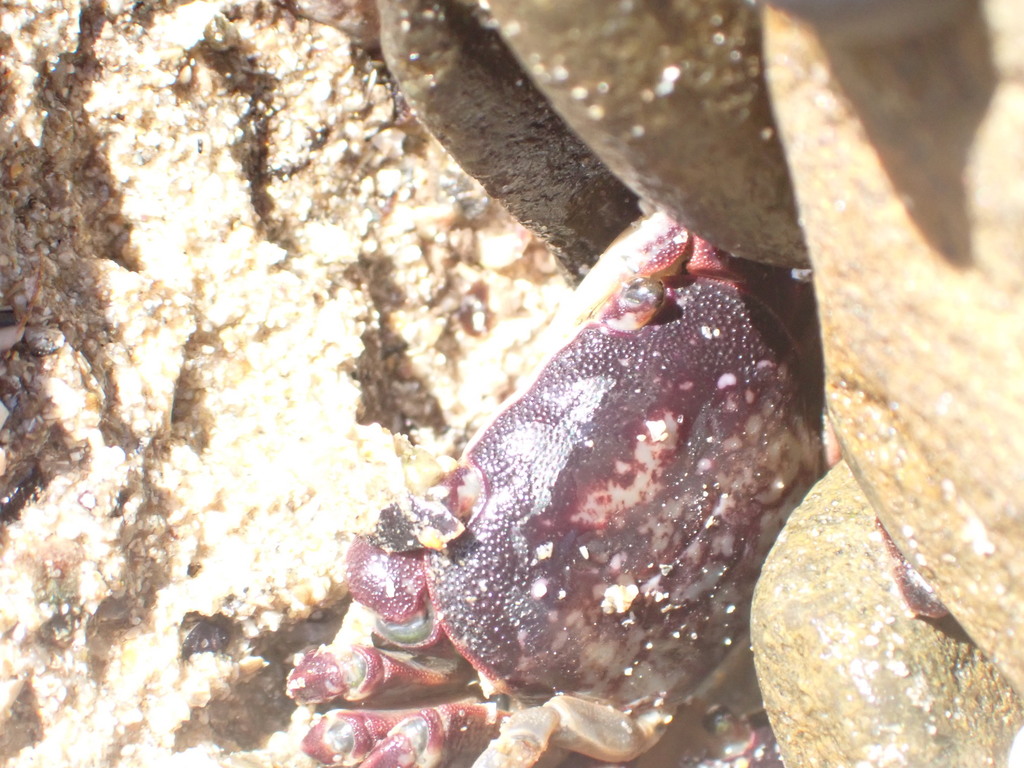
These shore crabs can survive out of the water for several hours. As scavengers this species feeds on decaying seaweeds and other sea life along the shorelines and are often found under rocks at low tide scurrying for cover when disturbed.
This genus (Cyclograpsus) of crabs shares a lot of the same characteristics making it harder to identify them from each other the fact they do hybridise with each other also makes it harder to ID them.
At a glance
Purple-mottled Shore Crab at a glance
Habitat
Under rocks at mid to high intertidal levels
Size
Grows up to around 4cm
Origin
Native
Distribution
South-eastern Australia
Descriptions
Distribution
South-eastern Australia
Habitat
Under rocks at mid to high intertidal levels
Size
Grows up to around 4cm
Identification
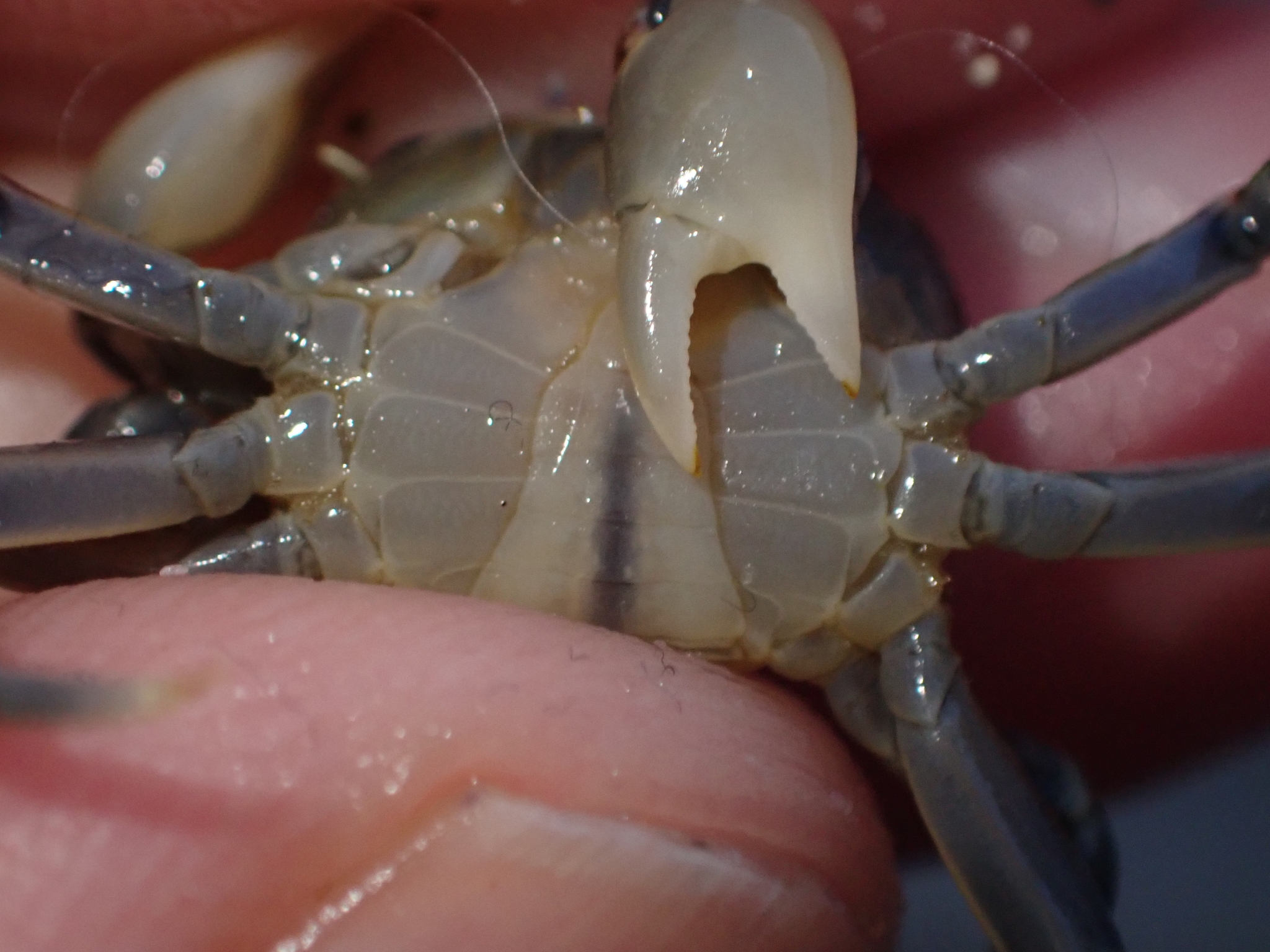
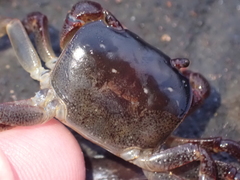
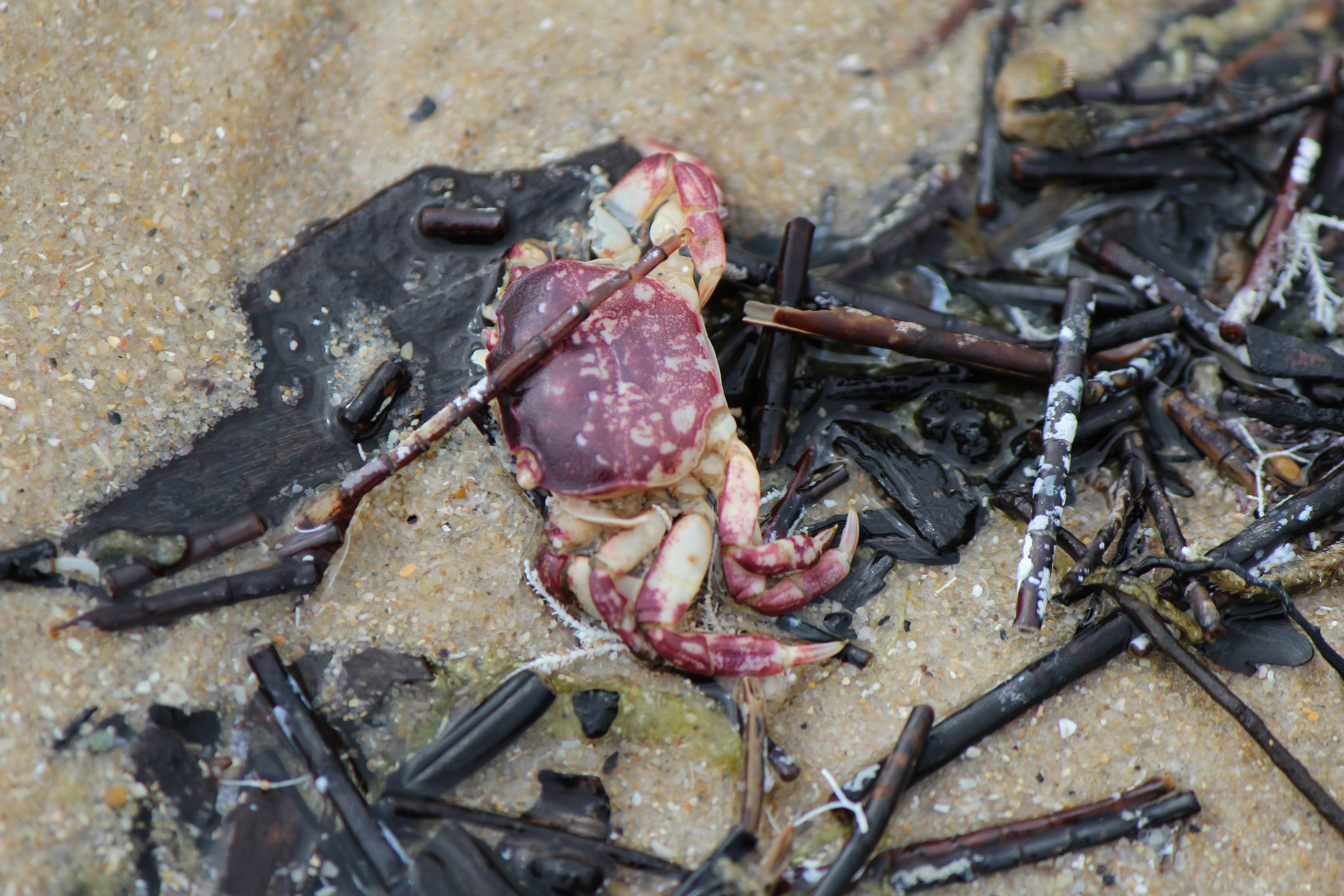
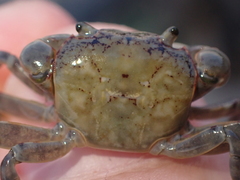
With this species the carapace does not have any notches and varies greatly with colours from that mottled purple to dark reds, oranges and greys much like Cyclograpsus audouinii.
That being said the name for this species gives some indication of how to identify them and one key characteristic is the granulation along the front of the carapace basically the front of this crabs shell is more rough than Cyclograpsus audouinii This crab also lacks the dense tufts of hairs or setae between the base of the legs.
That being said the name for this species gives some indication of how to identify them and one key characteristic is the granulation along the front of the carapace basically the front of this crabs shell is more rough than Cyclograpsus audouinii This crab also lacks the dense tufts of hairs or setae between the base of the legs.




Distribution and map
Distribution provided by The Atlas of Living Australia
Classification
Classification
KingdomAnimalia
PhylumArthropoda
SubphylumCrustacea
SuperclassMulticrustacea
ClassMalacostraca
SubclassEumalacostraca
SuperorderEucarida
OrderDecapoda
SuborderPleocyemata
InfraorderBrachyura
SectionEubrachyura
SuperfamilyGrapsoidea
FamilyVarunidae
SubfamilyCyclograpsinae
GenusCyclograpsus
SpeciesCyclograpsus granulosus
Synonyms
Synonyms
There are no known synonyms for this species
References and dates
Original
No original text available
Bibliography
View page references
Added
Sun 5 Jul 2020 @ 00:00 AM
Updated
Mon 22 Apr 2024 @ 00:00 AM
Surveys
View Survey List
Photos




Files
External Links
4 External Links
View External
Links
Disclaimer: A lot of work goes into trying to identify and ensure accurate identifications are made, and that the listed Descriptions, Sizes, Habitats and Distribution information is as accurate and valid as possible. Unfortunately, information in this arena is ever changing and as such no guarantee can be offered that it is correct or currently valid — the information is provided as a guide, and it is always suggested that you do a little research to ensure you have the latest and most accurate information. View the references or bibliography. Feedback and comments on the information provided are always welcome.
From Our Tasmania · https://ourtasmania.au/species-guide/view-species/cyclograpsus-granulosus/