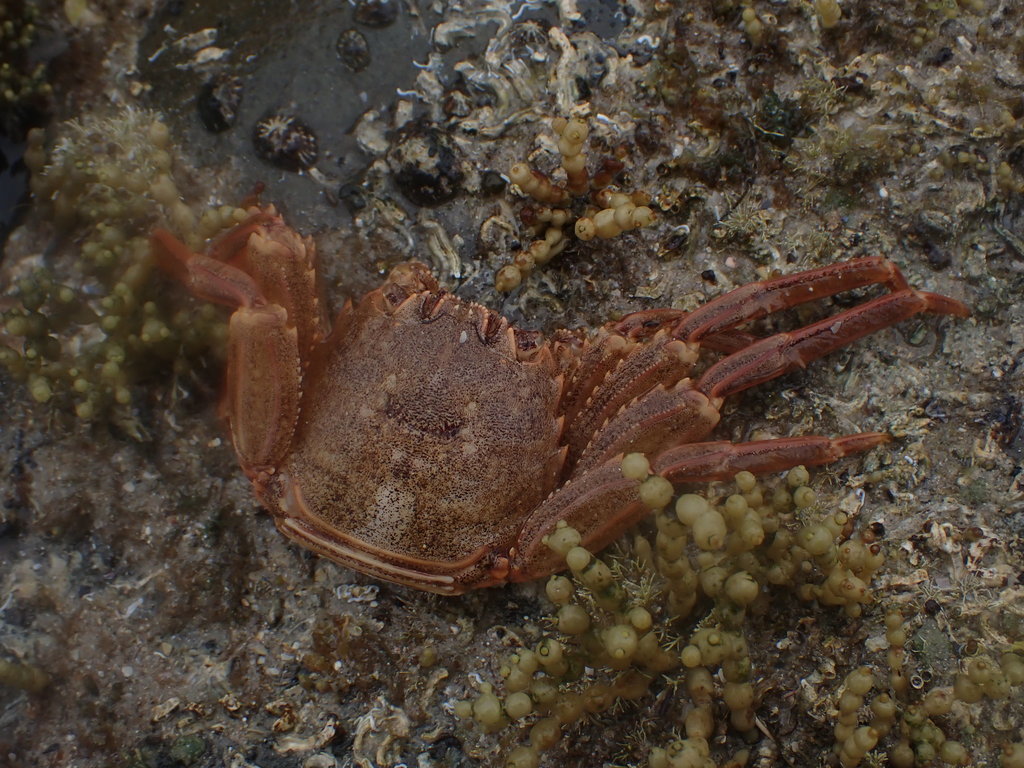
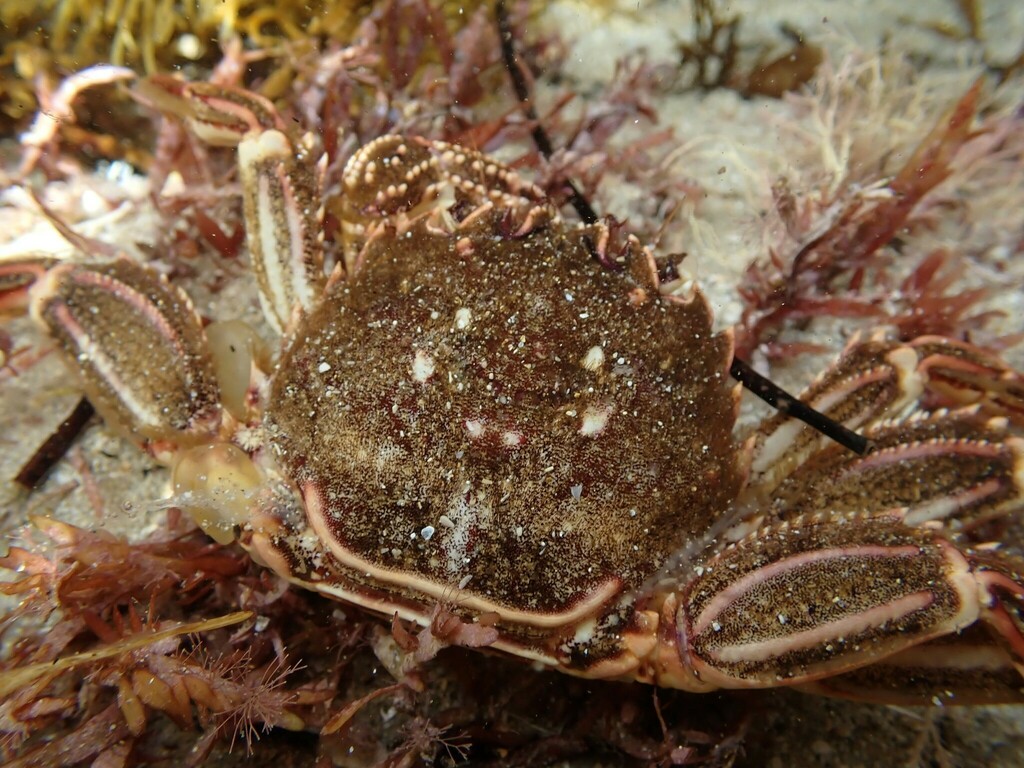
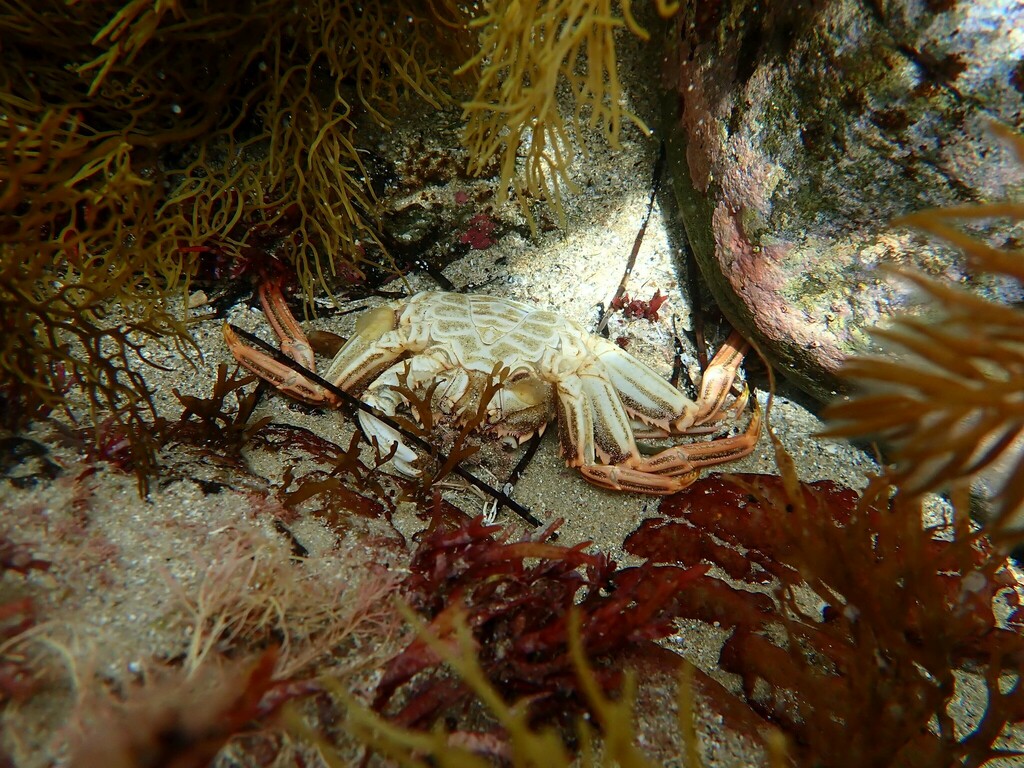
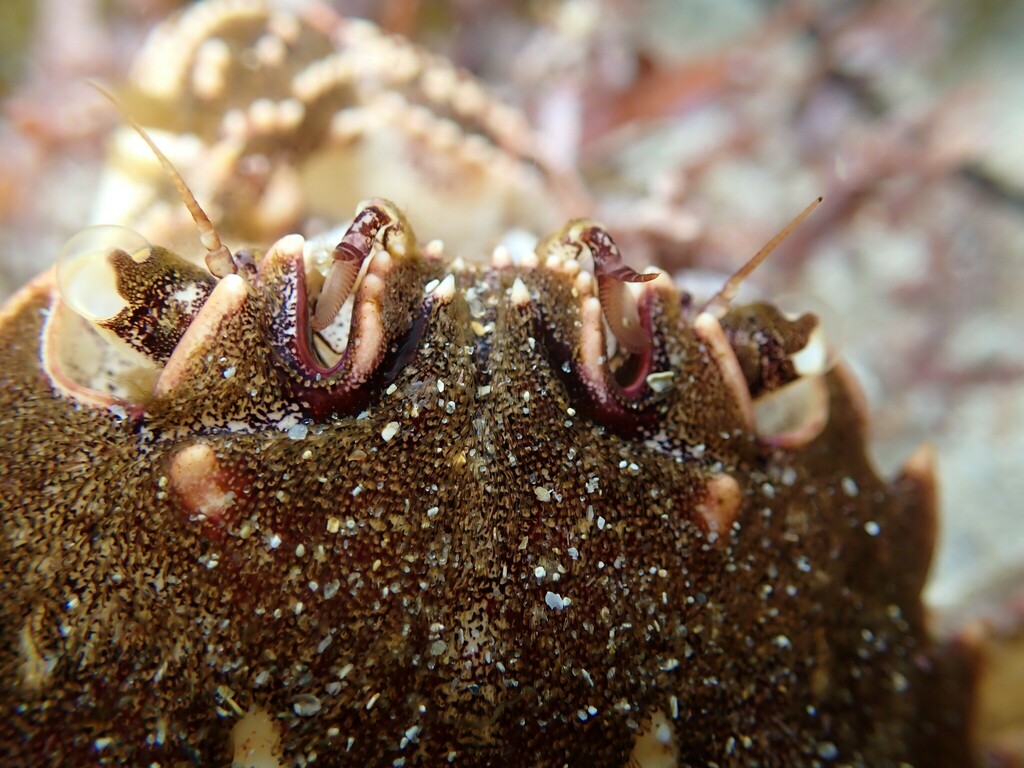
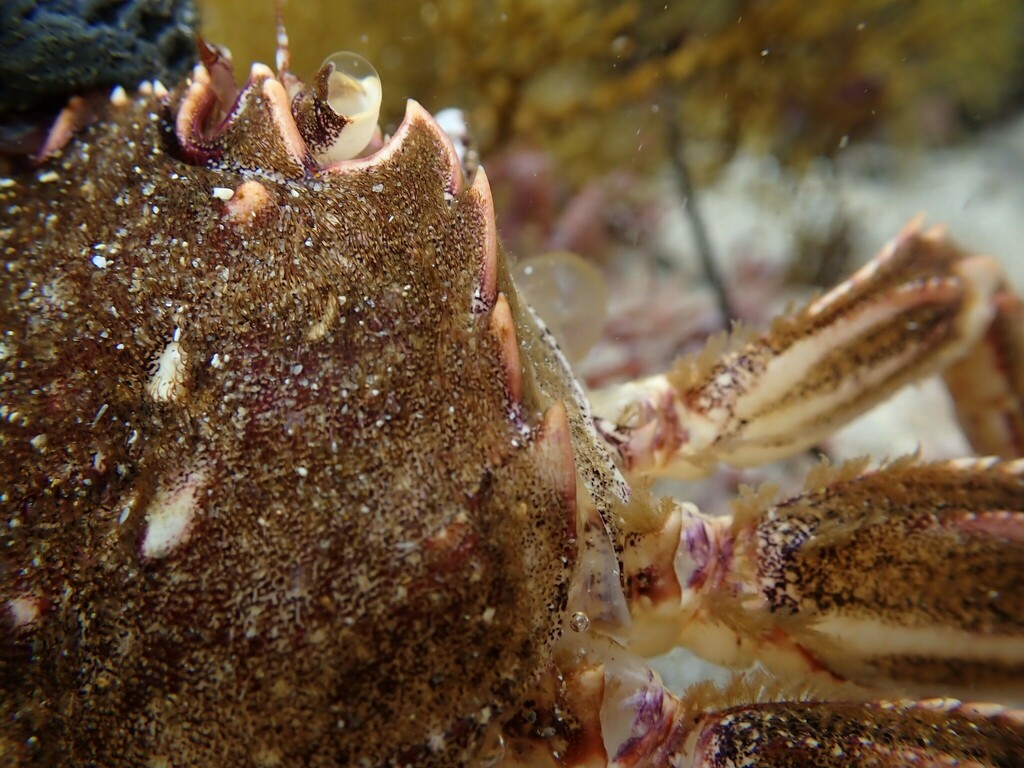
This crab is common along subtidal reefs and in rocky crevices. Living along exposed coasts these are fast moving crabs dodging waves as they move through the kelps and sea squirts they live and feed amongst.

At a glance

Red Rock Crab at a glance

Habitat Can be found on reefs or in rock crevices, under rocks at the low tide level out to depths of around 50m or more
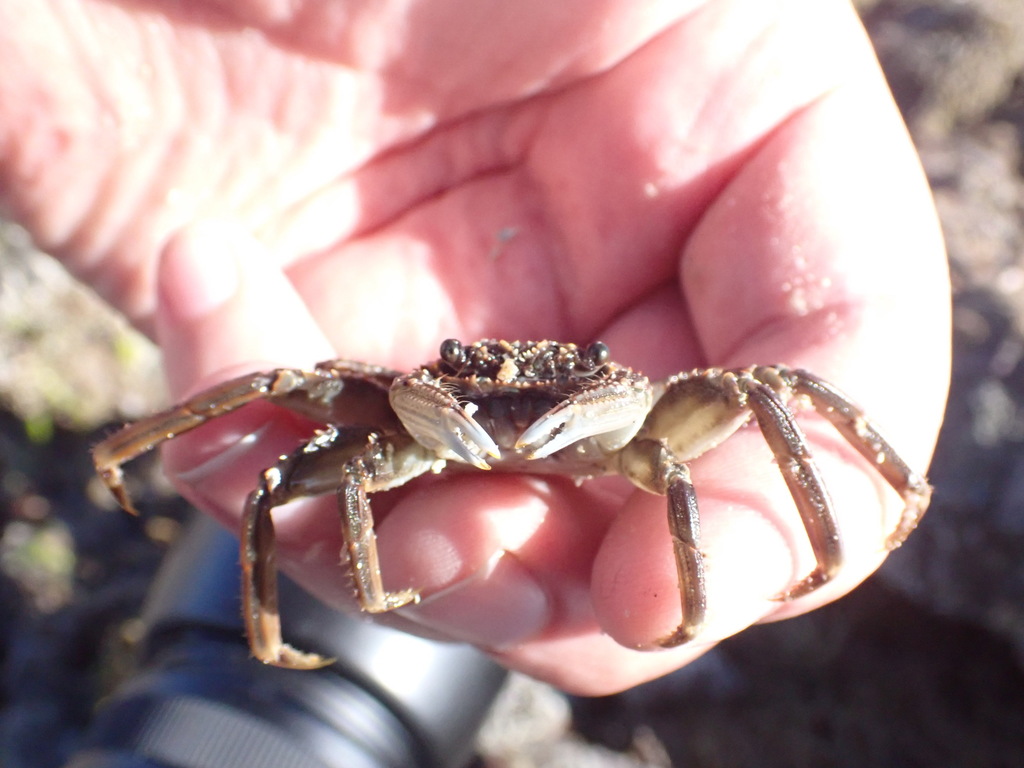
Size Can grow to around 70mm across the carapace
Origin Native
Distribution Southern Indian and Southern Pacific Oceans, including South Africa, New Zealand, and Chile in Australia it is found in southern temperate waters including around Tasmania
Descriptions
Distribution
Southern Indian and Southern Pacific Oceans, including South Africa, New Zealand, and Chile in Australia it is found in southern temperate waters including around Tasmania
Habitat
Can be found on reefs or in rock crevices, under rocks at the low tide level out to depths of around 50m or more
Size
Can grow to around 70mm across the carapace

Identification

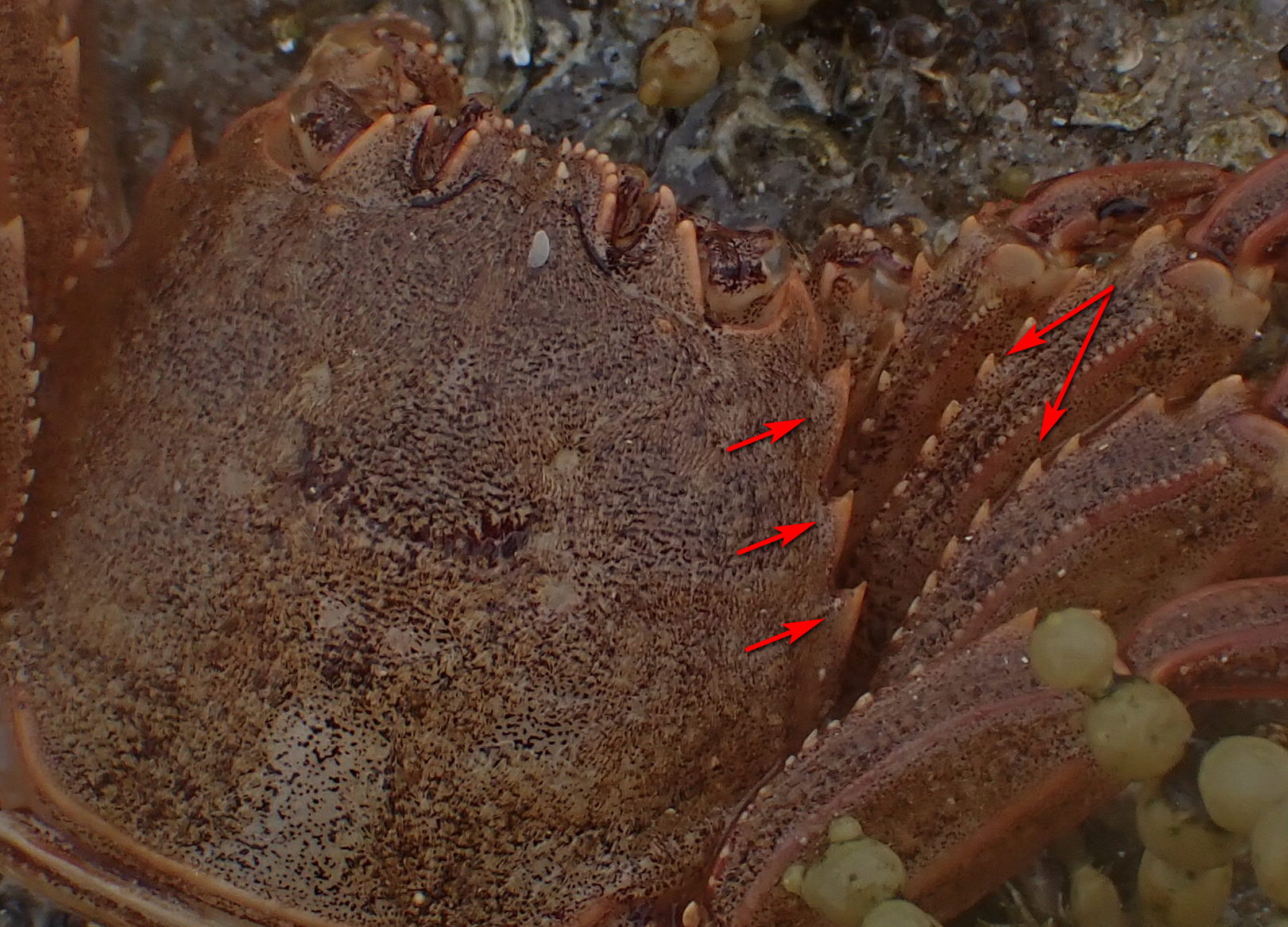
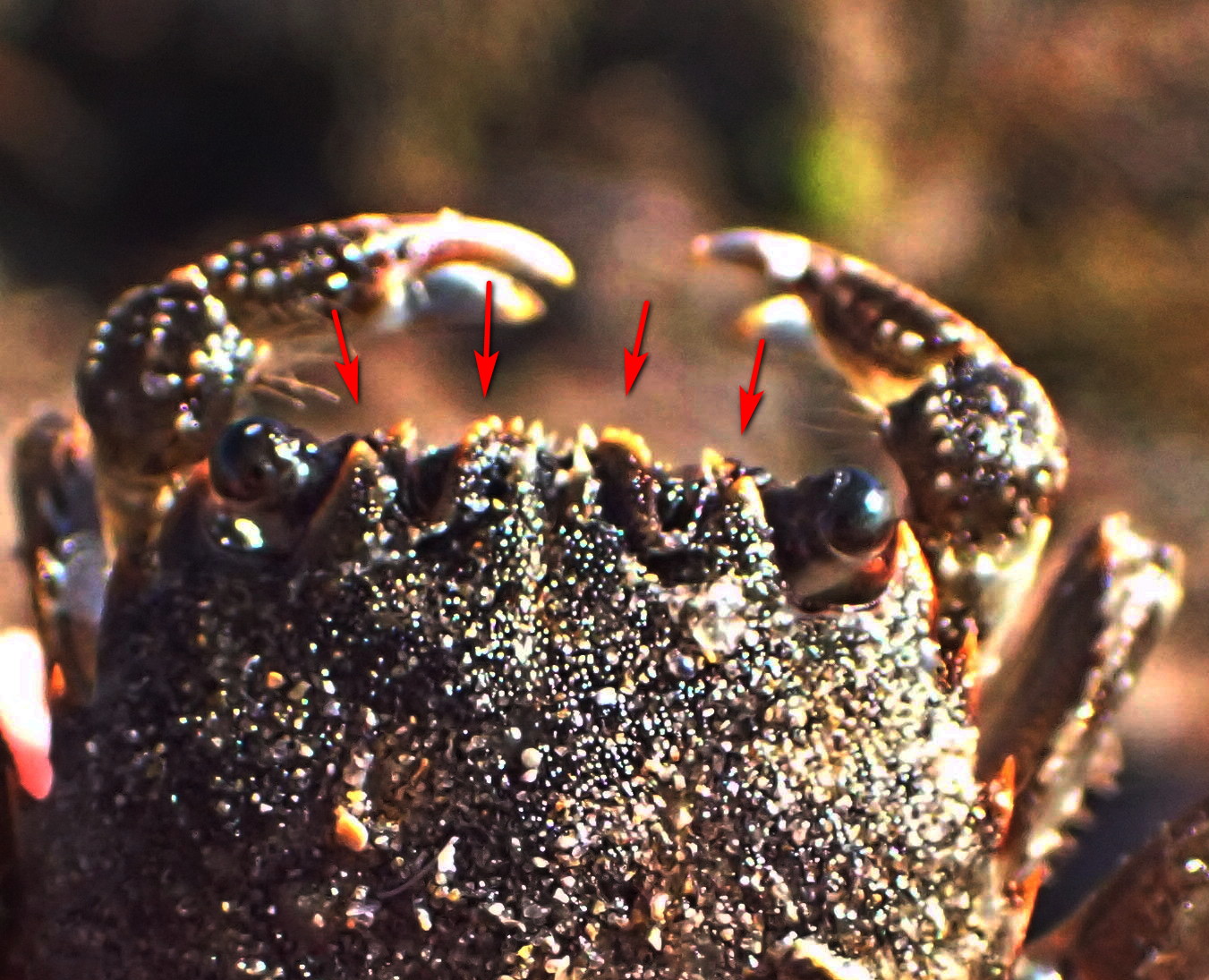
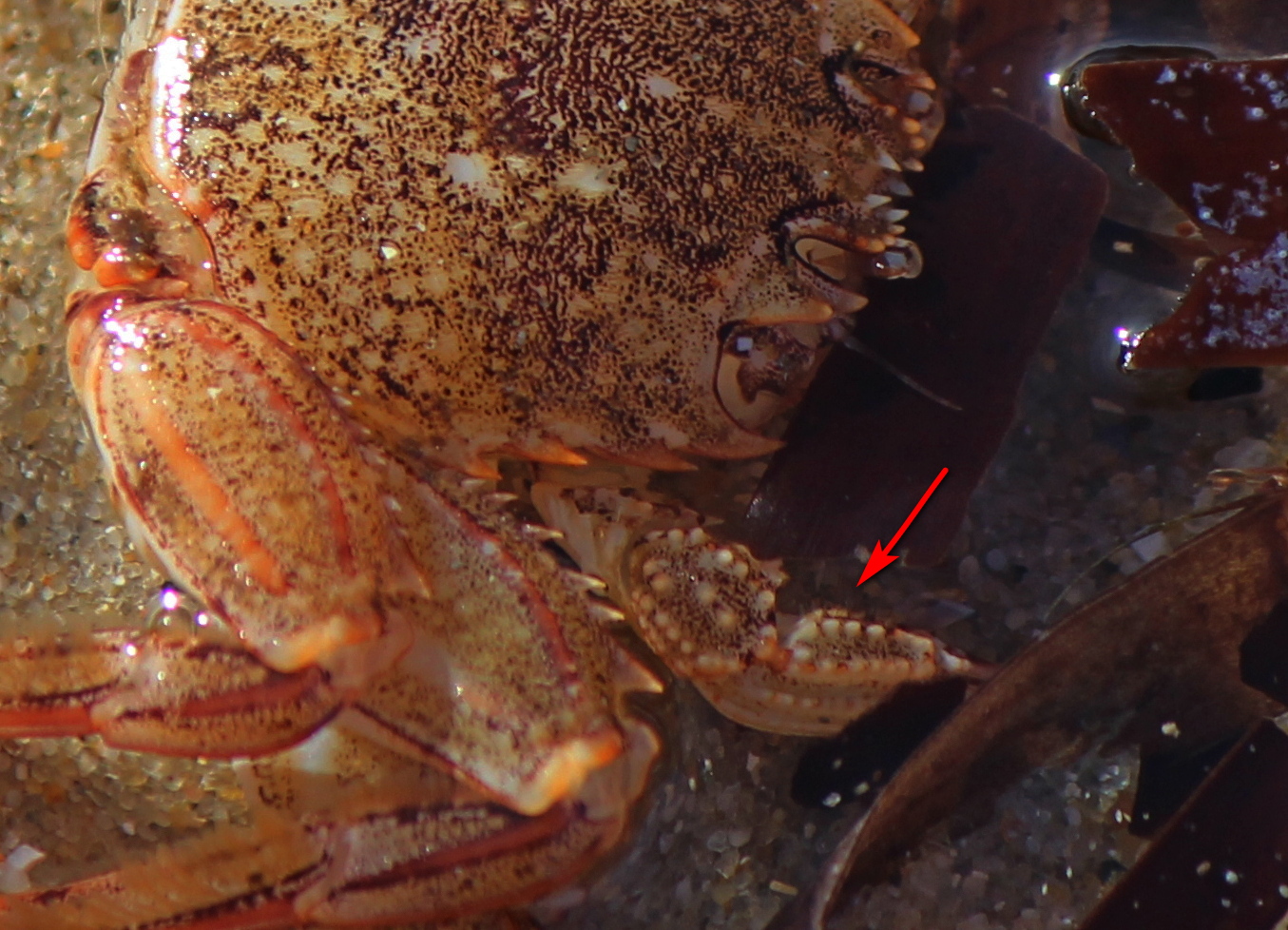
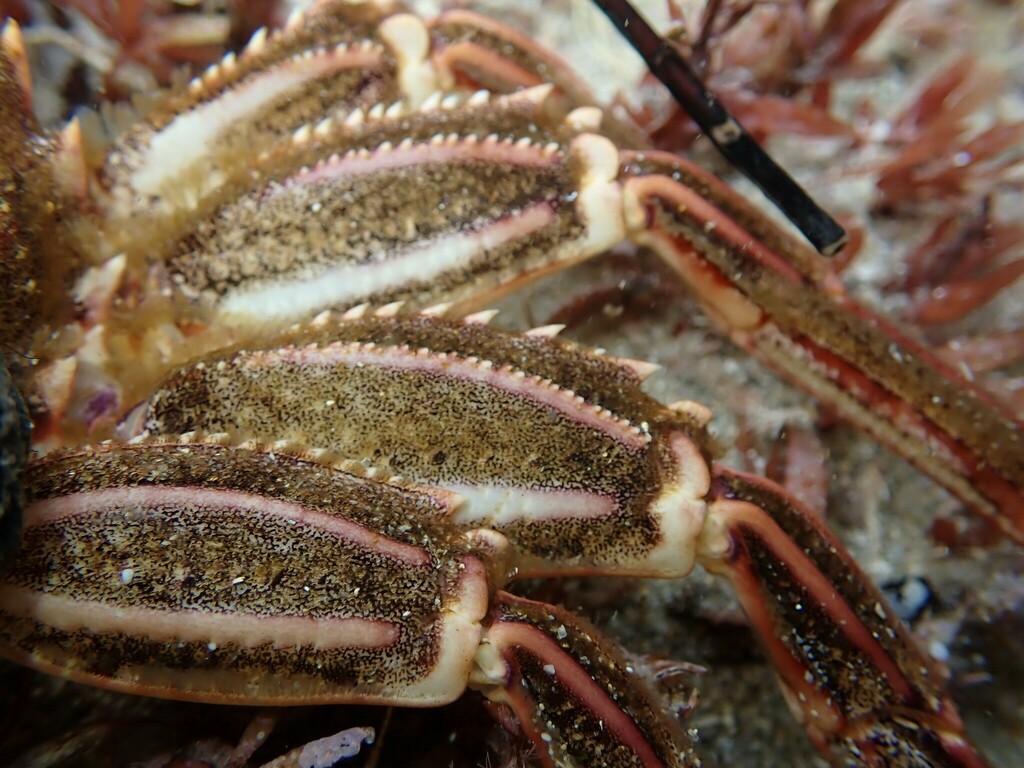
Colour ranging from reds to browns covered with small dense hairs has a squarish shape to the body (carapace) with four defined notches across the front the eyes feature between two of those outside notches, the side of the carapace has three spike-like triangular notches. The legs feature a series of outward angled spikes on the section closet to the body, whilst the claws feature a couple of rows light coloured knobs.
Common Name Red Rock Crab
Aliases Cleft-Fronted Shore Crab,
Origin Native
Share
Distribution and map

Distribution provided by The Atlas of Living Australia

Classification

Classification

KingdomAnimalia
SubphylumCrustacea
SuperclassMulticrustacea
SuperorderEucarida
SuborderPleocyemata
InfraorderBrachyura
SuperfamilyGrapsoidea
Synonyms

Synonyms

There are no known synonyms for this species
References and dates
Original No original text available
Bibliography View page references
Added Mon 15 Jun 2020 @ 00:00 AM
Updated Mon 22 Apr 2024 @ 00:00 AM
Files
Type Details Version Size Added Updated Links
There are no downloads or Files for this species at the moment

Disclaimer: A lot of work goes into trying to identify and ensure accurate identifications are made, and that the listed Descriptions, Sizes, Habitats and Distribution information is as accurate and valid as possible. Unfortunately, information in this arena is ever changing and as such no guarantee can be offered that it is correct or currently valid — the information is provided as a guide, and it is always suggested that you do a little research to ensure you have the latest and most accurate information. View the references or bibliography. Feedback and comments on the information provided are always welcome.