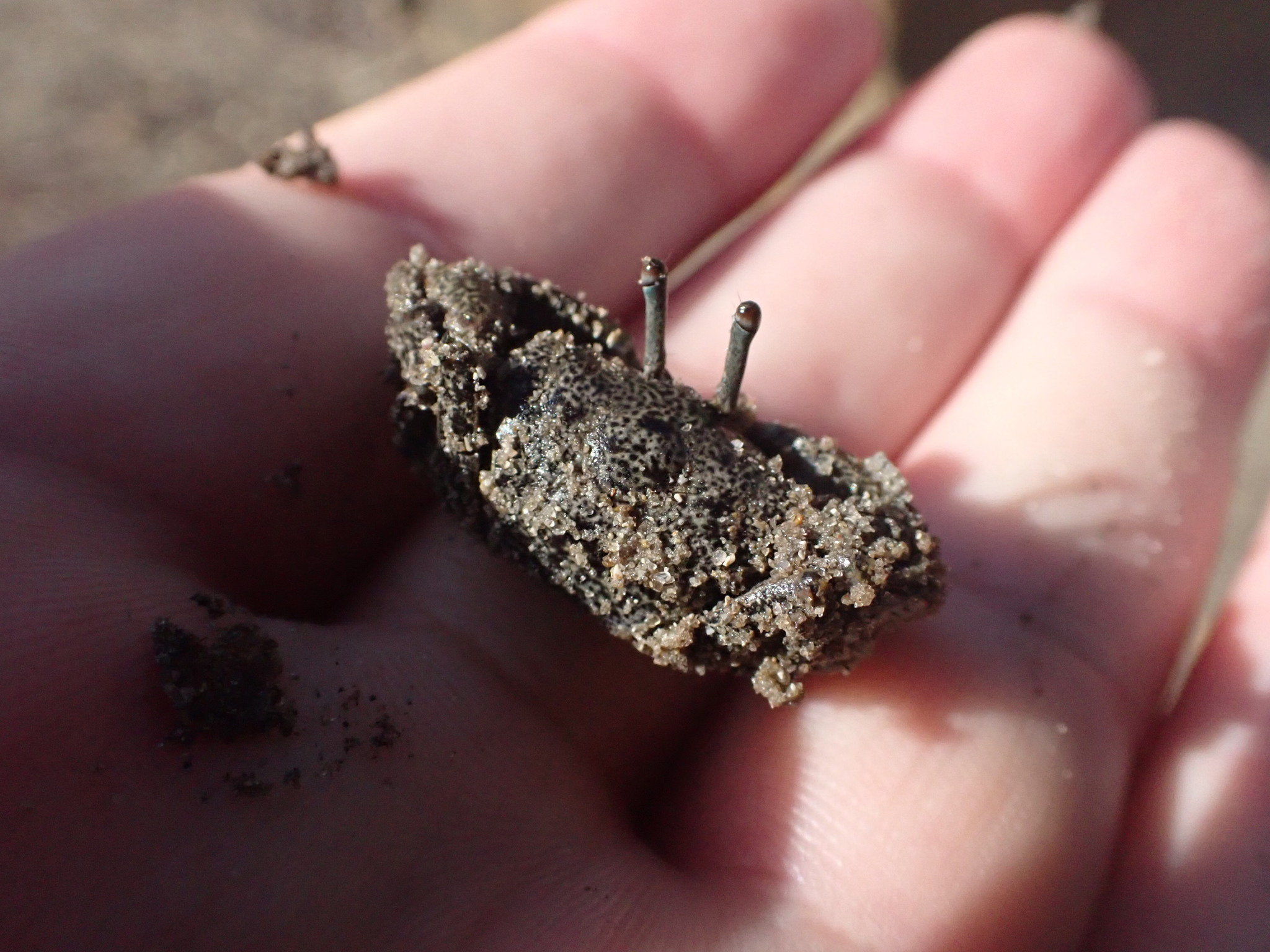
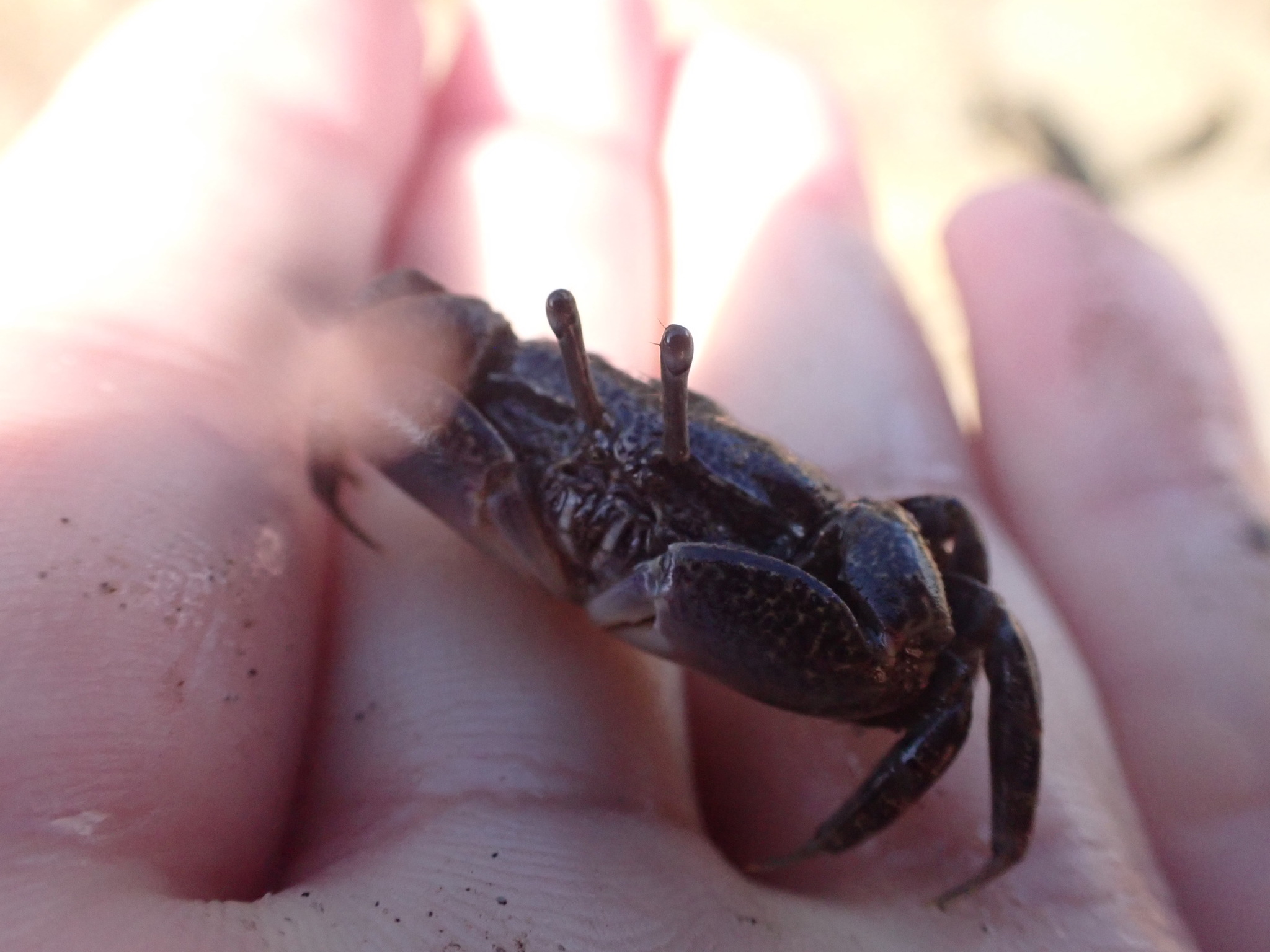
This crab named after their behaviour of waving their twisted claws in the air to communicate with other crabs. The only species in this genus and family they are identified by their shape being wide across the carapace and narrow in length, the carapace is a mottled dark colour whilst their claws vary with age and sex. The juvenile crabs having a greenish claw that changes to orange and pink and finally mature males with purple claws.
The crabs emerge from their burrows during low tide to feed detritus in the sediment of the mud flats and river banks where they live often swarming in numbers over the mud only to disappear when they sense nearby movement or disturbances.
At a glance
Semaphore Crab at a glance
Habitat
In burrows on intertidal mudflats and swamp areas
Size
Can grow up to around 3cm
Origin
Native
Distribution
Along the east coast of Australia including around Tasmania
Descriptions
Distribution
Along the east coast of Australia including around Tasmania
Habitat
In burrows on intertidal mudflats and swamp areas
Size
Can grow up to around 3cm
Distribution and map
Distribution provided by The Atlas of Living Australia
Classification
Classification
KingdomAnimalia
PhylumArthropoda
SubphylumCrustacea
SuperclassMulticrustacea
ClassMalacostraca
SubclassEumalacostraca
SuperorderEucarida
OrderDecapoda
SuborderPleocyemata
InfraorderBrachyura
SectionEubrachyura
SuperfamilyOcypodoidea
FamilyHeloeciidae
GenusHeloecius
SpeciesHeloecius cordiformis
Synonyms
Synonyms
There are no known synonyms for this species
References and dates
Original
No original text available
Bibliography
View page references
Added
Thu 27 Aug 2020 @ 00:00 AM
Updated
Tue 23 Apr 2024 @ 00:00 AM
Surveys
View Survey List
Photos


Files
External Links
3 External Links
View External
Links
Disclaimer: A lot of work goes into trying to identify and ensure accurate identifications are made, and that the listed Descriptions, Sizes, Habitats and Distribution information is as accurate and valid as possible. Unfortunately, information in this arena is ever changing and as such no guarantee can be offered that it is correct or currently valid — the information is provided as a guide, and it is always suggested that you do a little research to ensure you have the latest and most accurate information. View the references or bibliography. Feedback and comments on the information provided are always welcome.
From Our Tasmania · https://ourtasmania.au/species-guide/view-species/heloecius-cordiformis/