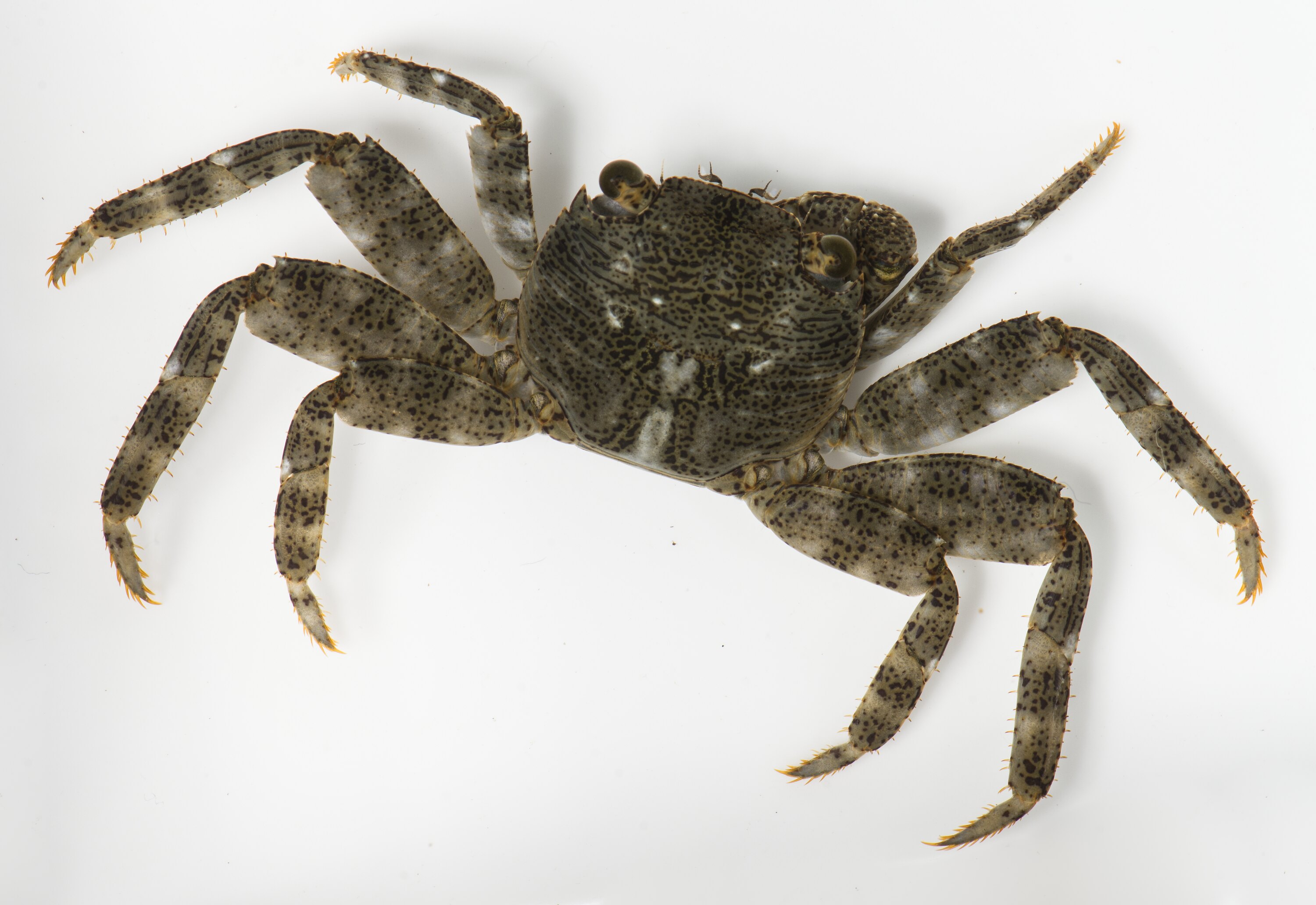
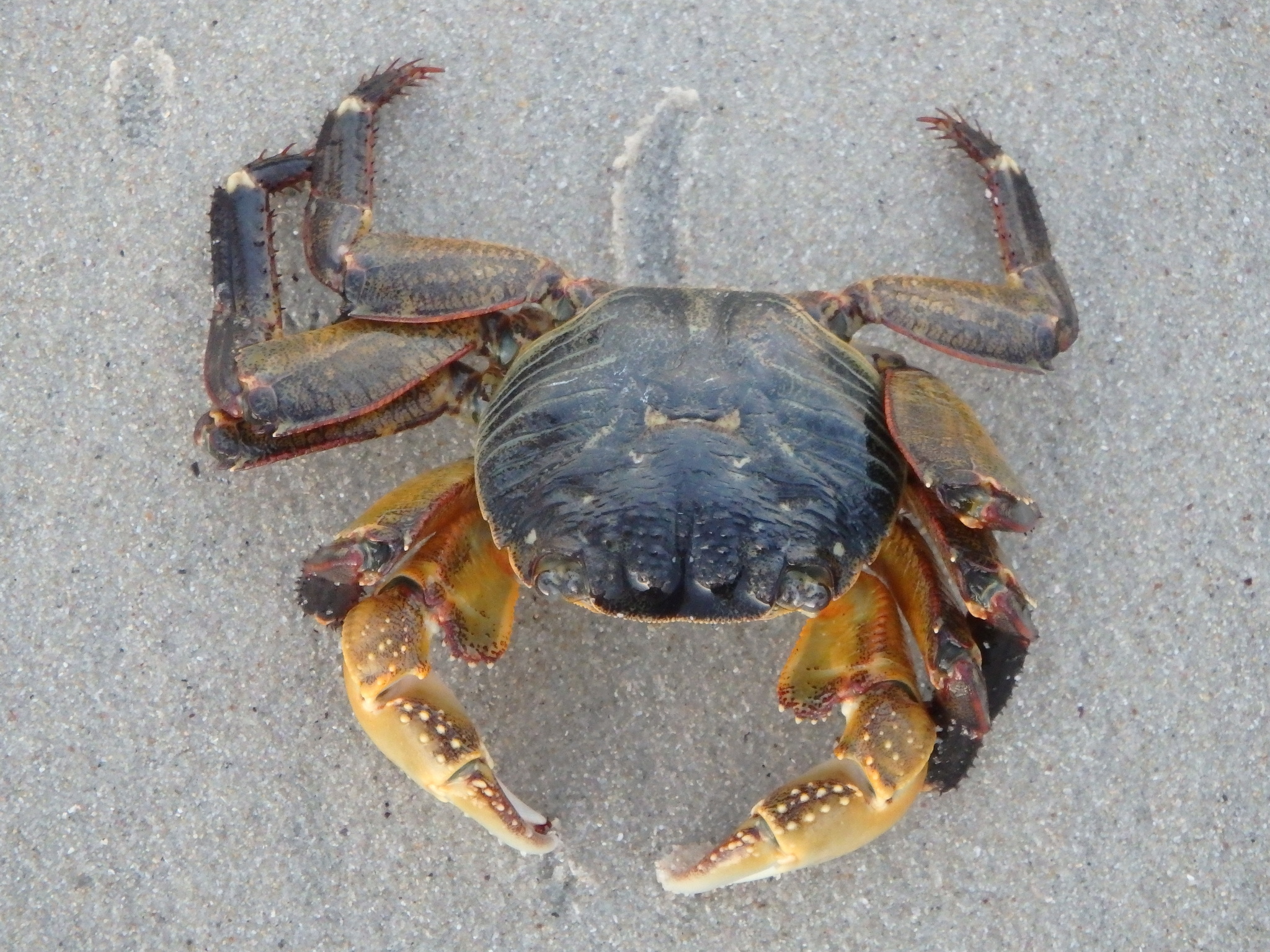
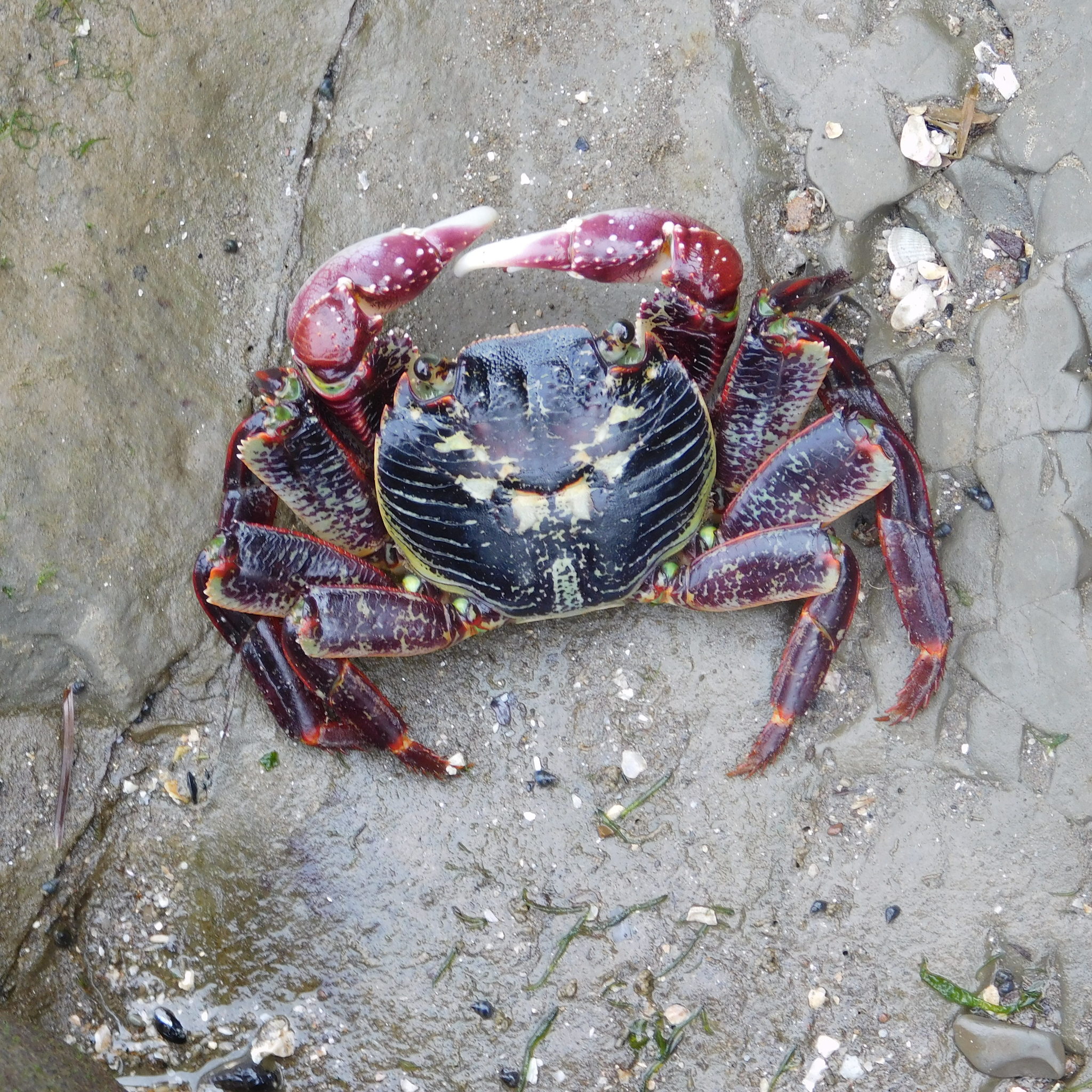
This swift moving and distinctive crab normally disapears quicky before you can even see it. This crab is often disticively purple and whilst colour variations do occur the pruple colour is more common.
The carapace features two notches behind the eye and eight or more ridges on the top sides, the legs are some what flattened with a spines near the joint. The claws commonly purple above and whit below.
During the day they are well hidden in the crevices coming out at night scurrying over rocks feeding one of the largest of the Australian shore crabs they move quickly and hold on tight in their hidding places making them hard to catch.
At a glance
Swift-footed Shore Crab at a glance
Habitat
Can be found on rocky shores at mid to high levels levels in rock crevices and cracks or under rocks.
Size
Can grow to around 50mm across the carapace
Origin
Native
Distribution
Australian coasts including around Tasmania, also found in New Zealand
Descriptions
Distribution
Australian coasts including around Tasmania, also found in New Zealand
Habitat
Can be found on rocky shores at mid to high levels levels in rock crevices and cracks or under rocks.
Size
Can grow to around 50mm across the carapace
Distribution and map
Distribution provided by The Atlas of Living Australia
Classification
Classification
KingdomAnimalia
PhylumArthropoda
SubphylumCrustacea
SuperclassMulticrustacea
ClassMalacostraca
SubclassEumalacostraca
SuperorderEucarida
OrderDecapoda
SuborderPleocyemata
InfraorderBrachyura
SectionEubrachyura
SuperfamilyGrapsoidea
FamilyGrapsidae
SubfamilyGrapsinae
GenusLeptograpsus
SpeciesLeptograpsus variegatus
Synonyms
Synonyms
There are no known synonyms for this species
References and dates
Original
No original text available
Bibliography
View page references
Added
Thu 2 Jul 2020 @ 00:00 AM
Updated
Tue 12 Oct 2021 @ 23:00 PM
Surveys
View Survey List
Photos


Files
External Links
3 External Links
View External
Links
Disclaimer: A lot of work goes into trying to identify and ensure accurate identifications are made, and that the listed Descriptions, Sizes, Habitats and Distribution information is as accurate and valid as possible. Unfortunately, information in this arena is ever changing and as such no guarantee can be offered that it is correct or currently valid — the information is provided as a guide, and it is always suggested that you do a little research to ensure you have the latest and most accurate information. View the references or bibliography. Feedback and comments on the information provided are always welcome.
From Our Tasmania · https://ourtasmania.au/species-guide/view-species/leptograpsus-variegatus/