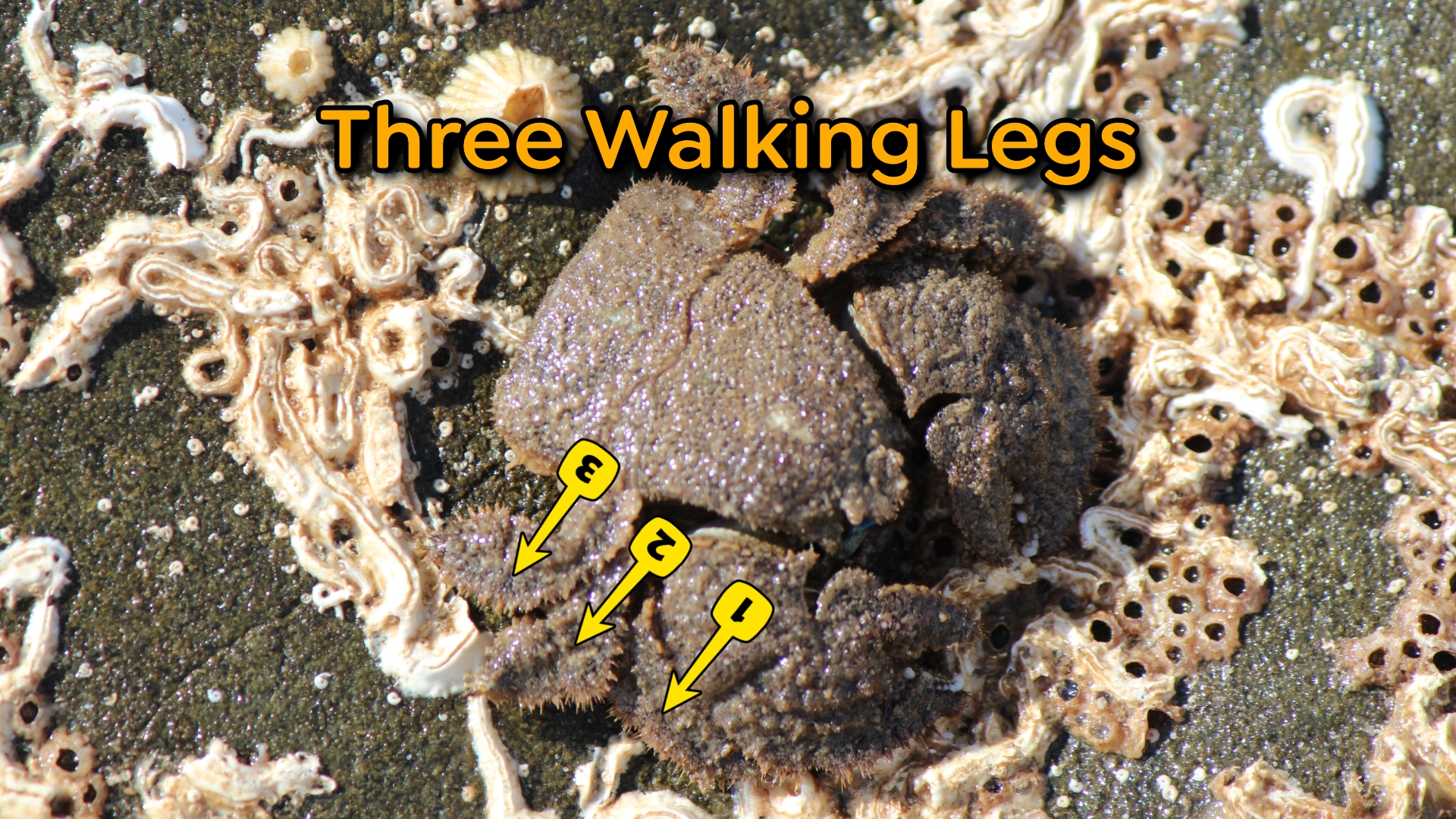
Not considered a true crab and is more closely related to Hermit crabs, it only has the three walking legs besides the claws, this species is easy to identify due to its shape and features.
The shape and features of this crab allow it to blend in well although hinder its ability to move making slow and hard for them to turn back over if they get on their back.
At a glance
Hairy Stone Crab at a glance
Habitat
Can be found under rocks at intertidal levels on exposed rocky coasts
Size
Can grow to around 30mm across the carapace
Origin
Endemic
Distribution
Southern Australia including around Tasmania.
Descriptions
Distribution
Southern Australia including around Tasmania.
Habitat
Can be found under rocks at intertidal levels on exposed rocky coasts
Size
Can grow to around 30mm across the carapace
Identification
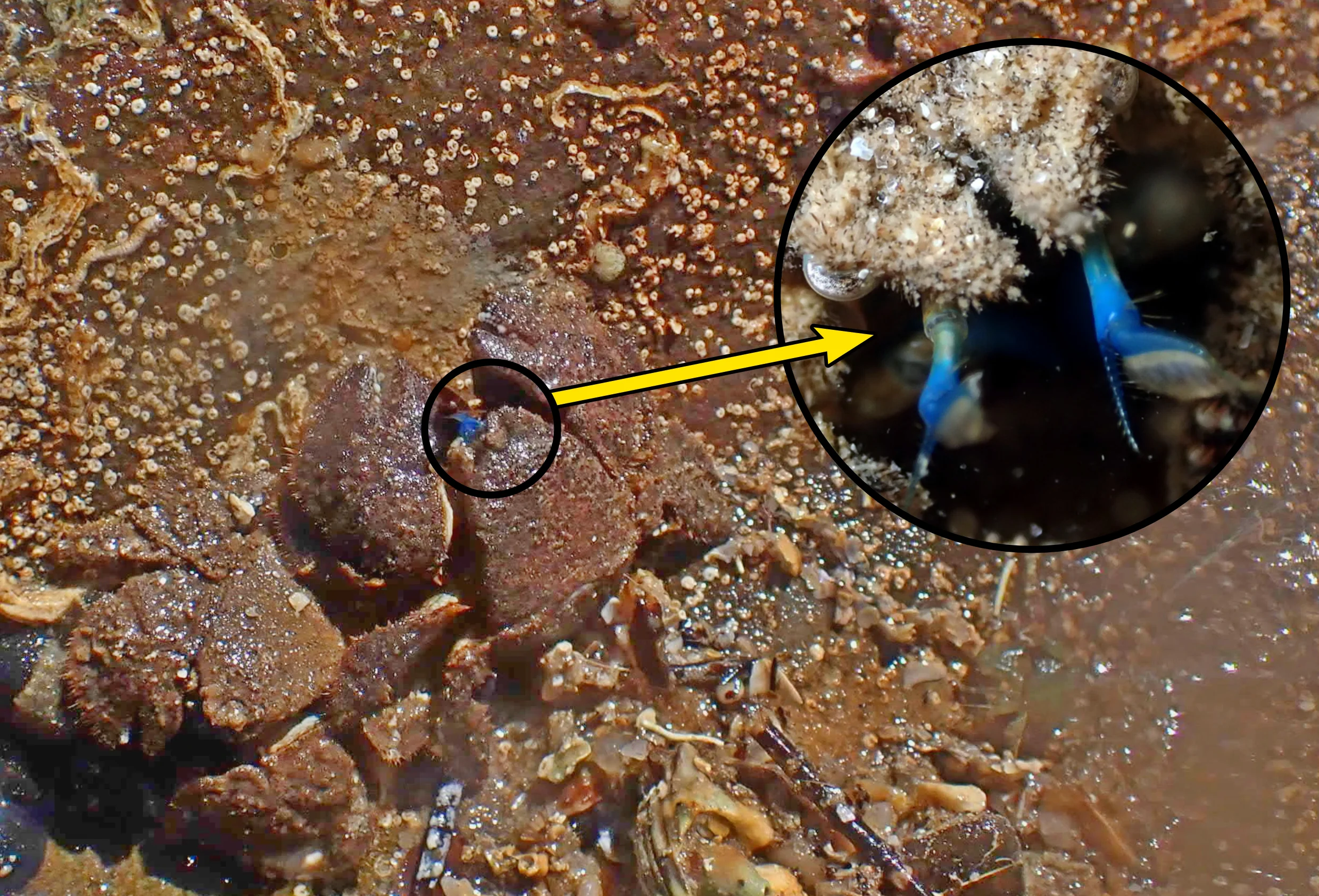
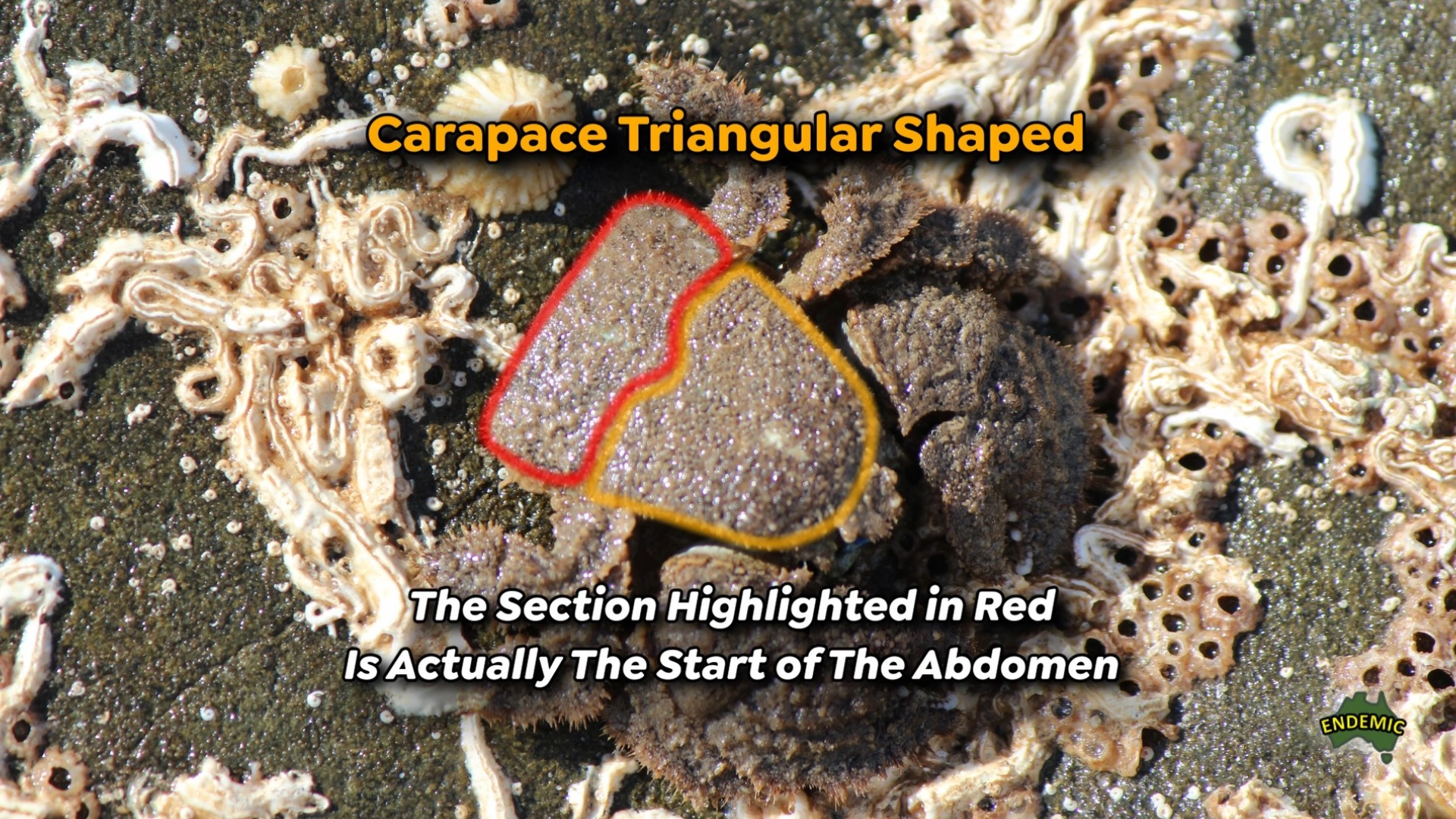
The crab's small hairs, or setae, capture silt and sand, enhancing its camouflage in its habitat. It features a flat, triangular carapace and with only three legs that fit snugly against its body and each other. Its claws (chelae) are large and flattened. While the crab typically blends in well, its bright blue antennae and mouth parts become visible when the claws are spread apart.

Distribution and map
Distribution provided by The Atlas of Living Australia
Classification
Classification
KingdomAnimalia
PhylumArthropoda
SubphylumCrustacea
SuperclassMulticrustacea
ClassMalacostraca
SubclassEumalacostraca
SuperorderEucarida
OrderDecapoda
SuborderPleocyemata
InfraorderAnomura
SuperfamilyLomisoidea
FamilyLomisidae
GenusLomis
SpeciesLomis hirta
Synonyms
Synonyms
Porcellana hirta Lamarck, 1818
References and dates
Original
View Original Descriptions
Bibliography
View page references
Added
Sun 11 Jan 2026 @ 04:10 AM
Updated
Sun 11 Jan 2026 @ 06:22 AM
Surveys
View Survey List
Videos
Photos
No images found for this species
Files
External Links
3 External Links
View External
Links
Disclaimer: A lot of work goes into trying to identify and ensure accurate identifications are made, and that the listed Descriptions, Sizes, Habitats and Distribution information is as accurate and valid as possible. Unfortunately, information in this arena is ever changing and as such no guarantee can be offered that it is correct or currently valid — the information is provided as a guide, and it is always suggested that you do a little research to ensure you have the latest and most accurate information. View the references or bibliography. Feedback and comments on the information provided are always welcome.
From Our Tasmania · https://ot-drk.test/species-guide/view-species/lomis-hirta/