The red-necked wallaby or Bennett's wallaby is a medium-sized macropod marsupial, common in the more temperate and fertile parts of eastern Australia, including Tasmania.
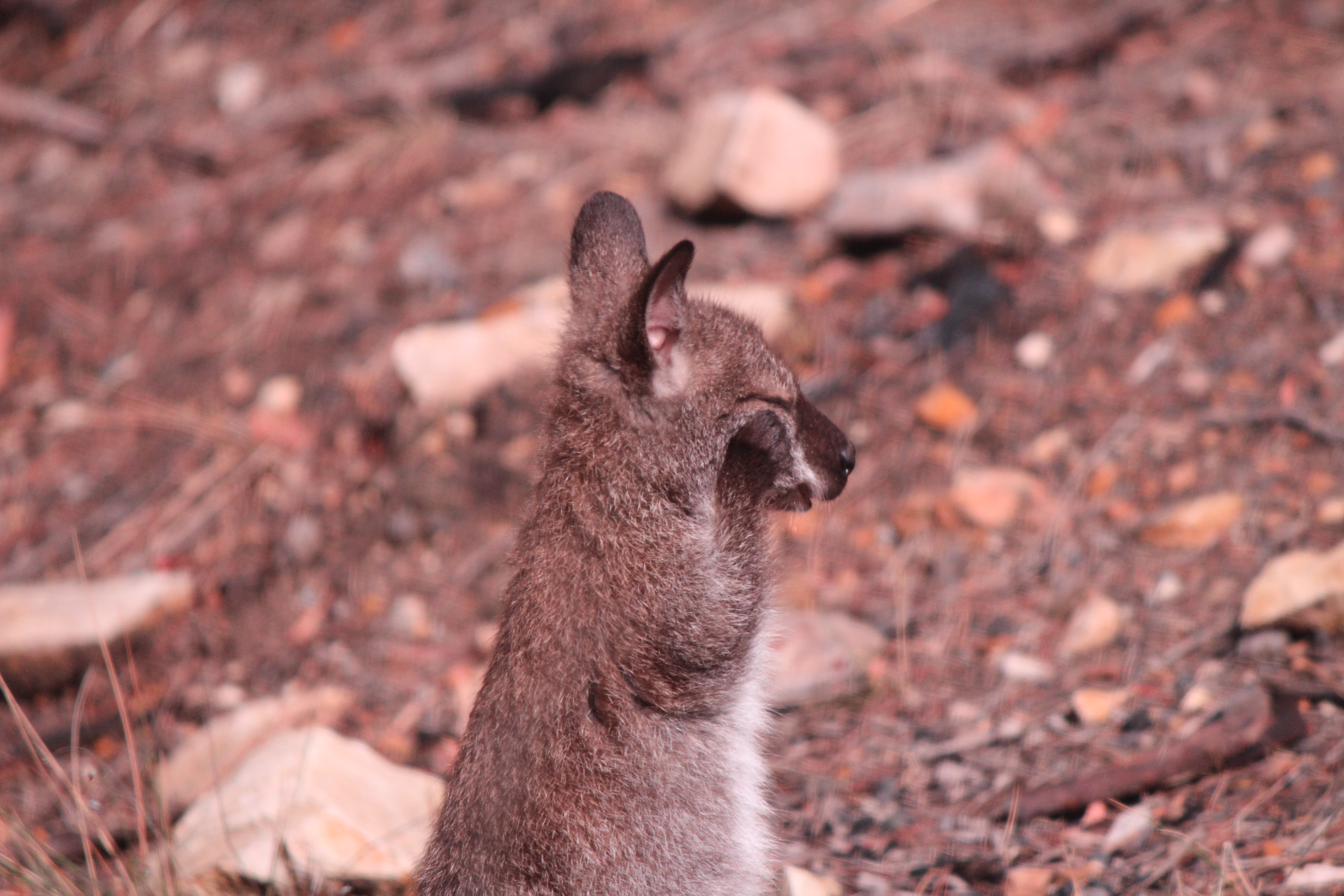
Red-necked wallabies are distinguished by their black nose and paws, white stripe on the upper lip, and grizzled medium grey coat with a reddish wash across the shoulders.
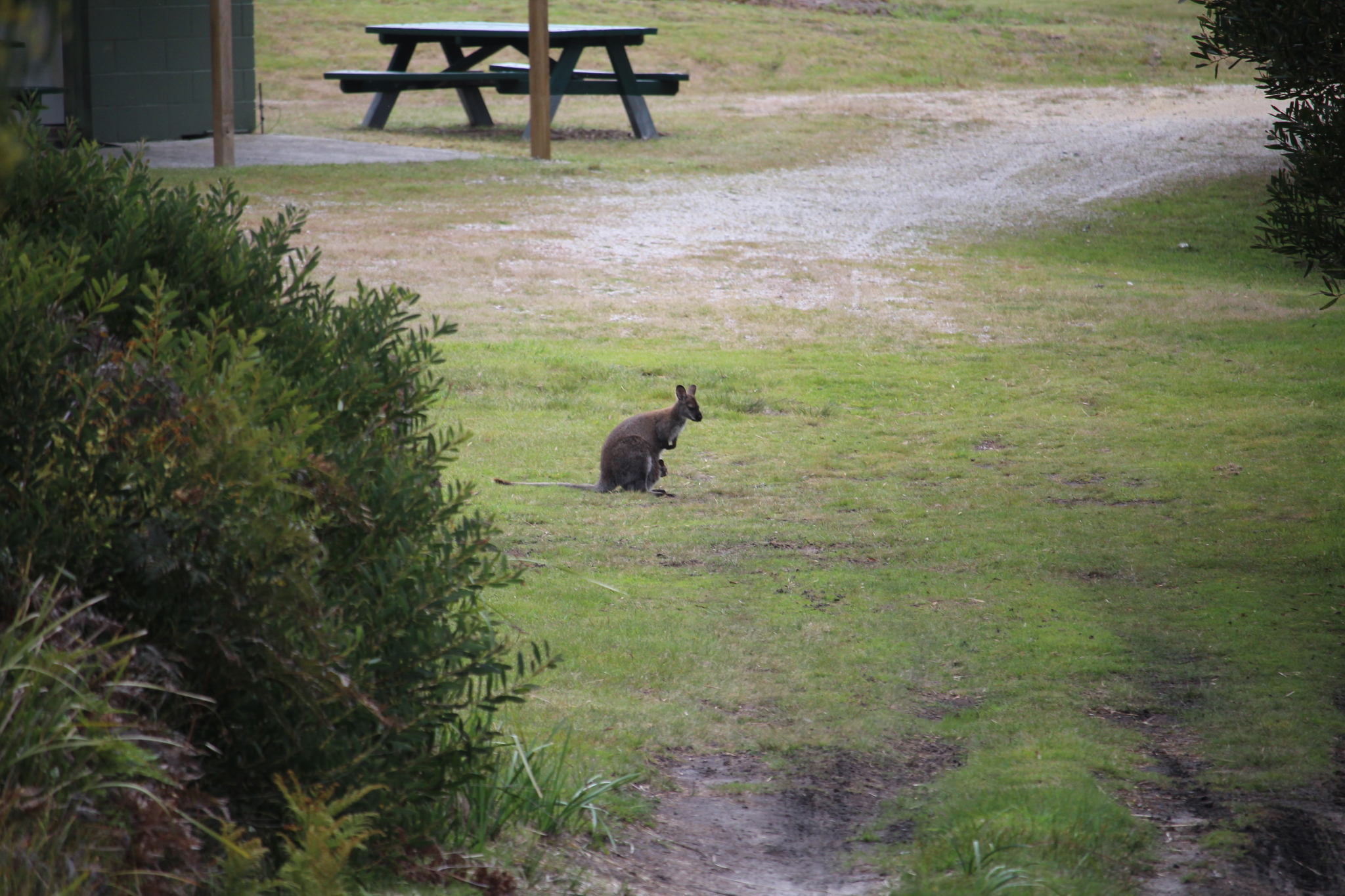
The Tasmanian form, Macropus rufogriseus rufogriseus, usually known as Bennett's wallaby, is smaller (as island subspecies often are), has longer, darker, shaggier fur, and breeds in the late summer, mostly between February and April. They have adapted to living in proximity to humans and can be found grazing on lawns in the fringes of Hobart and other urban areas.
Red-necked wallabies have been introduced to several other countries, including New Zealand, England, Scotland, Ireland, France and the Isle of Man
At a glance
Bennett's wallaby at a glance
Habitat
Red-necked wallabies are found in coastal scrub and sclerophyll forest throughout coastal and highland eastern Australia
Size
They can weigh 13.8 to 18.6 kilograms and attain a head-body length of 90 centimetres
Origin
Endemic
Distribution
From Bundaberg, Queensland to the South Australian border, Tasmania and on many of the Bass Strait islands
Descriptions
Distribution
From Bundaberg, Queensland to the South Australian border, Tasmania and on many of the Bass Strait islands
Habitat
Red-necked wallabies are found in coastal scrub and sclerophyll forest throughout coastal and highland eastern Australia
Size
They can weigh 13.8 to 18.6 kilograms and attain a head-body length of 90 centimetres
Distribution and map
Occurrences shown for the genus Macropus. Distribution provided by The Atlas of Living Australia.
Classification
Classification
KingdomAnimalia
PhylumChordata
SubphylumVertebrata
SuperclassGnathostomata
ClassMammalia
SubclassMarsupialia
OrderDiprotodontia
SuborderPhalangerida
SuperfamilyMacropodoidea
FamilyMacropodidae
SubfamilyMacropodinae
GenusMacropus
Synonyms
Synonyms
There are no known synonyms for this species
References and dates
Original
No original text available
Bibliography
View page references
Added
Sat 6 Jun 2020 @ 00:00 AM
Updated
Wed 3 Nov 2021 @ 23:00 PM
Surveys
View Survey List
Photos



Files
External Links
5 External Links
View External
Links
Disclaimer: A lot of work goes into trying to identify and ensure accurate identifications are made, and that the listed Descriptions, Sizes, Habitats and Distribution information is as accurate and valid as possible. Unfortunately, information in this arena is ever changing and as such no guarantee can be offered that it is correct or currently valid — the information is provided as a guide, and it is always suggested that you do a little research to ensure you have the latest and most accurate information. View the references or bibliography. Feedback and comments on the information provided are always welcome.
From Our Tasmania · https://ourtasmania.au/species-guide/view-species/macropus-rufogriseus-rufogriseus/