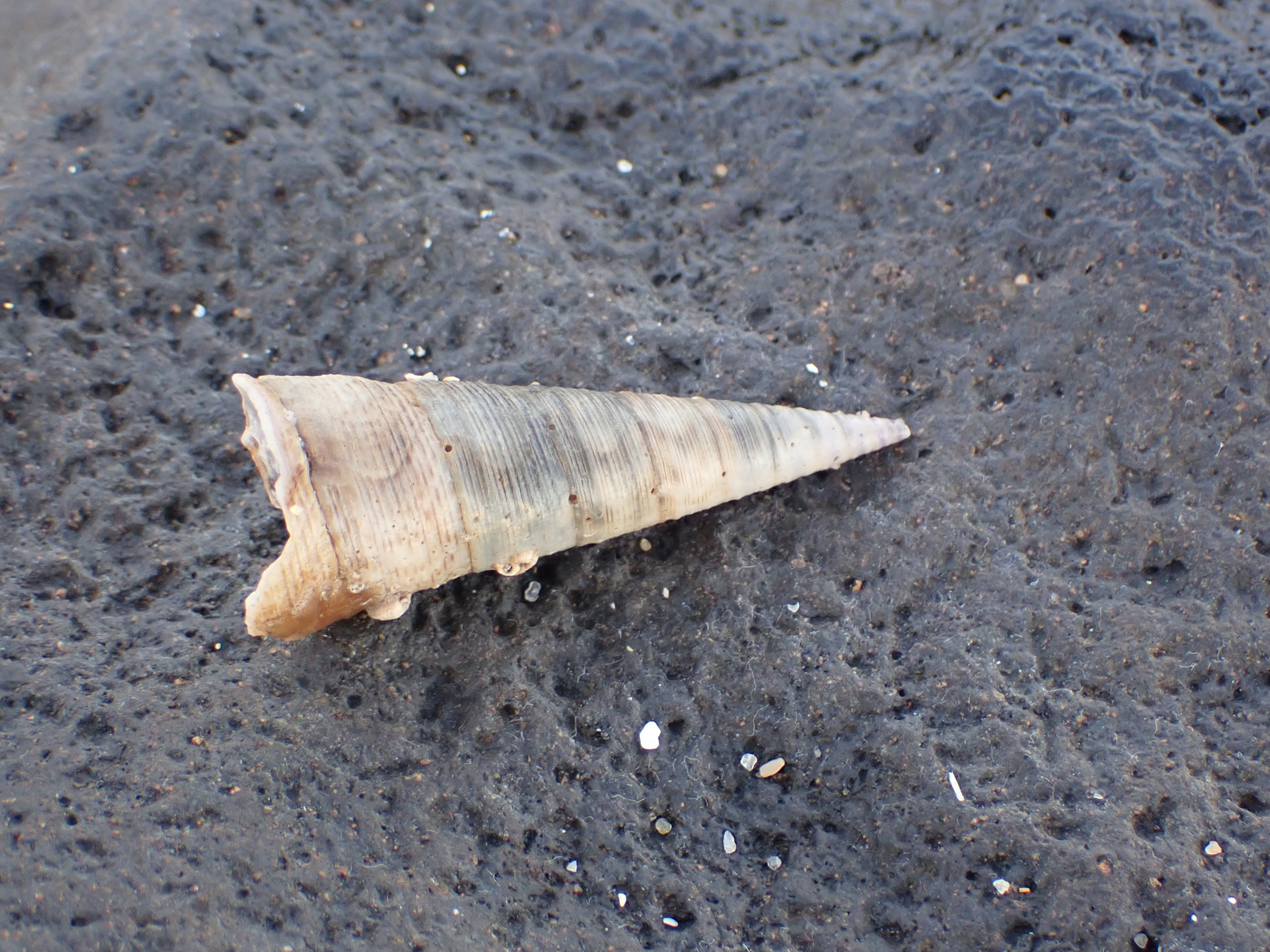
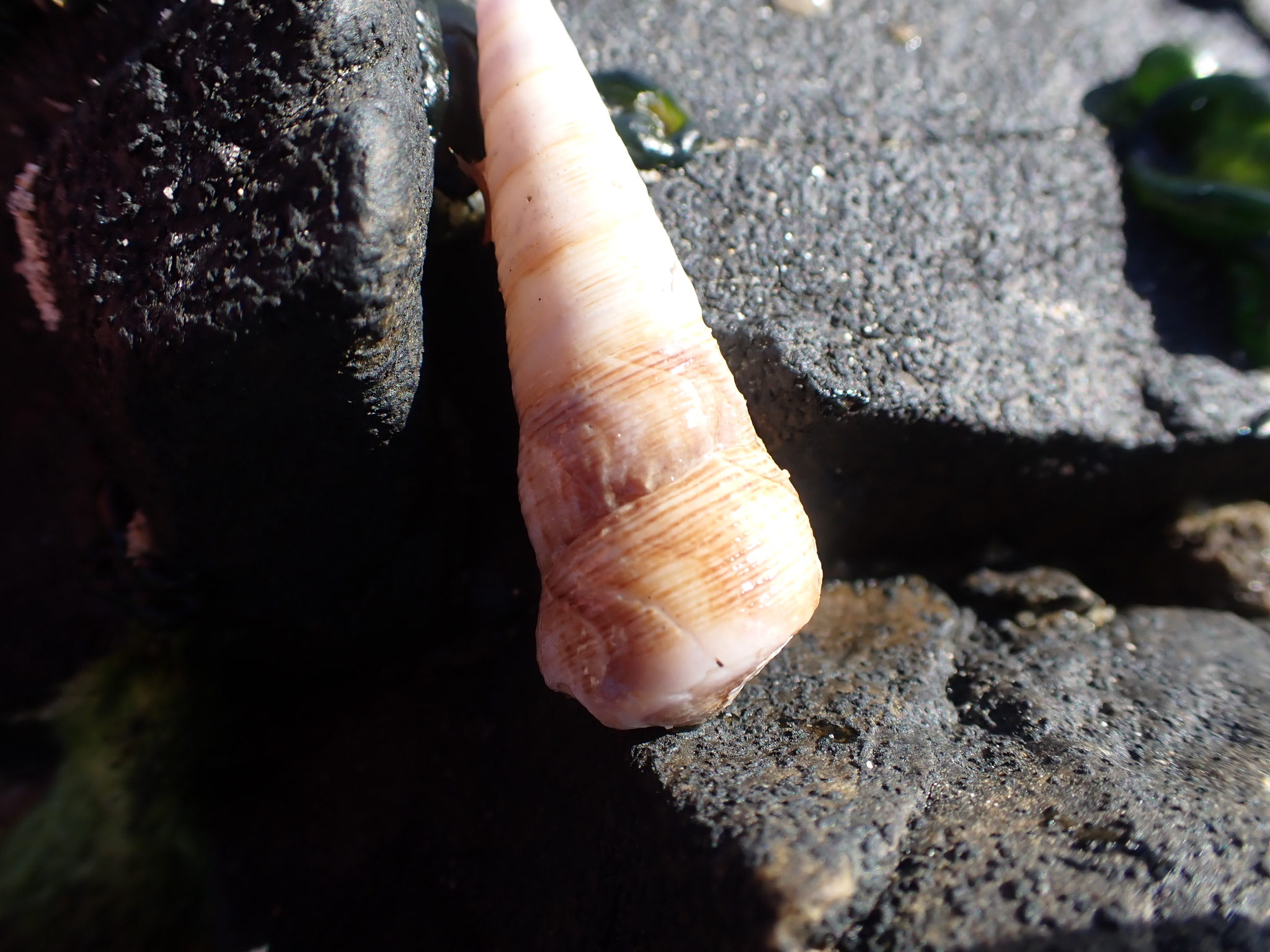
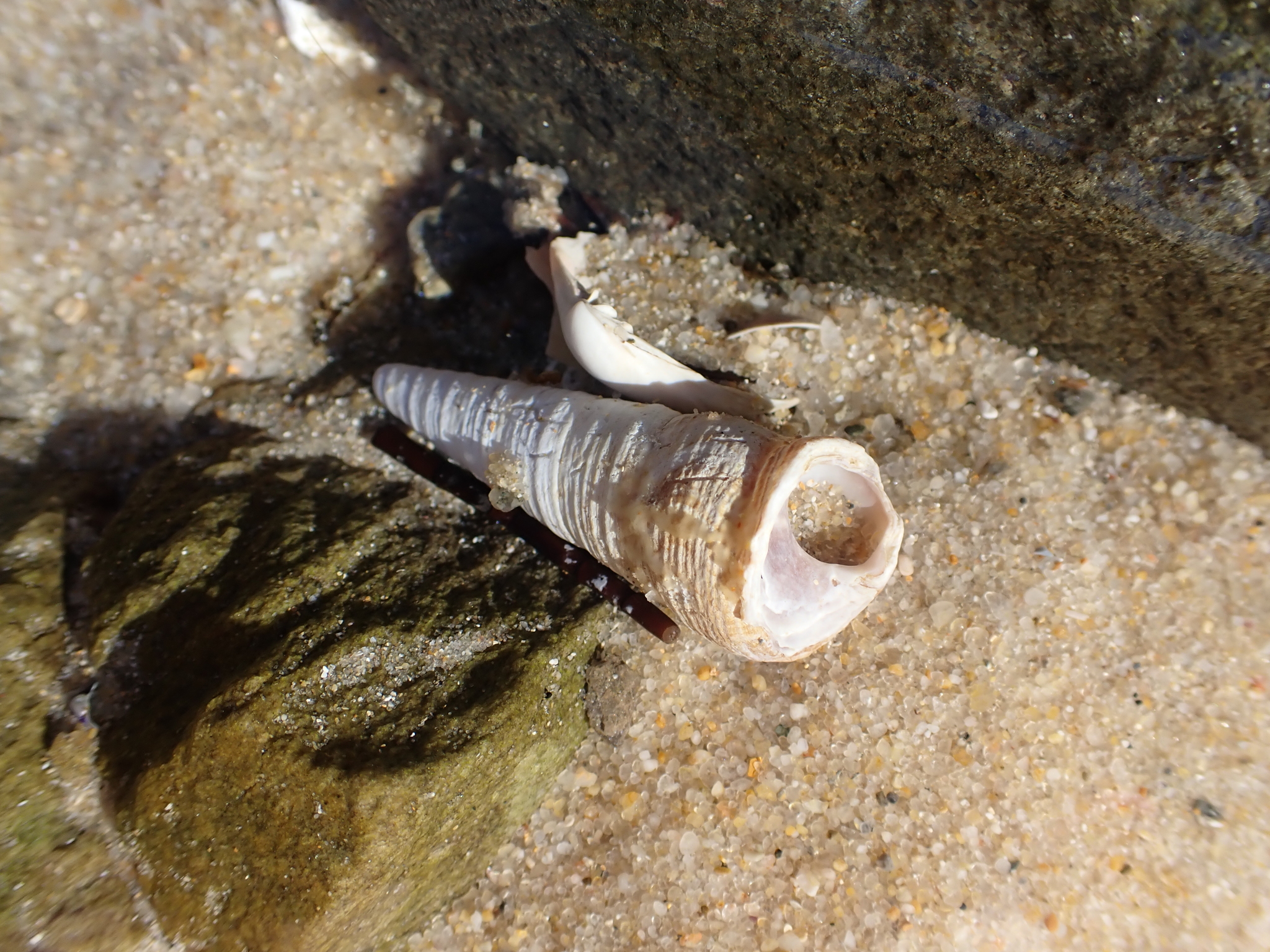
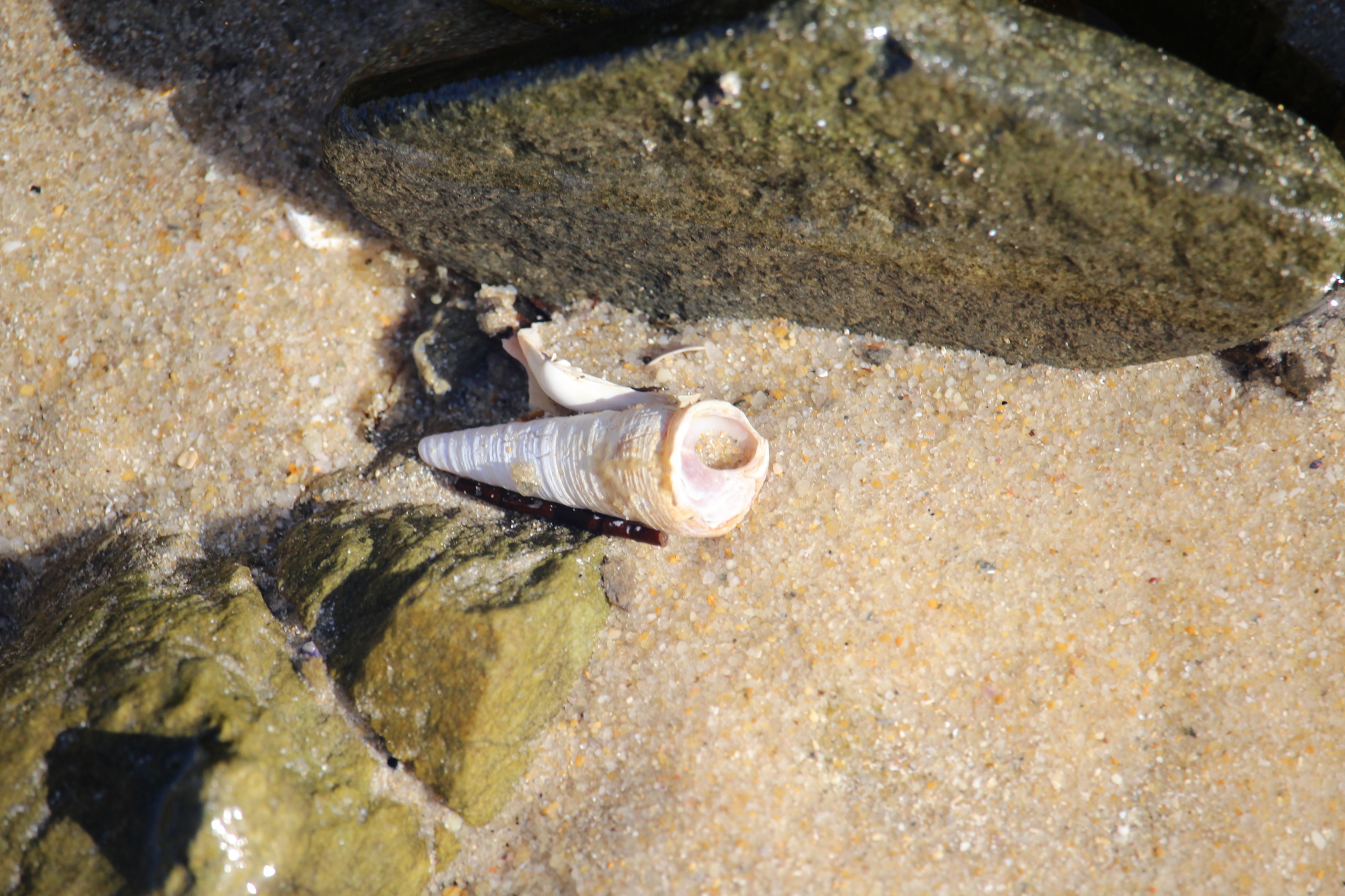
Large brown screw shell with a pointed tip. It was introduced from NZ to Tasmania about 80 years ago with live shipments of oysters and now occurs in massive aggregations. The species now poses a threat to local species, because living and dead shells have carpeted the seabed in places such the D’Entrecasteaux Channel, greatly altering the habitat. The numbers of the native screw shell Gazameda gunnii seem to decline following the arrival of Maoricolpus roseus in an area. Gazameda gunnii is smaller, with a more mottled appearance, and has fine beads forming ridges around the shell

At a glance

New Zealand Screw Shell at a glance

Habitat Lives on fine silts, muds, and sandy, gravelly or shelly substrates from the low intertidal down to about 200 m
Size Can grow up to around 90mm
Origin Introduced
Distribution In Australia from SA to NSW including Tasmania this species is introduced and is native to New Zealand
Descriptions
Distribution
In Australia from SA to NSW including Tasmania this species is introduced and is native to New Zealand
Habitat
Lives on fine silts, muds, and sandy, gravelly or shelly substrates from the low intertidal down to about 200 m
Size
Can grow up to around 90mm
Common Name New Zealand Screw Shell
Aliases No Known Aliases
Origin Introduced
Share
Distribution and map

Distribution provided by The Atlas of Living Australia

Classification

Classification

KingdomAnimalia
PhylumMollusca
SuperorderSorbeoconcha
SuperfamilyCerithioidea
SubfamilyTurritellinae
Synonyms

Synonyms

There are no known synonyms for this species
References and dates
Original No original text available
Bibliography View page references
Added Sat 7 Nov 2020 @ 23:00 PM
Updated Sun 4 Sep 2022 @ 00:00 AM
Files
Type Details Version Size Added Updated Links
There are no downloads or Files for this species at the moment

Disclaimer: A lot of work goes into trying to identify and ensure accurate identifications are made, and that the listed Descriptions, Sizes, Habitats and Distribution information is as accurate and valid as possible. Unfortunately, information in this arena is ever changing and as such no guarantee can be offered that it is correct or currently valid — the information is provided as a guide, and it is always suggested that you do a little research to ensure you have the latest and most accurate information. View the references or bibliography. Feedback and comments on the information provided are always welcome.