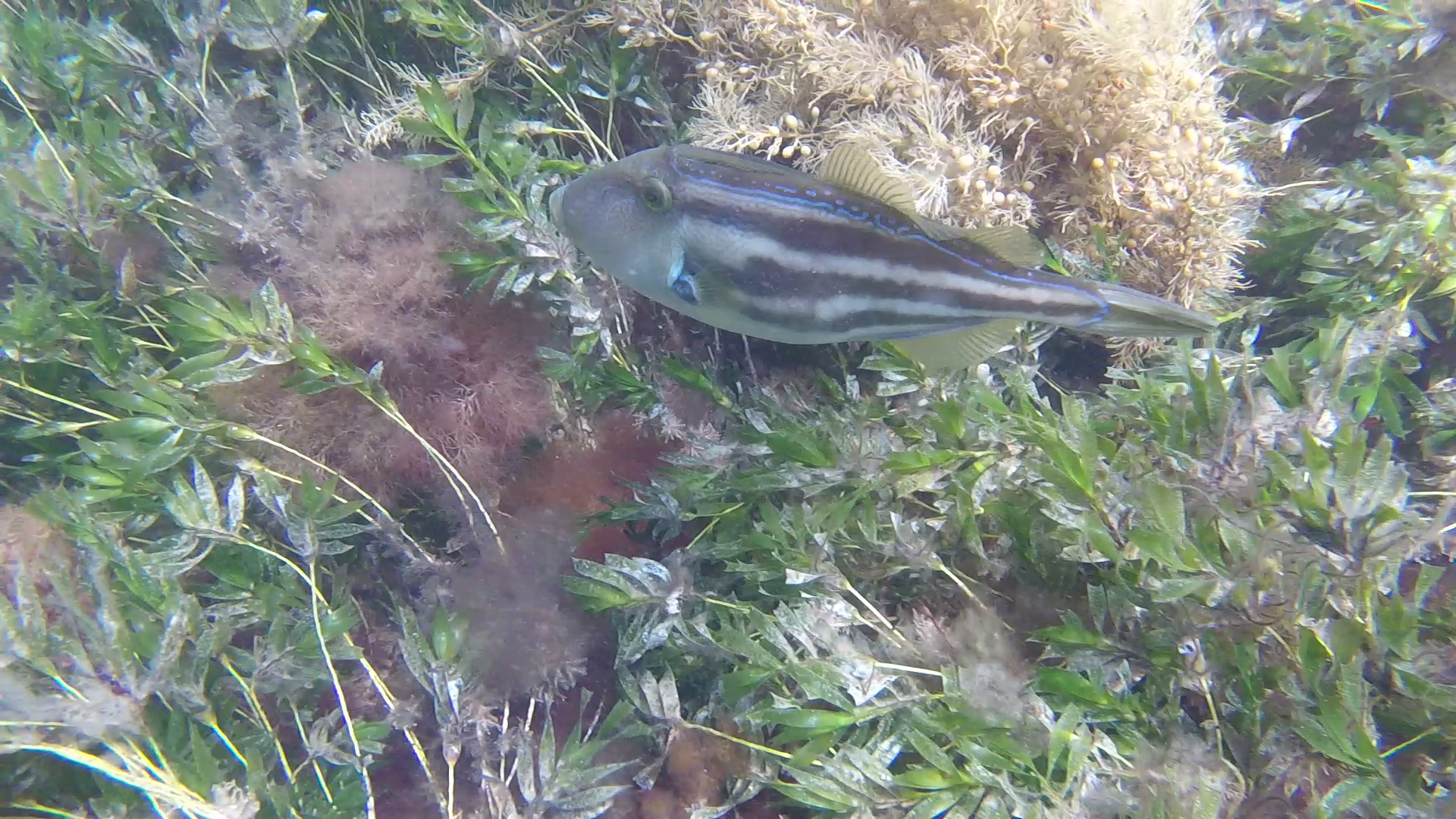
Male Sixspine Leatherjackets are usually blue with yellow blotches. There are blue lines and dots on the head and below the dorsal and anal fins.
Females are pale green, yellow or brown and usually have three to five broad brown stripes.
The colour pattern can be variable. Fish across the distribution can look quite different.
Both sexes have five to eight spines on the caudal peduncle, those of male fish are longer
At a glance
Sixspine Leatherjacket at a glance
Habitat
Juveniles are found in shallow water, commonly in seagrass beds. Adults are found on coastal and offshore reefs, to depths of 50 m or more
Size
Grows up to around 60cm
Origin
Endemic
Distribution
The Sixspine Leatherjacket is endemic to Australia. It occurs in southern Australian waters from northern New South Wales to Western Australia including Tasmania
Descriptions
Distribution
The Sixspine Leatherjacket is endemic to Australia. It occurs in southern Australian waters from northern New South Wales to Western Australia including Tasmania
Habitat
Juveniles are found in shallow water, commonly in seagrass beds. Adults are found on coastal and offshore reefs, to depths of 50 m or more
Size
Grows up to around 60cm
Distribution and map
Distribution provided by The Atlas of Living Australia
Classification
Classification
KingdomAnimalia
PhylumChordata
SubphylumVertebrata
SuperclassGnathostomata
ClassActinopterygii
SubclassEuteleostei
SuperorderAcanthopterygii
OrderTetraodontiformes
FamilyMonacanthidae
GenusMeuschenia
SpeciesMeuschenia freycineti
Synonyms
Synonyms
There are no known synonyms for this species
References and dates
Original
No original text available
Bibliography
View page references
Added
Fri 29 May 2020 @ 00:00 AM
Updated
Tue 16 Nov 2021 @ 23:00 PM
Surveys
View Survey List
Photos

Files
External Links
5 External Links
View External
Links
Disclaimer: A lot of work goes into trying to identify and ensure accurate identifications are made, and that the listed Descriptions, Sizes, Habitats and Distribution information is as accurate and valid as possible. Unfortunately, information in this arena is ever changing and as such no guarantee can be offered that it is correct or currently valid — the information is provided as a guide, and it is always suggested that you do a little research to ensure you have the latest and most accurate information. View the references or bibliography. Feedback and comments on the information provided are always welcome.
From Our Tasmania · https://ourtasmania.au/species-guide/view-species/meuschenia-freycineti/