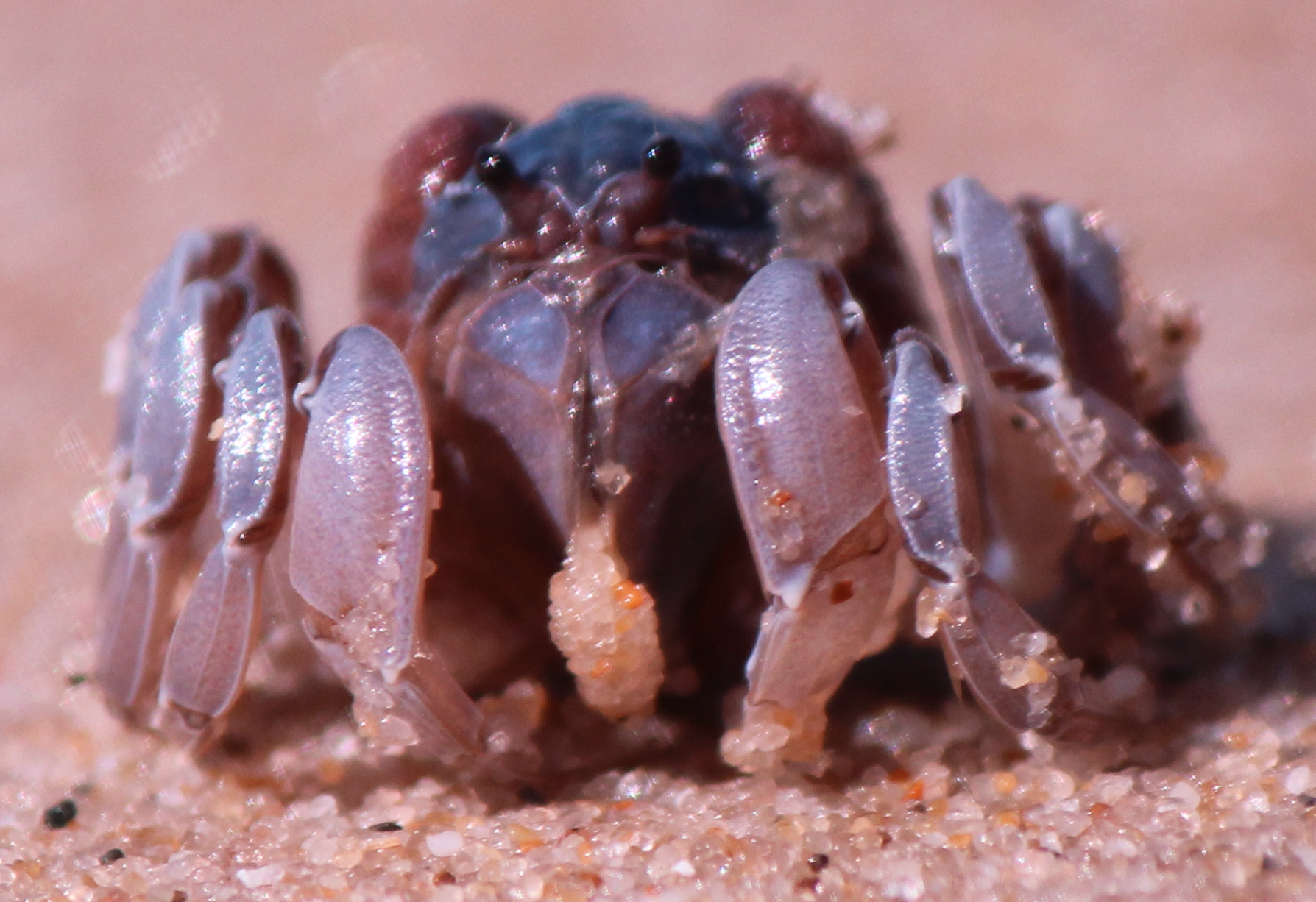
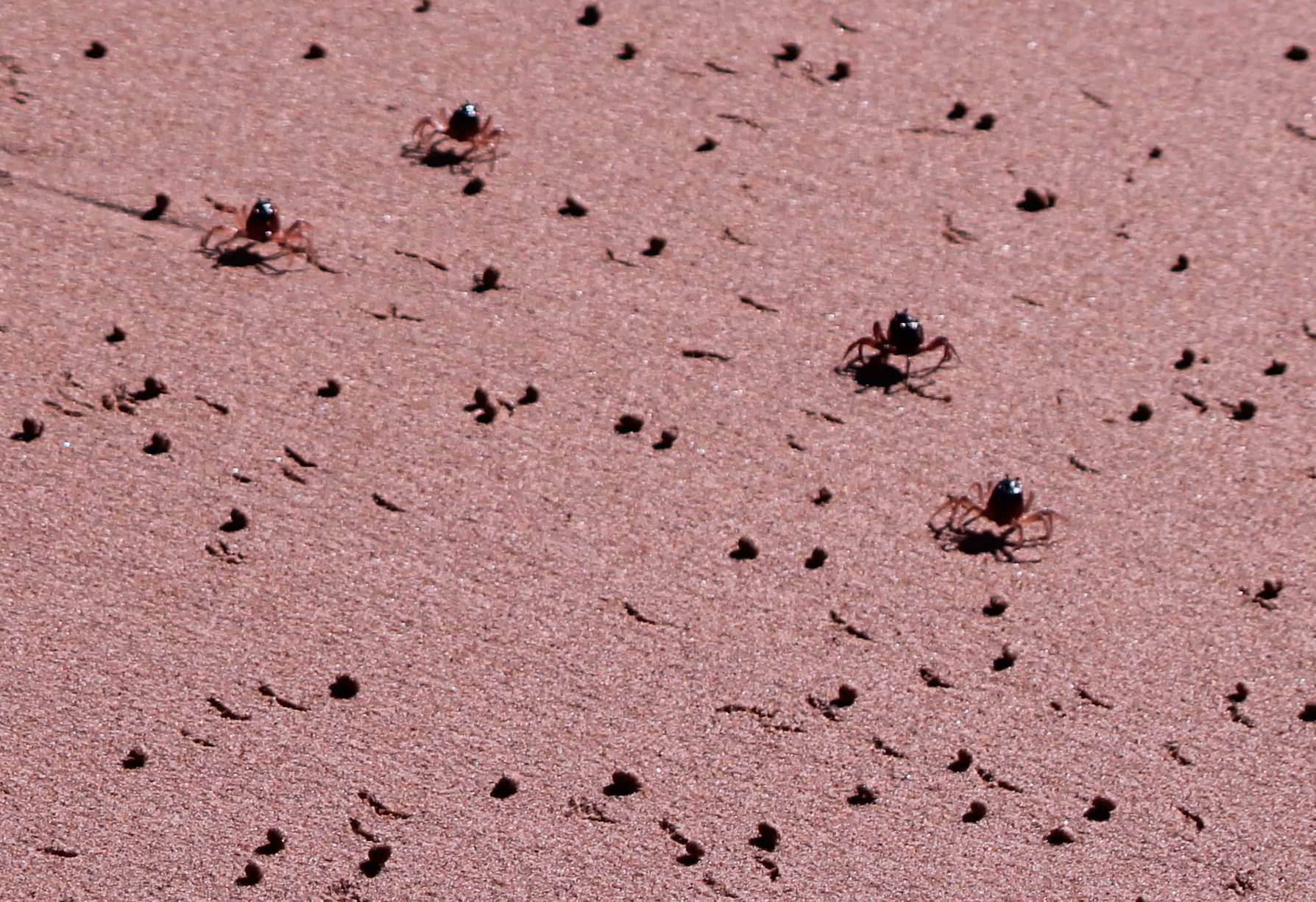
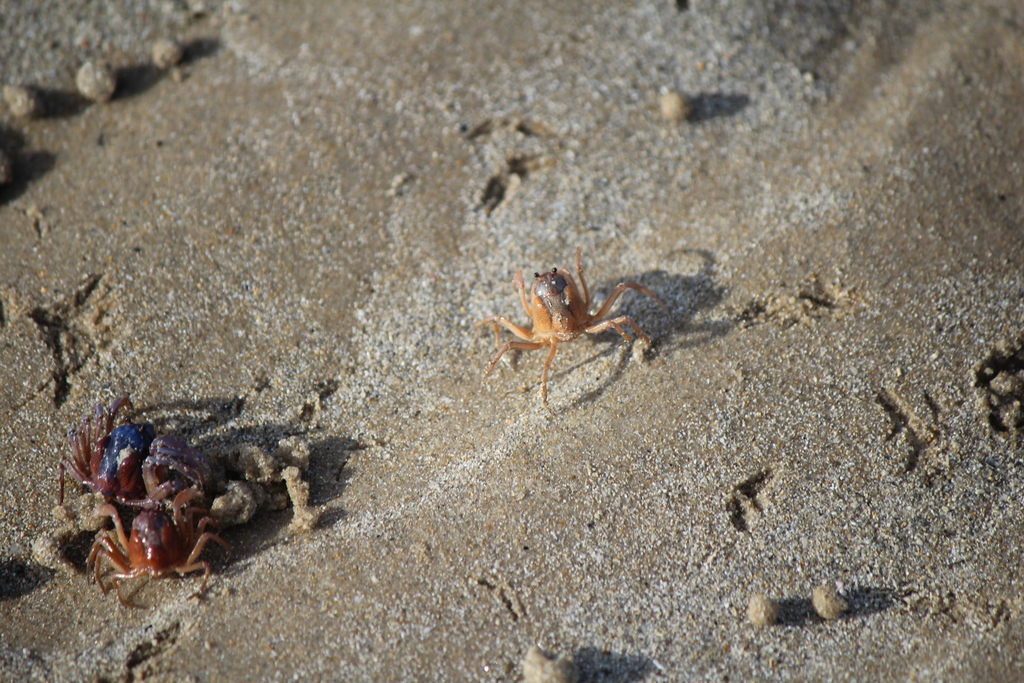
Commonly seen at low tide moving in large groups across the sand as they feed and quickly burrowing into the sand when disturbed. It is this large colony or group movement that gives them their common name.
These crabs roll up balls of sand to feed on as they move along leaving the balls behind as they go. These balls are visible along the beaches once the crabs burrowed away to await the next high tide when they repeat this process over again.
At a glance
Soldier Crab at a glance
Habitat
Can be found along intertidal beaches and mud flats at low tide
Size
Can grow to around 15mm across the carapace
Origin
Native
Distribution
Eastern Australia including around Tasmania
Descriptions
Distribution
Eastern Australia including around Tasmania
Habitat
Can be found along intertidal beaches and mud flats at low tide
Size
Can grow to around 15mm across the carapace
Identification
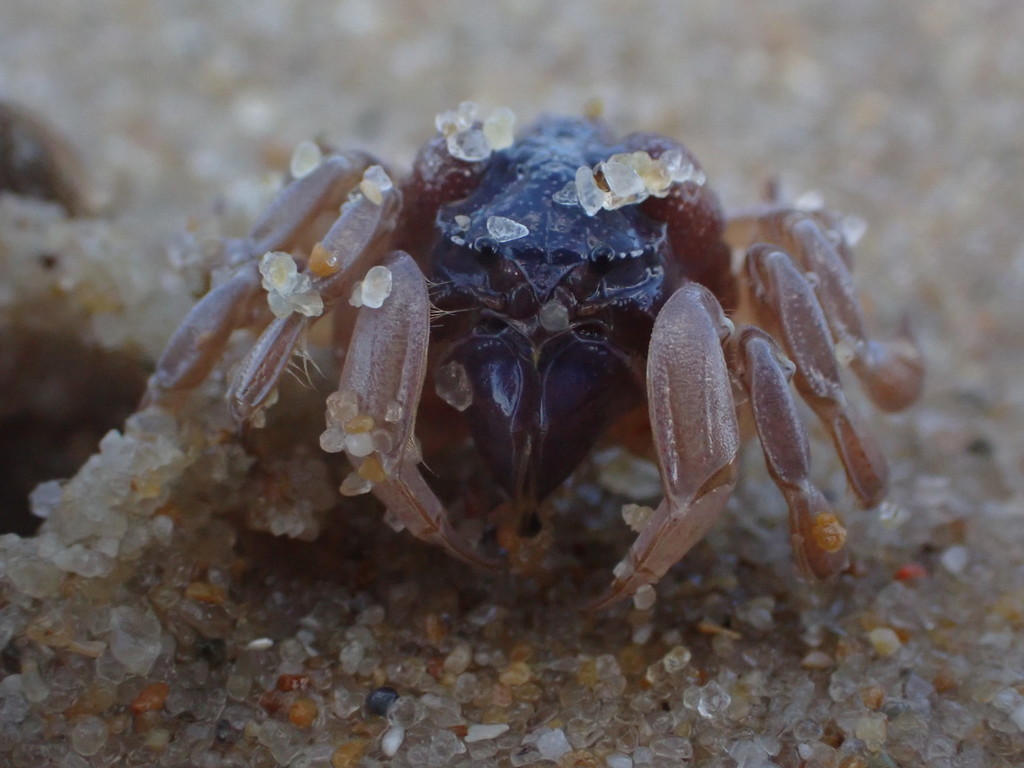
Adults of this crab are blues to grey in colour with a red to purple patch on each side light coloured legs and claws. The eyes are black on short stalks that are lighter in colour.


Distribution and map
Distribution provided by The Atlas of Living Australia
Classification
Classification
KingdomAnimalia
PhylumArthropoda
SubphylumCrustacea
SuperclassMulticrustacea
ClassMalacostraca
SubclassEumalacostraca
SuperorderEucarida
OrderDecapoda
SuborderPleocyemata
InfraorderBrachyura
SectionEubrachyura
SuperfamilyOcypodoidea
FamilyMictyridae
GenusMictyris
SpeciesMictyris platycheles
Synonyms
Synonyms
There are no known synonyms for this species
References and dates
Original
No original text available
Bibliography
View page references
Added
Thu 14 May 2020 @ 00:00 AM
Updated
Sun 2 Oct 2022 @ 00:00 AM
Surveys
View Survey List
Photos

Files
External Links
2 External Links
View External
Links
Disclaimer: A lot of work goes into trying to identify and ensure accurate identifications are made, and that the listed Descriptions, Sizes, Habitats and Distribution information is as accurate and valid as possible. Unfortunately, information in this arena is ever changing and as such no guarantee can be offered that it is correct or currently valid — the information is provided as a guide, and it is always suggested that you do a little research to ensure you have the latest and most accurate information. View the references or bibliography. Feedback and comments on the information provided are always welcome.
From Our Tasmania · https://ourtasmania.au/species-guide/view-species/mictyris-platycheles/