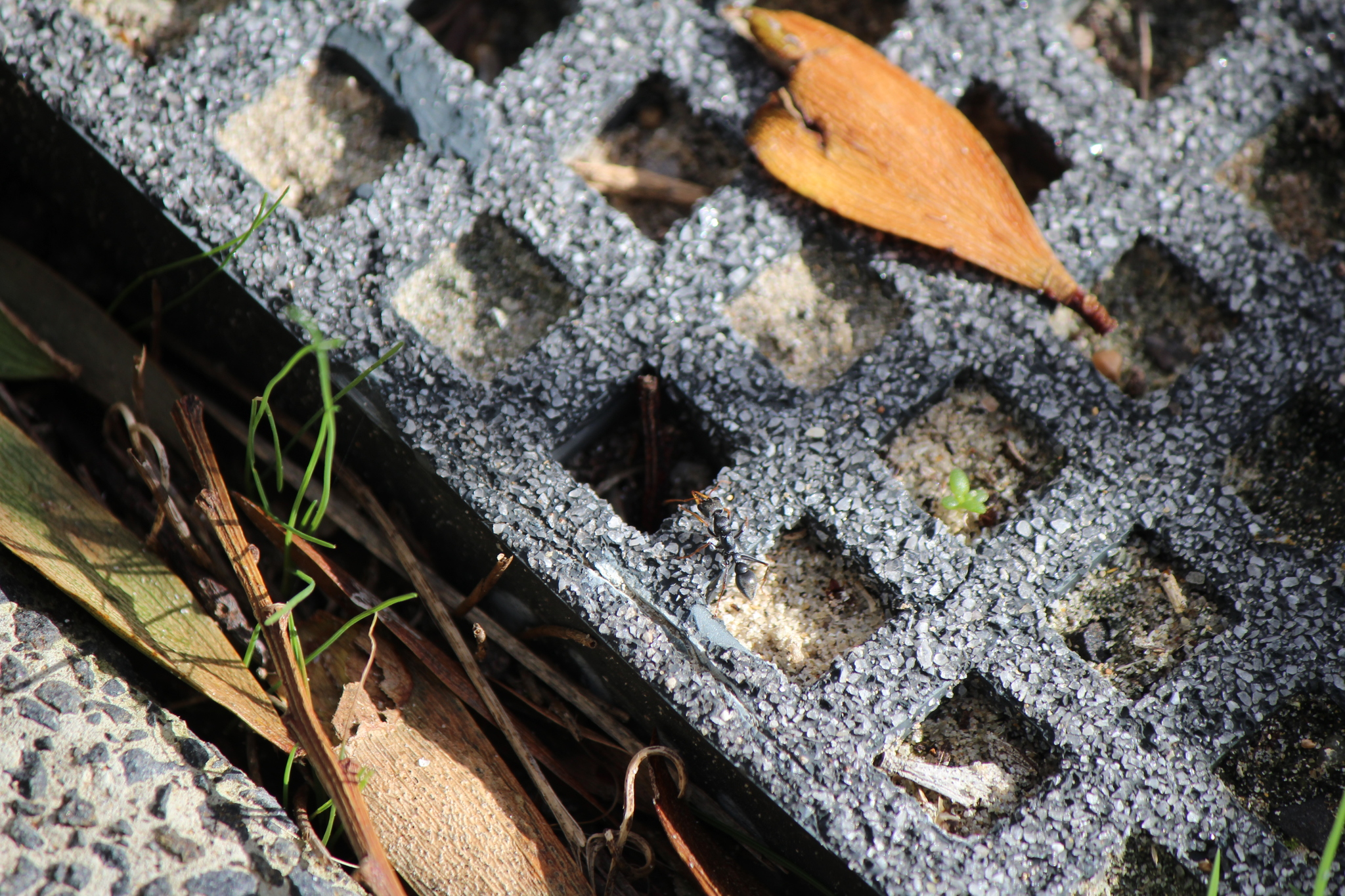
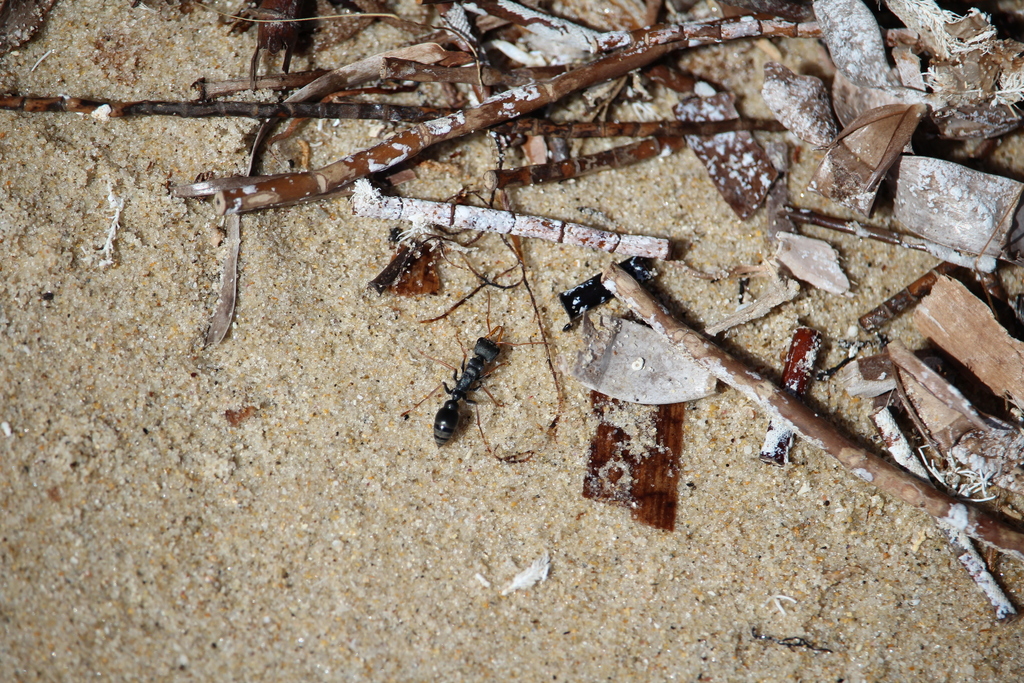
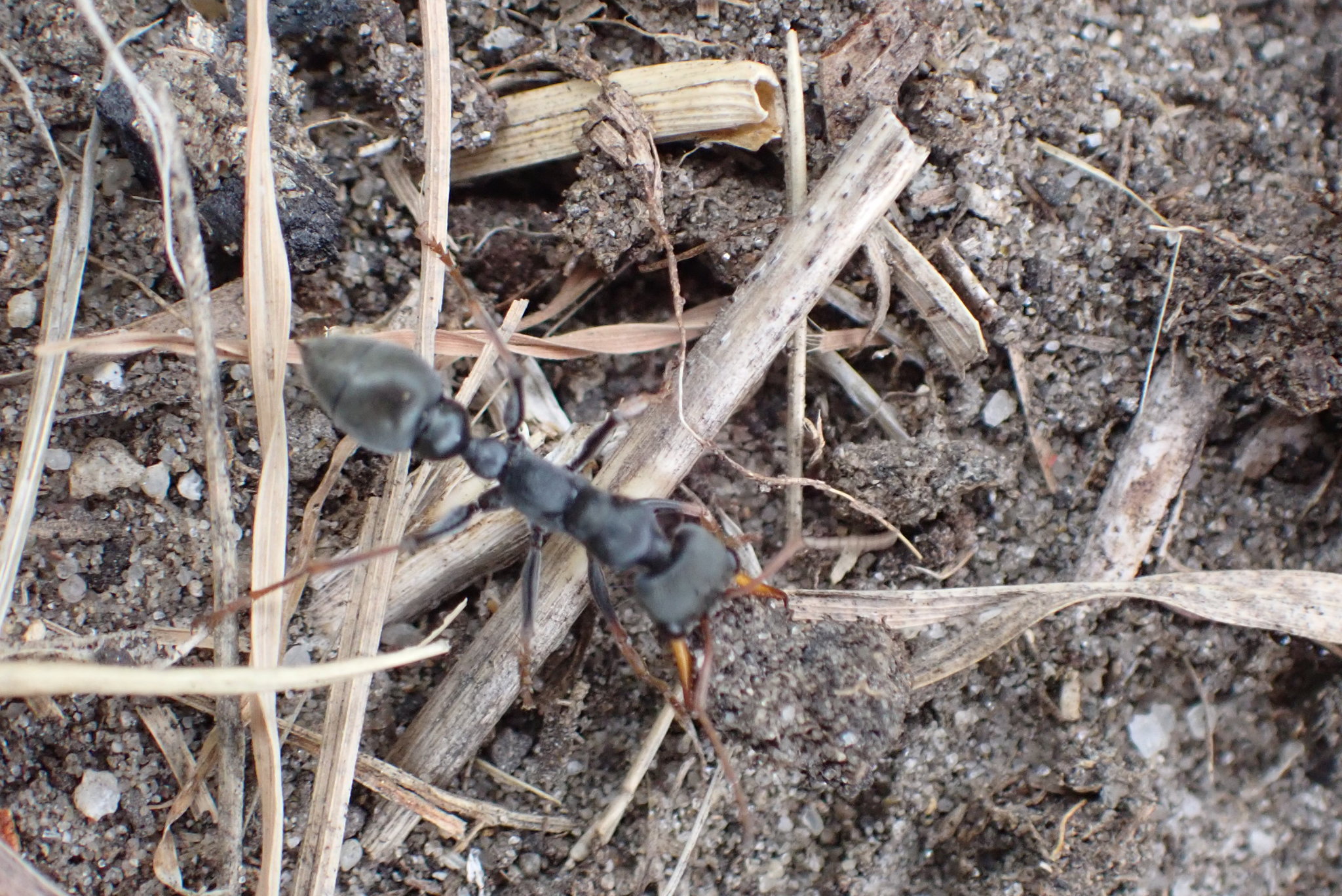
The ant has black body with yellow jaws and yellow tips of legs and can move in a series of rapid jumps. Their nest in the ground usually has a mound of soil around the entrance. They feed on sweet secretions from plants and sap-sucking insects
They do not bite, but rather grasp the victim in their jaws, then bend around and sting them (their sting is in the tail)
Allergic reactions may occur to stings
The stings, like those of bees and wasps, are very painful. Local swelling is very common. Large local swellings can also occur, lasting a few days at a time. The most serious reactions are known as generalised allergic reactions, of which the most severe is anaphylaxis.
At a glance
Jack Jumper Ant at a glance
Habitat
Open habitats, nesting in bushland, woodlands, and dry open forests, surrounded by gravel and sandy soil. Locally a very common ant species
Size
Worker body up to 1 cm long
Origin
Endemic
Distribution
South-eastern and south-western mainland Australia and Tasmania
Descriptions
Distribution
South-eastern and south-western mainland Australia and Tasmania
Habitat
Open habitats, nesting in bushland, woodlands, and dry open forests, surrounded by gravel and sandy soil.
Locally a very common ant species
Locally a very common ant species
Size
Worker body up to 1 cm long
Distribution and map
Distribution provided by The Atlas of Living Australia
Classification
Classification
KingdomAnimalia
PhylumArthropoda
SubphylumHexapoda
ClassInsecta
SubclassPterygotes
OrderHymenoptera
SuperfamilyVespoidea
FamilyFormicidae
SubfamilyMyrmeciinae
TribeMyrmeciini
GenusMyrmecia
SpeciesMyrmecia pilosula
Synonyms
Synonyms
There are no known synonyms for this species
References and dates
Original
No original text available
Bibliography
View page references
Added
Tue 2 Jun 2020 @ 00:00 AM
Updated
Sun 7 Nov 2021 @ 23:00 PM
Surveys
View Survey List
Photos
Files
External Links
3 External Links
View External
Links
Disclaimer: A lot of work goes into trying to identify and ensure accurate identifications are made, and that the listed Descriptions, Sizes, Habitats and Distribution information is as accurate and valid as possible. Unfortunately, information in this arena is ever changing and as such no guarantee can be offered that it is correct or currently valid — the information is provided as a guide, and it is always suggested that you do a little research to ensure you have the latest and most accurate information. View the references or bibliography. Feedback and comments on the information provided are always welcome.
From Our Tasmania · https://ourtasmania.au/species-guide/view-species/myrmecia-pilosula/