Dangerous:Dangerously venomous and their bite can be fatal - If bitten seek urgent medical aid.
There are a number of Snake Bite Kits around the community if bitten it is important to stay calm and limit movement, Bandage the area with a firm broad bandage ASAP covering as much of the limb as possible. First Aid Can be found here
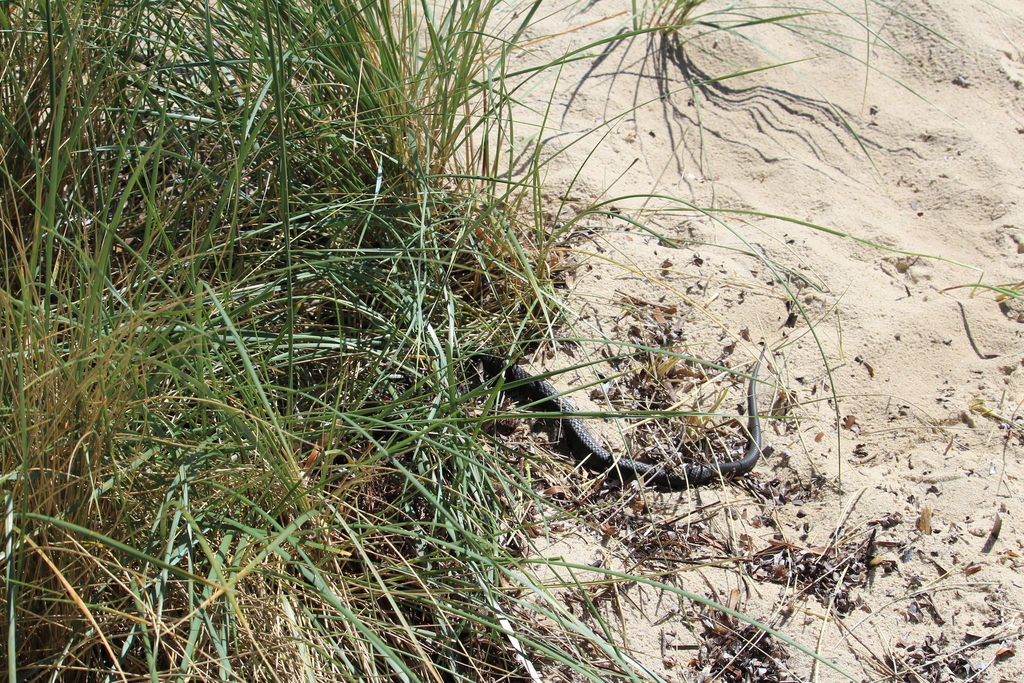
A common snake around the coast including throughout the yards of the shacks and the Tomahawk Caravan Park. These snakes can be very attractive to look at and they normally flee when distrubed by human movements.
At a glance
Tiger Snake at a glance
Habitat
Damp areas, dry sclerophyll forests, coastal scrub and woodlands, river beds and swampy areas
Size
Can grow to around 2m
Origin
Endemic
Distribution
Southern Australia including Tasmania
Descriptions
Distribution
Southern Australia including Tasmania
Habitat
Damp areas, dry sclerophyll forests, coastal scrub and woodlands, river beds and swampy areas
Size
Can grow to around 2m
Identification
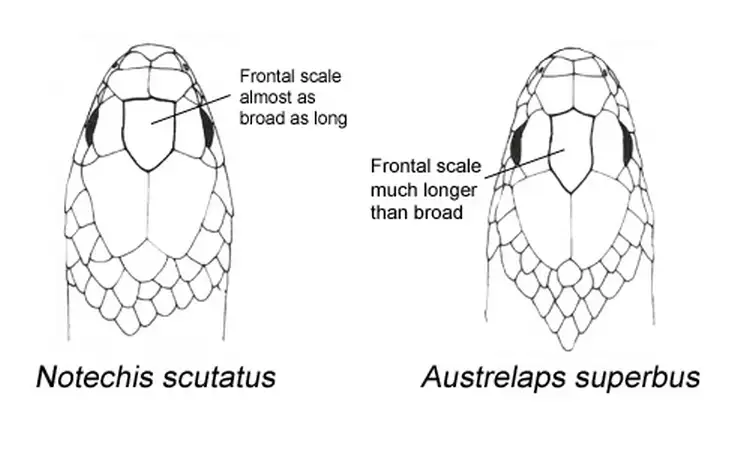
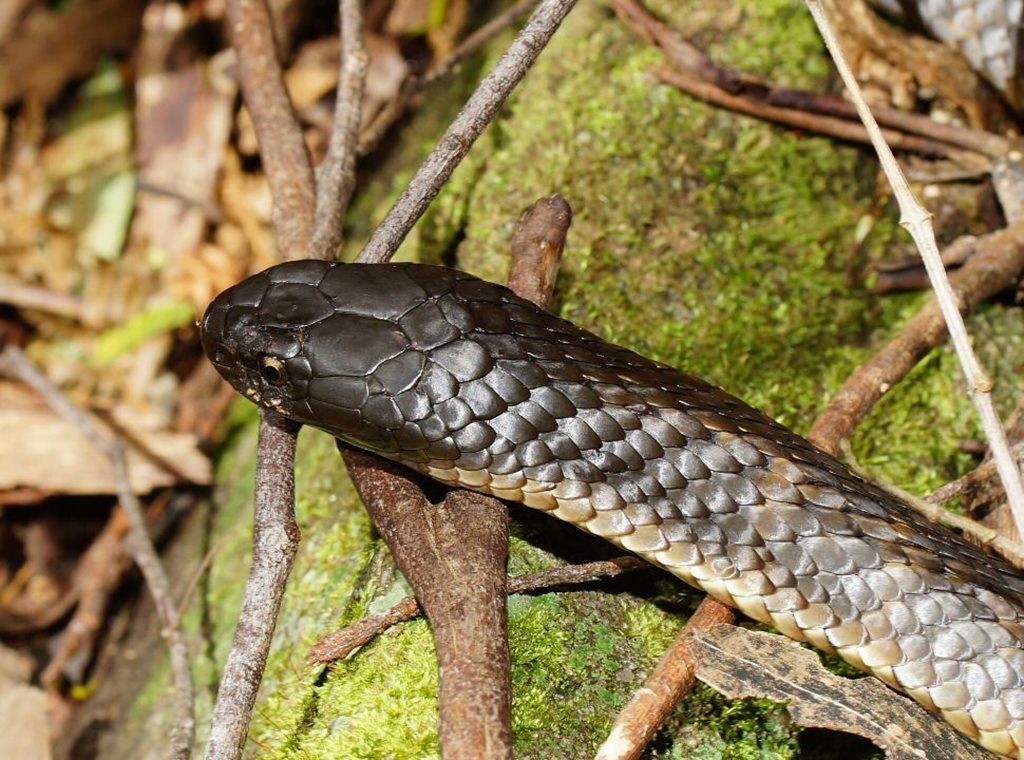
Body colour varies, including brown to green. Usually, but not always, with dark or light stripes across the body. The main way to ID this snake is via the arrangement of the scales or scale pattern on its head the frontal scale between the eyes is almost as broad as it is long
Distribution and map
Distribution provided by The Atlas of Living Australia
Classification
Classification
KingdomAnimalia
PhylumChordata
SubphylumVertebrata
SuperclassGnathostomata
ClassReptilia
SubclassLepidosauria
OrderSquamata
SuborderSerpentes
FamilyElapidae
SubfamilyHydrophiinae
GenusNotechis
SpeciesNotechis scutatus
Synonyms
Synonyms
There are no known synonyms for this species
References and dates
Original
No original text available
Bibliography
View page references
Added
Wed 4 Nov 2020 @ 23:00 PM
Updated
Sun 4 Sep 2022 @ 00:00 AM
Surveys
View Survey List
Photos
Files
External Links
4 External Links
View External
Links
Disclaimer: A lot of work goes into trying to identify and ensure accurate identifications are made, and that the listed Descriptions, Sizes, Habitats and Distribution information is as accurate and valid as possible. Unfortunately, information in this arena is ever changing and as such no guarantee can be offered that it is correct or currently valid — the information is provided as a guide, and it is always suggested that you do a little research to ensure you have the latest and most accurate information. View the references or bibliography. Feedback and comments on the information provided are always welcome.
From Our Tasmania · https://ourtasmania.au/species-guide/view-species/notechis-scutatus/