One of two species in this genus this small brittle star is among the common ones found around Australias southern coastline including around Tasmania
At a glance
Five-armed Brittle Star at a glance
Habitat
Under rocks, in crevices, on or near sponges, to depth of 180 m
Size
Disc up to 1 cm wide, arm up to 5 cm long
Origin
Native
Distribution
Southern Australia including around Tasmania
Descriptions
Distribution
Southern Australia including around Tasmania
Habitat
Under rocks, in crevices, on or near sponges, to depth of 180 m
Size
Disc up to 1 cm wide, arm up to 5 cm long
Identification
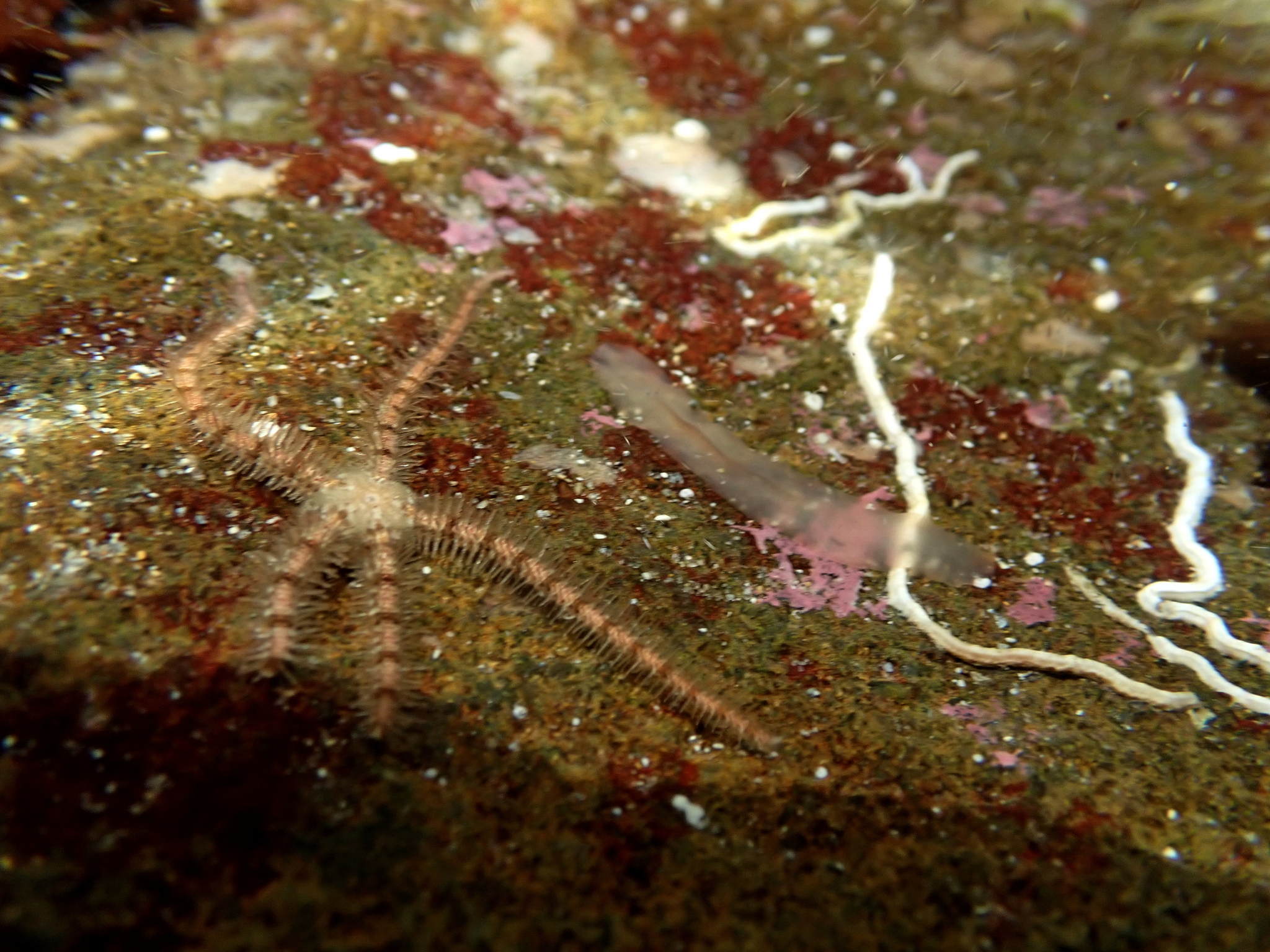
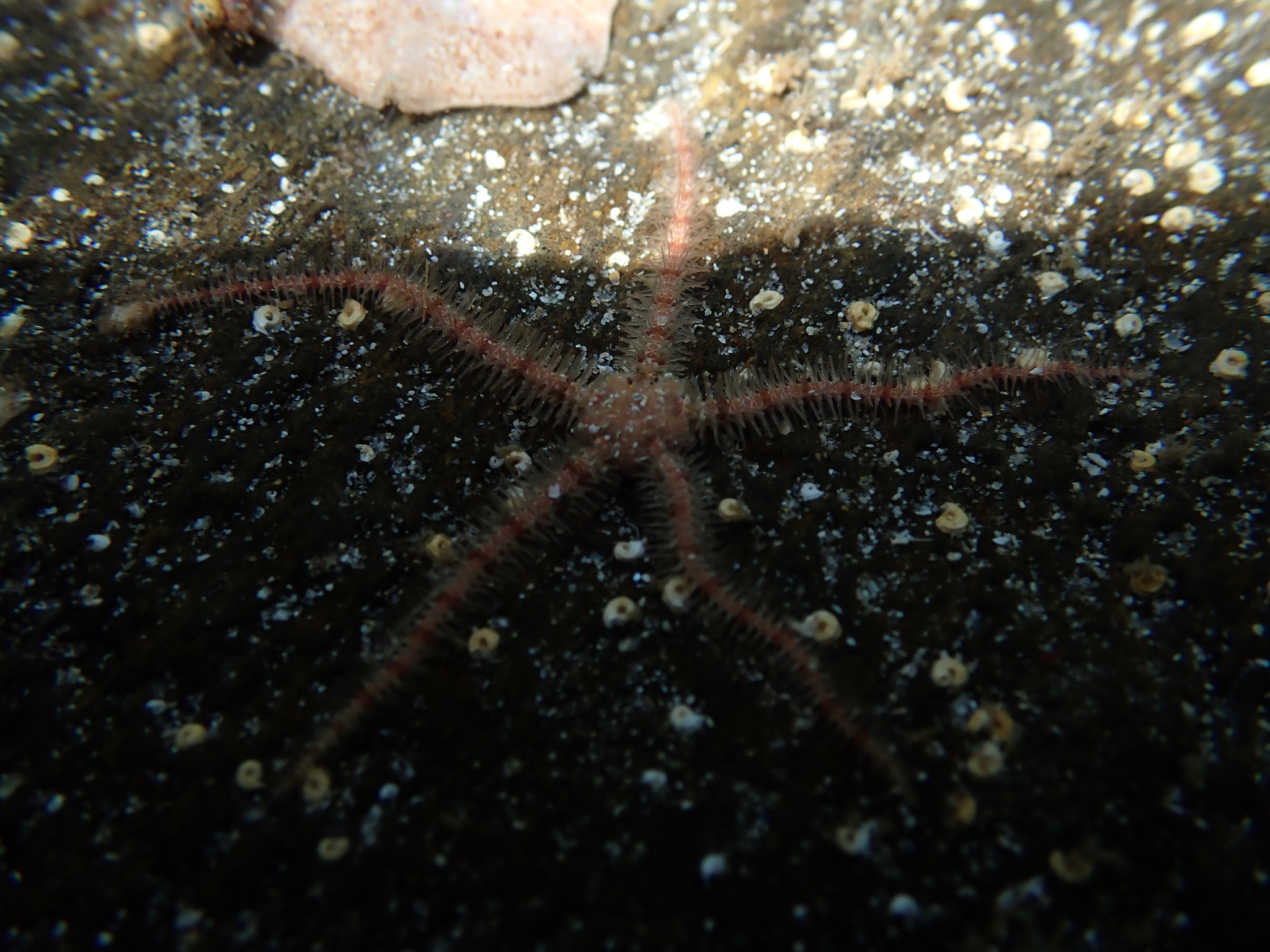
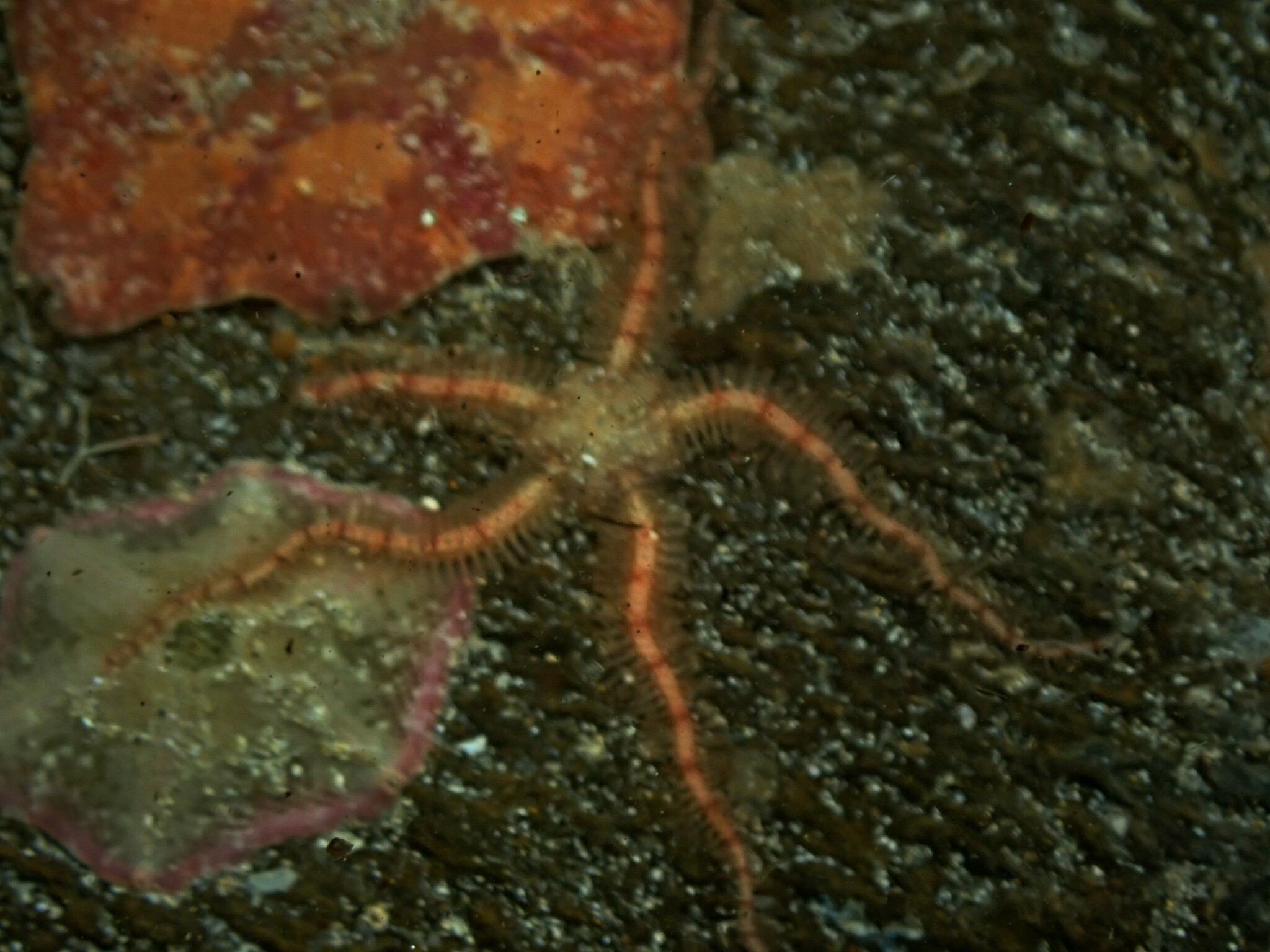
A small pink brittle star with a thorny central disc, darker red markings and long, strongly spined arms
Look for:
- Rounded, slightly swollen central disc covered with short, thorn-like spines.
- Small spines covering the radial shields on top of the disc.
- Long, slender arms with noticeably long spines along their sides.
- Arm spines with rough, saw-like edges rather than smooth edges.
- Pink colouring with darker red markings or patterns across the disc and arms.
- On the underside, the small mouth papillae are concentrated near the tip of each jaw.
Distribution and map
Distribution provided by The Atlas of Living Australia
Classification
Classification
KingdomAnimalia
PhylumEchinodermata
ClassOphiuroidea
OrderAmphilepidida
FamilyOphiotrichidae
GenusOphiothrix
SubgenusOphiothrix (Ophiothrix)
Synonyms
Synonyms
Ophiothrix hartmeyeri Koehler, 1907
Ophiothrix caespitosa Lyman, 1879
References and dates
Original
No original text available
Bibliography
View page references
Added
Sat 3 Oct 2026 @ 15:18 PM
Updated
Sat 3 Oct 2026 @ 15:22 PM
Surveys
View Survey List
Photos
Files
| Type | Details | Version | Size | Added | Updated | Links |
|---|---|---|---|---|---|---|
| There are no downloads or Files for this species at the moment | ||||||
External Links
2 External Links
View External
Links
Disclaimer: A lot of work goes into trying to identify and ensure accurate identifications are made, and that the listed Descriptions, Sizes, Habitats and Distribution information is as accurate and valid as possible. Unfortunately, information in this arena is ever changing and as such no guarantee can be offered that it is correct or currently valid — the information is provided as a guide, and it is always suggested that you do a little research to ensure you have the latest and most accurate information. View the references or bibliography. Feedback and comments on the information provided are always welcome.
From Our Tasmania · https://ourtasmania.au/species-guide/view-species/ophiothrix-ophiothrix-caespitosa/