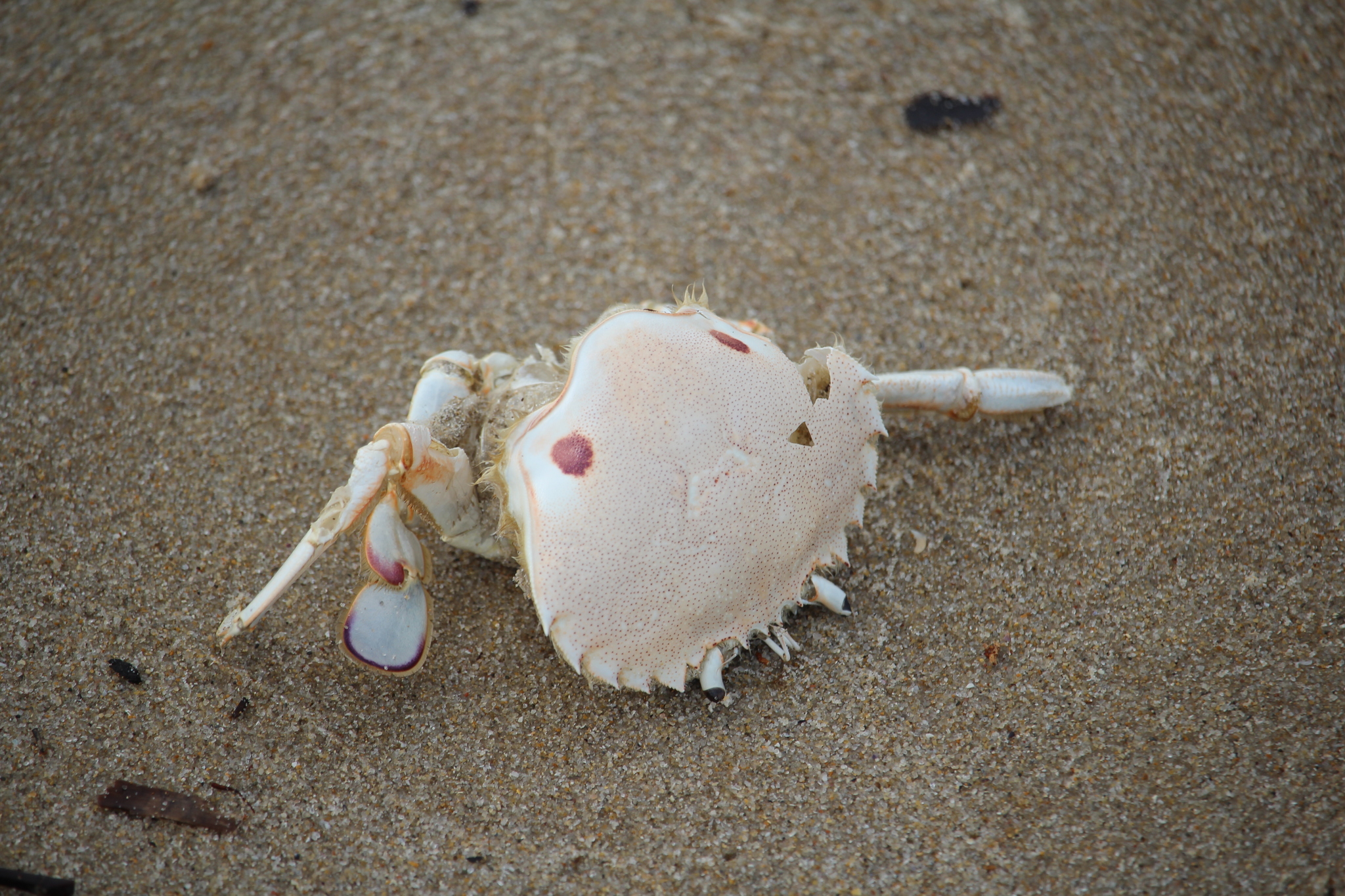
This crab is rather agile and moves away quickly burying itself under the sand. Like most crabs this species is most active at night and annoy fishermen stealing the baits from their hooks.
Similar to the invasive Carcinus maenas. Both of these crabs are commonly found washed up dead along Tomahawk Beach
At a glance
Common Sand Crab at a glance
Habitat
Can be found along sandy beaches out to depth of around 100m
Size
Can grow to around 110mm across the carapace
Origin
Native
Distribution
Southern Australia from Western Australia to Queensland, including Tasmania
Descriptions
Distribution
Southern Australia from Western Australia to Queensland, including Tasmania
Habitat
Can be found along sandy beaches out to depth of around 100m
Size
Can grow to around 110mm across the carapace
Identification
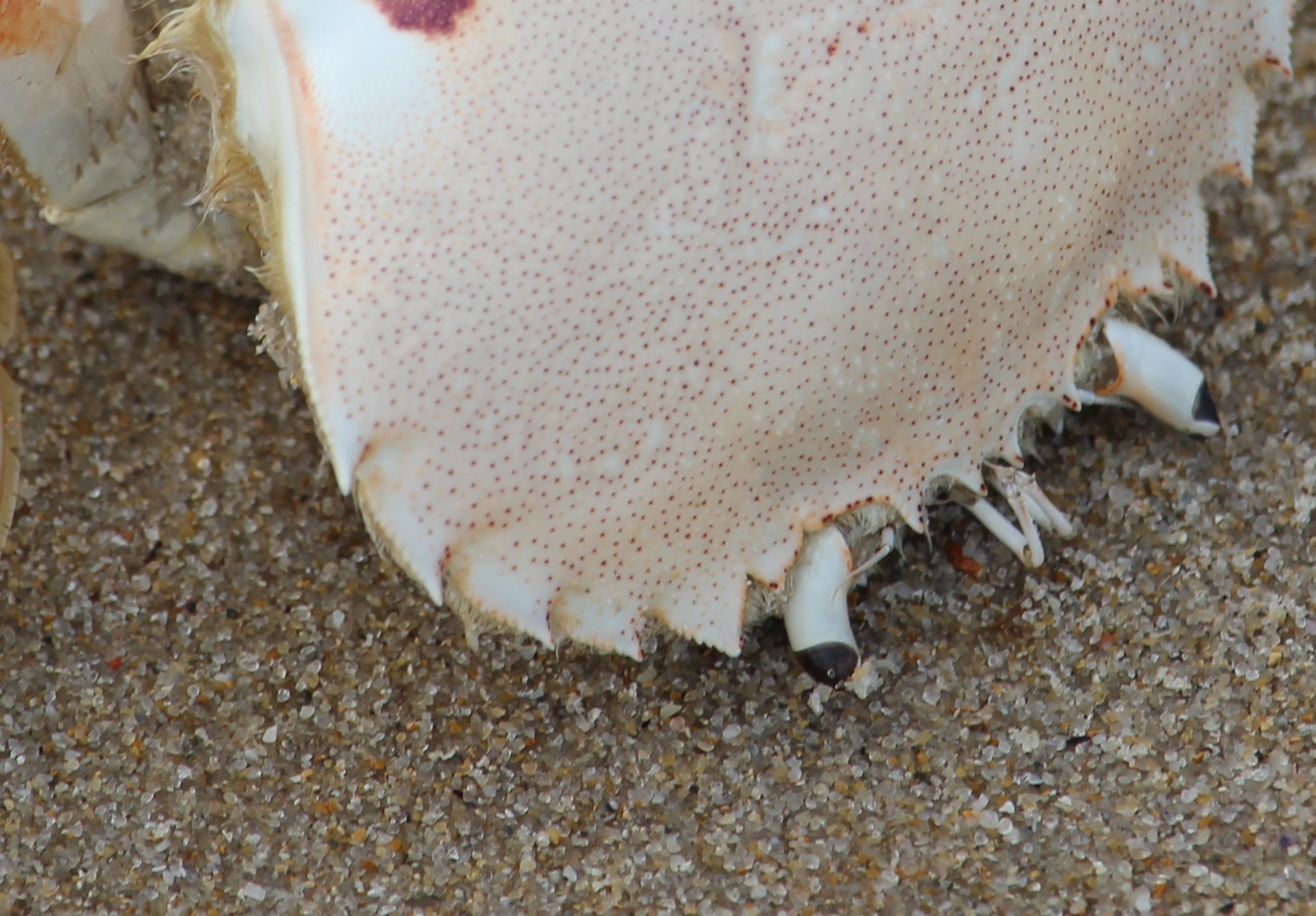
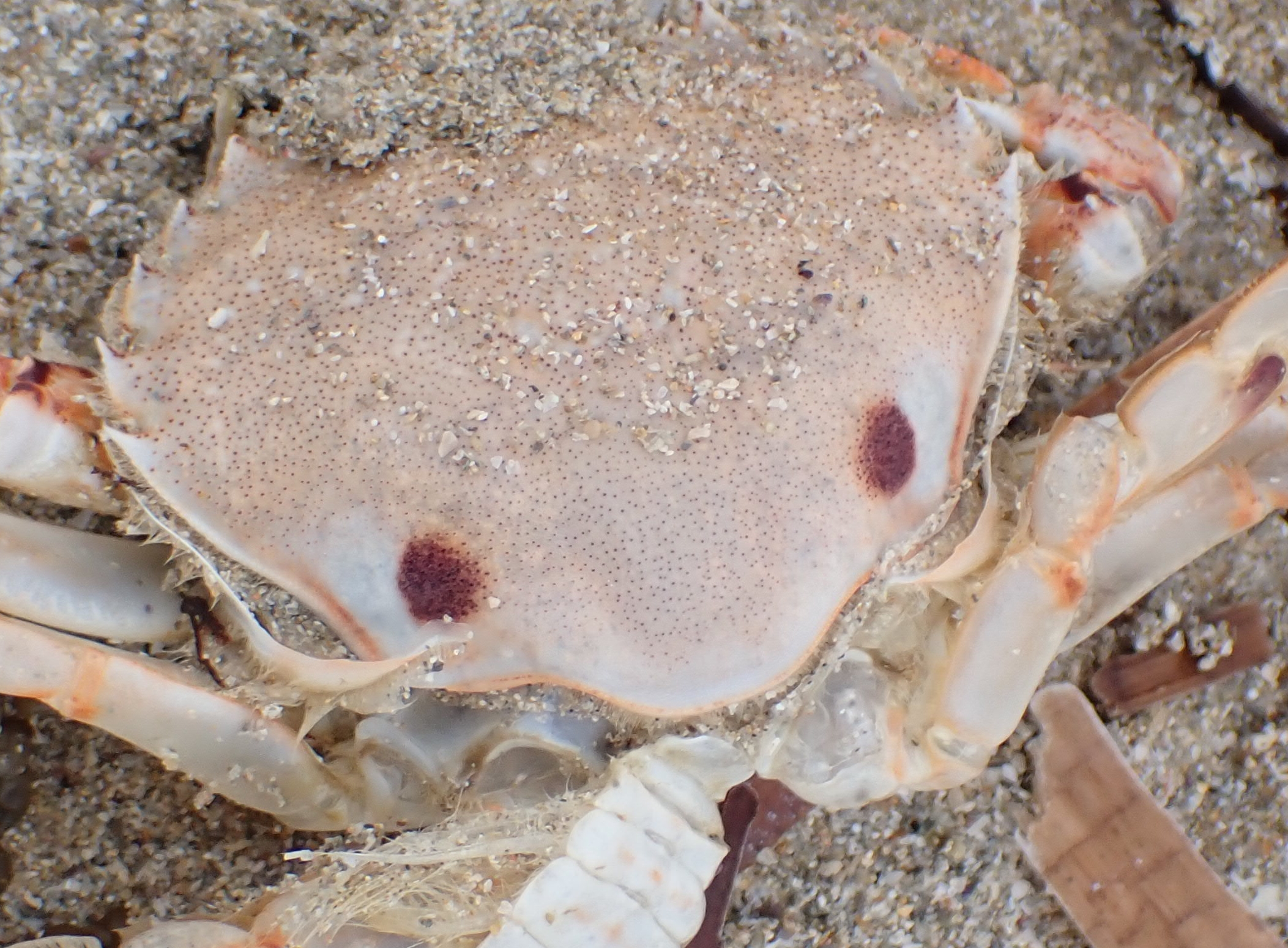
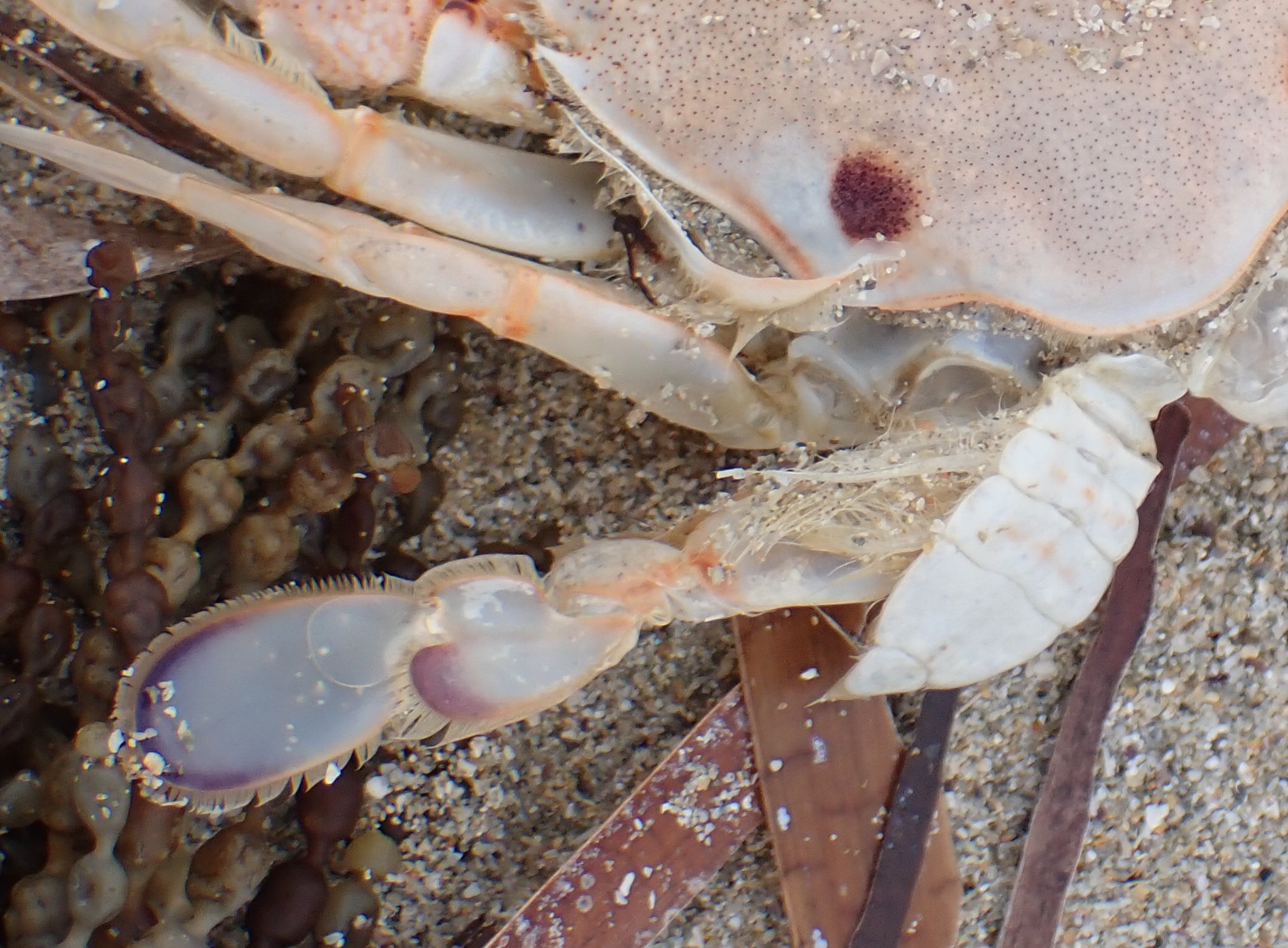
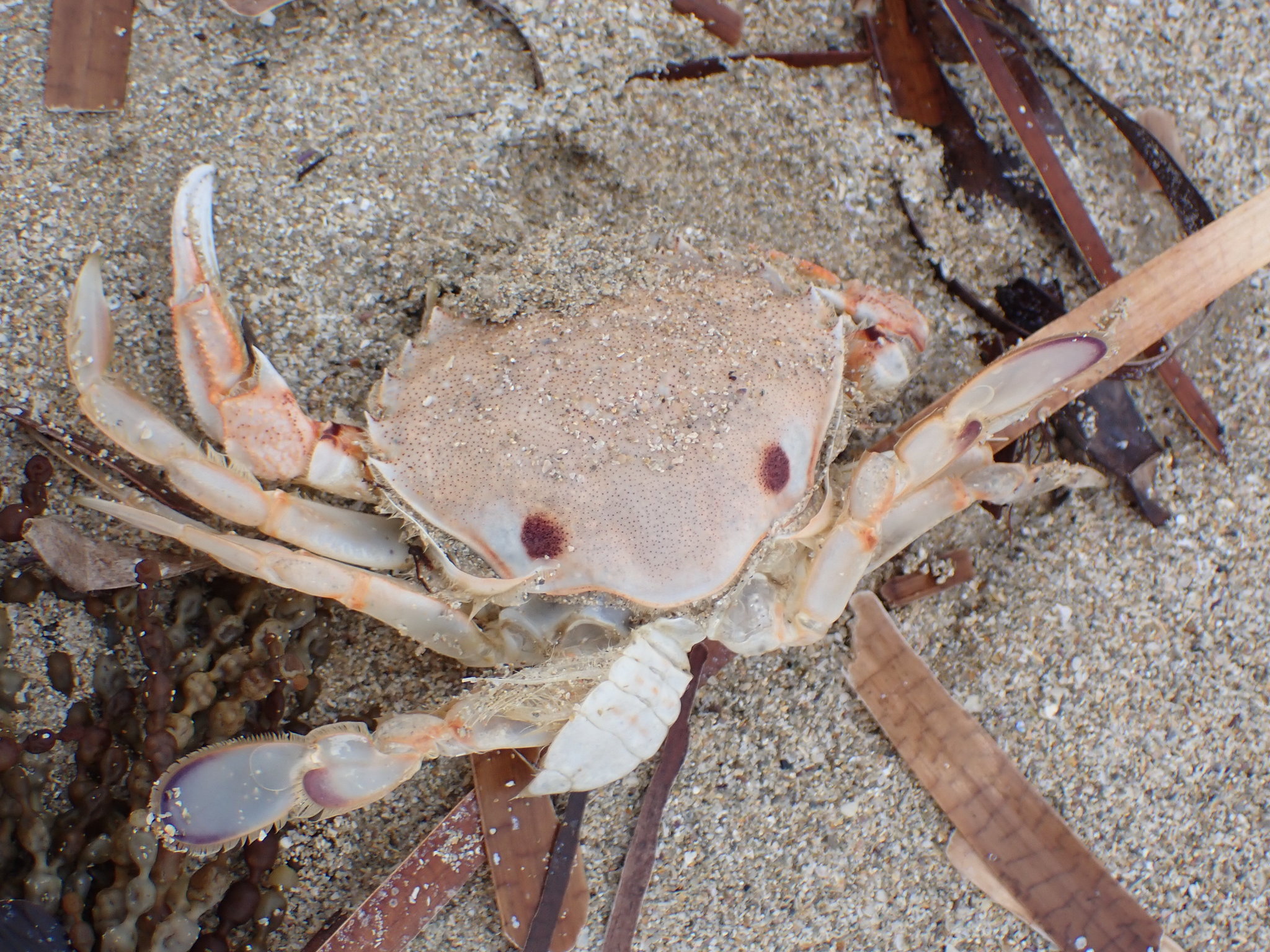
The carapace features two large reddish-brown dots towards the back whilst the colour of this crab varies from greyish to a pale orange-browns, the hind leg is a swimming leg and as such is flattened, and paddle shaped.
Distribution and map
Distribution provided by The Atlas of Living Australia
Classification
Classification
KingdomAnimalia
PhylumArthropoda
SubphylumCrustacea
SuperclassMulticrustacea
ClassMalacostraca
SubclassEumalacostraca
SuperorderEucarida
OrderDecapoda
SuborderPleocyemata
InfraorderBrachyura
SectionEubrachyura
SuperfamilyPortunoidea
FamilyPolybiidae
GenusOvalipes
SpeciesOvalipes australiensis
Synonyms
Synonyms
There are no known synonyms for this species
References and dates
Original
No original text available
Bibliography
View page references
Added
Wed 12 Aug 2020 @ 00:00 AM
Updated
Fri 19 Apr 2024 @ 00:00 AM
Surveys
View Survey List
Photos
Files
External Links
2 External Links
View External
Links
Disclaimer: A lot of work goes into trying to identify and ensure accurate identifications are made, and that the listed Descriptions, Sizes, Habitats and Distribution information is as accurate and valid as possible. Unfortunately, information in this arena is ever changing and as such no guarantee can be offered that it is correct or currently valid — the information is provided as a guide, and it is always suggested that you do a little research to ensure you have the latest and most accurate information. View the references or bibliography. Feedback and comments on the information provided are always welcome.
From Our Tasmania · https://ourtasmania.au/species-guide/view-species/ovalipes-australiensis/