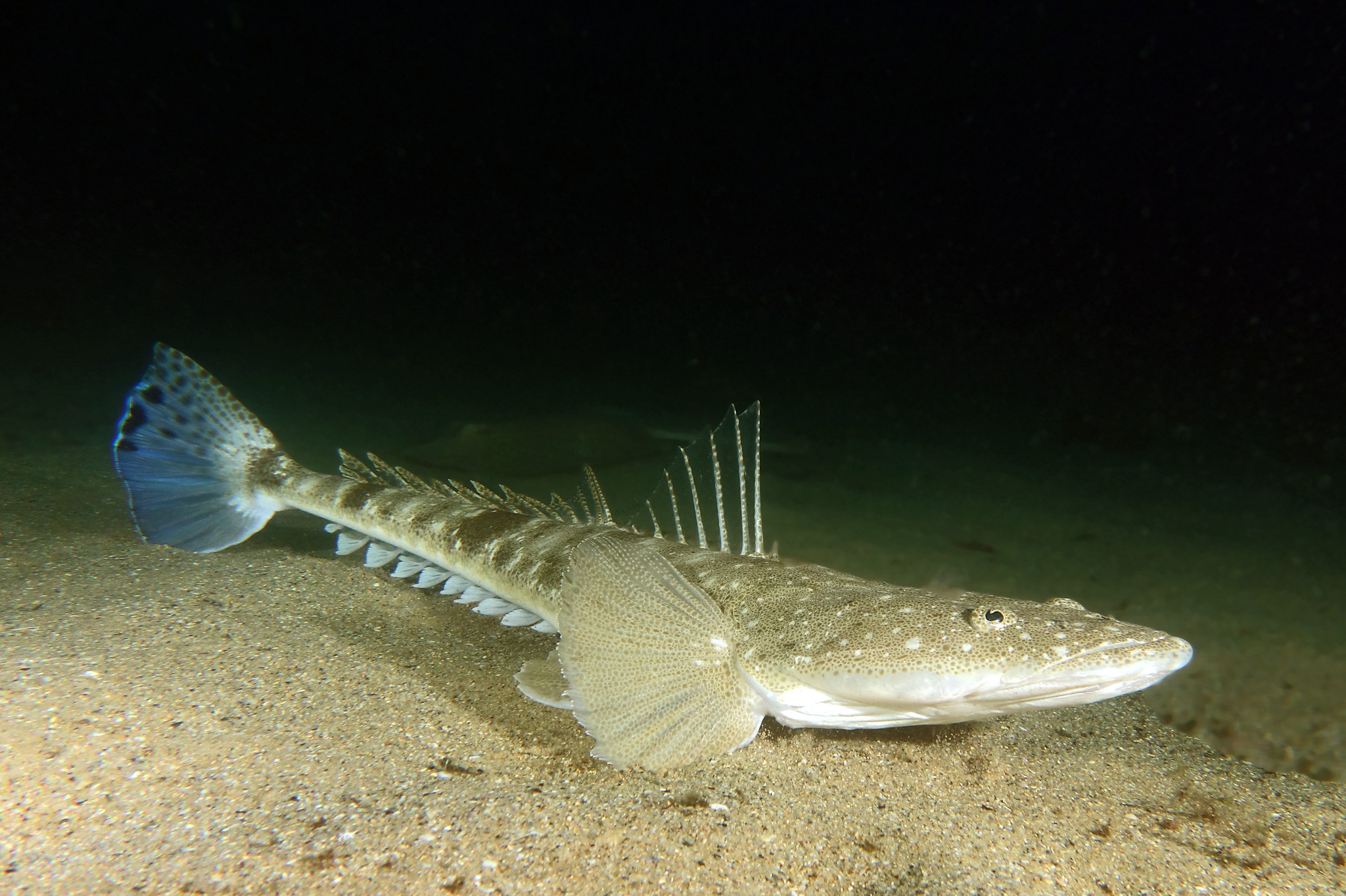
It is a large predatory fish and the largest member of the family Platycephalidae.
They can be distinguished from other flathead fine brown spots on the pectoral fins.
Many fishers have been led to believe that large females over 70cm are breeding fish but recent studies are showing that this is not the case and that in fact large females it appears their ovaries have degenerated so are not producing viable eggs, with more studies are being conducted to verify this.
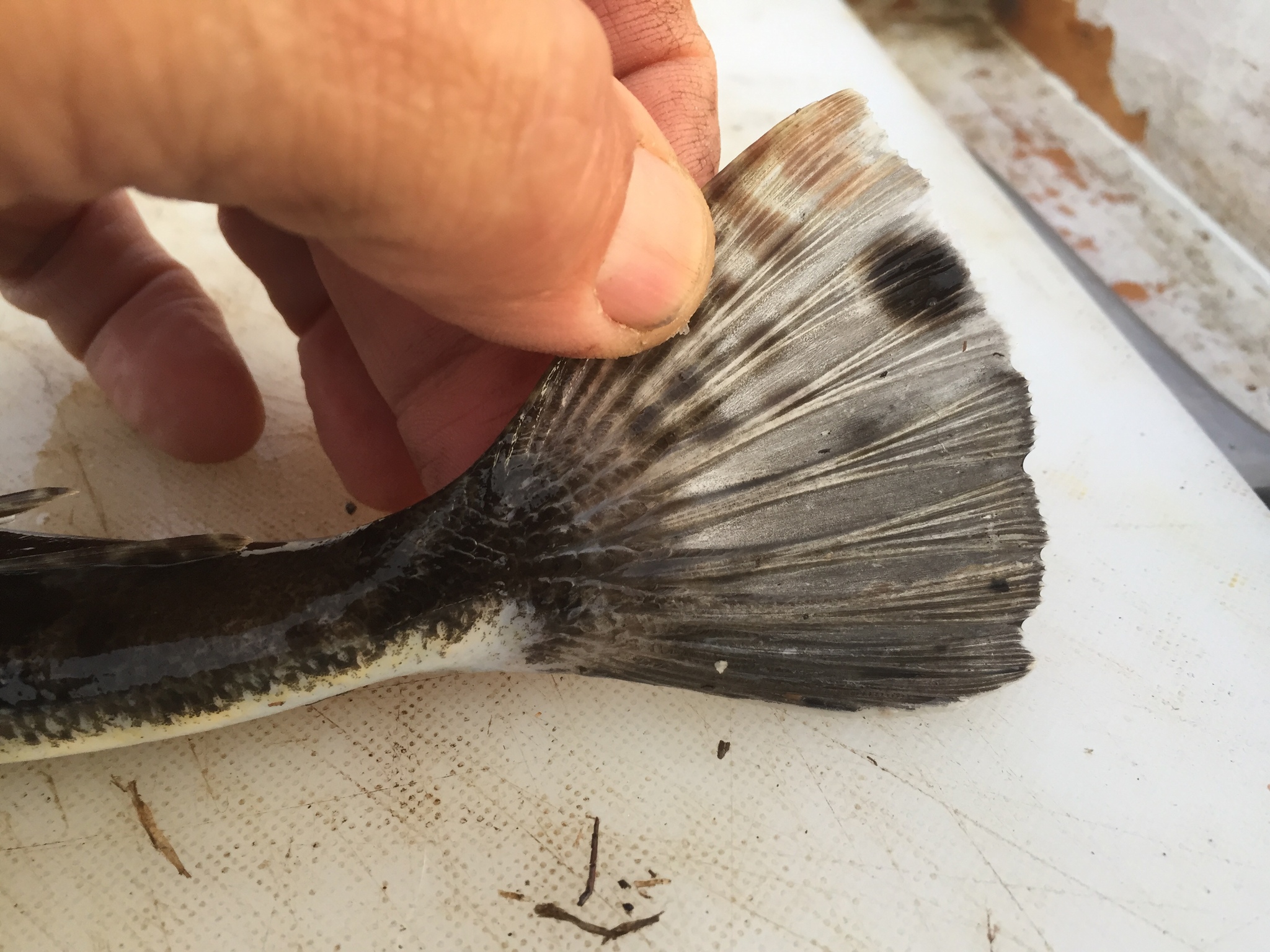
Look at the Tail and the pectoral fins to ID the tail may have a black mark but different to other species.
At a glance
Dusky Flathead at a glance
Habitat
They occur over mud, silt gravel, sand and seagrass beds from intertidal areas to depths of 30 m
Size
Dusky flathead are the largest of the many species of flathead found in Australia, and the most commonly caught. Dusky flathead have very rarely been caught at sizes up to 12–15 kg and lengths up to 1.5 metres, but average size is 0.5–1.5 kg and 40–50 cm
Origin
Endemic
Distribution
East coast of Australia, from Cairns in Queensland to the Gippsland Lakes in Victoria, Not common in most parts of Tasmania, it is reported to occur in small numbers around Flinders Island and the north coast but there have been no confirmed…
Descriptions
Distribution
East coast of Australia, from Cairns in Queensland to the Gippsland Lakes in Victoria, Not common in most parts of Tasmania, it is reported to occur in small numbers around Flinders Island and the north coast but there have been no confirmed…
Habitat
They occur over mud, silt gravel, sand and seagrass beds from intertidal areas to depths of 30 m
Size
Dusky flathead are the largest of the many species of flathead found in Australia, and the most commonly caught. Dusky flathead have very rarely been caught at sizes up to 12–15 kg and lengths up to 1.5 metres, but average size is 0.5–1.5 kg and 40–50 cm
Distribution and map
Distribution provided by The Atlas of Living Australia
Classification
Classification
KingdomAnimalia
PhylumChordata
SubphylumVertebrata
SuperclassGnathostomata
ClassActinopterygii
SubclassEuteleostei
SuperorderAcanthopterygii
OrderScorpaeniformes
FamilyPlatycephalidae
GenusPlatycephalus
SpeciesPlatycephalus fuscus
Synonyms
Synonyms
There are no known synonyms for this species
References and dates
Original
No original text available
Bibliography
View page references
Added
Sat 12 Sep 2020 @ 00:00 AM
Updated
Wed 31 Aug 2022 @ 00:00 AM
Surveys
View Survey List
Photos

Files
External Links
3 External Links
View External
Links
Disclaimer: A lot of work goes into trying to identify and ensure accurate identifications are made, and that the listed Descriptions, Sizes, Habitats and Distribution information is as accurate and valid as possible. Unfortunately, information in this arena is ever changing and as such no guarantee can be offered that it is correct or currently valid — the information is provided as a guide, and it is always suggested that you do a little research to ensure you have the latest and most accurate information. View the references or bibliography. Feedback and comments on the information provided are always welcome.
From Our Tasmania · https://ourtasmania.au/species-guide/view-species/platycephalus-fuscus/