These birds frequently follow people, catching insects disturbed by their passage. They are usually seen with their tail fanned out. They build a small, cup-shaped nest bound together with spider webs. The nest is usually in the fork of a tree and it has a long stem like a wine glass. The female lays two to five eggs which both parents incubate. After hatching, the chicks are fed by both parents. A pair will produce several broods each breeding season. Grey Fantails have a partial migration northwards during winter.
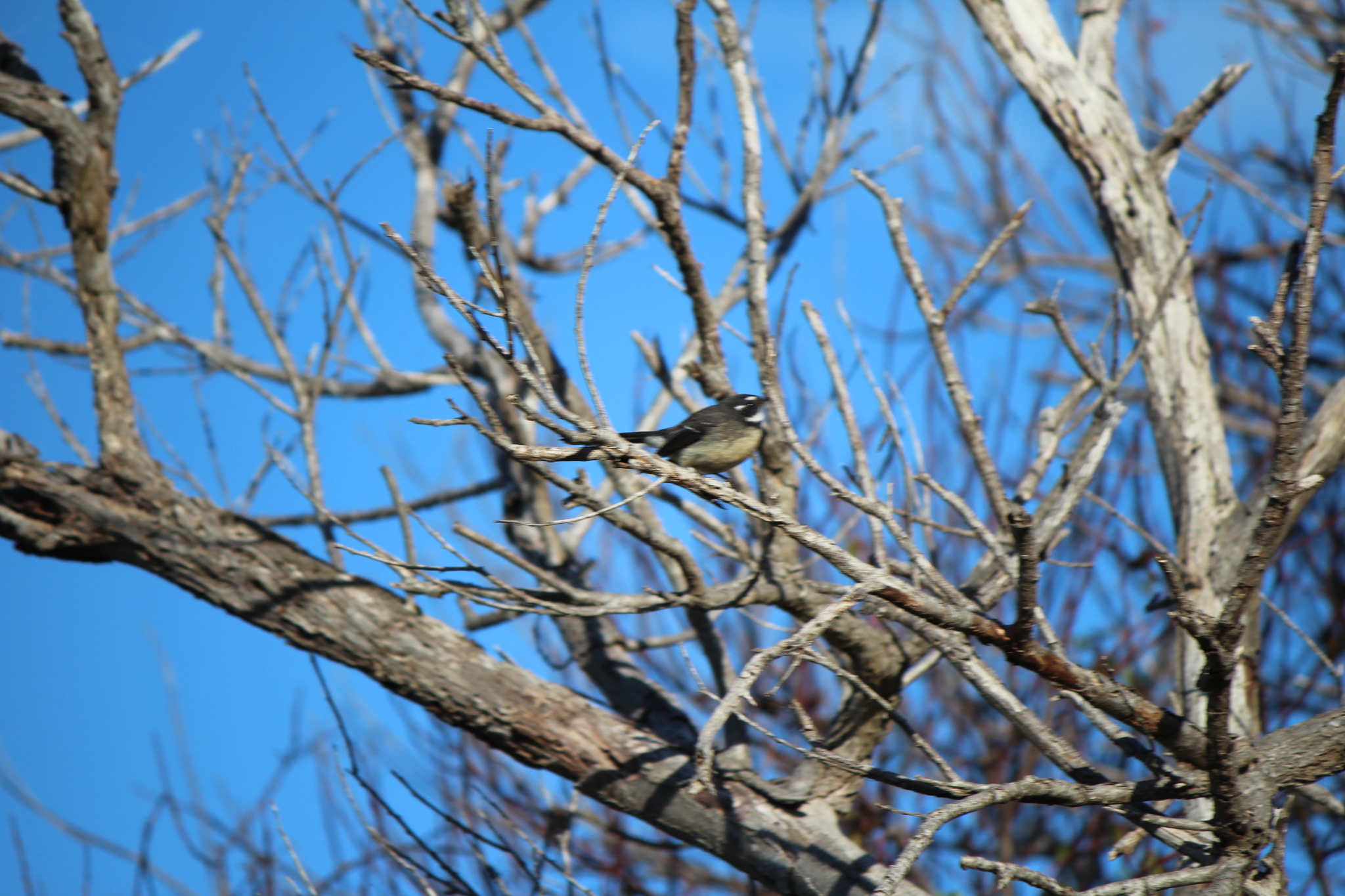
Upper body and head grey, throat with a white patch. Narrow white stripes on wing. Tail feathers long and grey with white edges. Eyebrow white. Easily recognised by its fanned tail. Body up to 17 cm long
At a glance
Grey Fantail at a glance
Habitat
Most treed areas
Size
Body up to 17 cm long
Origin
Native
Distribution
Mainland Australia and Tasmania
Descriptions
Distribution
Mainland Australia and Tasmania
Habitat
Most treed areas
Size
Body up to 17 cm long
Distribution and map
Distribution provided by The Atlas of Living Australia
Classification
Classification
KingdomAnimalia
PhylumChordata
SubphylumVertebrata
SuperclassGnathostomata
ClassAves
OrderPasseriformes
SuborderPasseri
InfraorderPasserida
FamilyDicruridae
GenusRhipidura
SpeciesRhipidura albiscapa
Synonyms
Synonyms
There are no known synonyms for this species
References and dates
Original
No original text available
Bibliography
View page references
Added
Thu 27 Aug 2020 @ 00:00 AM
Updated
Tue 16 Nov 2021 @ 23:00 PM
Surveys
View Survey List
Photos
Files
External Links
2 External Links
View External
Links
Disclaimer: A lot of work goes into trying to identify and ensure accurate identifications are made, and that the listed Descriptions, Sizes, Habitats and Distribution information is as accurate and valid as possible. Unfortunately, information in this arena is ever changing and as such no guarantee can be offered that it is correct or currently valid — the information is provided as a guide, and it is always suggested that you do a little research to ensure you have the latest and most accurate information. View the references or bibliography. Feedback and comments on the information provided are always welcome.
From Our Tasmania · https://ourtasmania.au/species-guide/view-species/rhipidura-albiscapa/