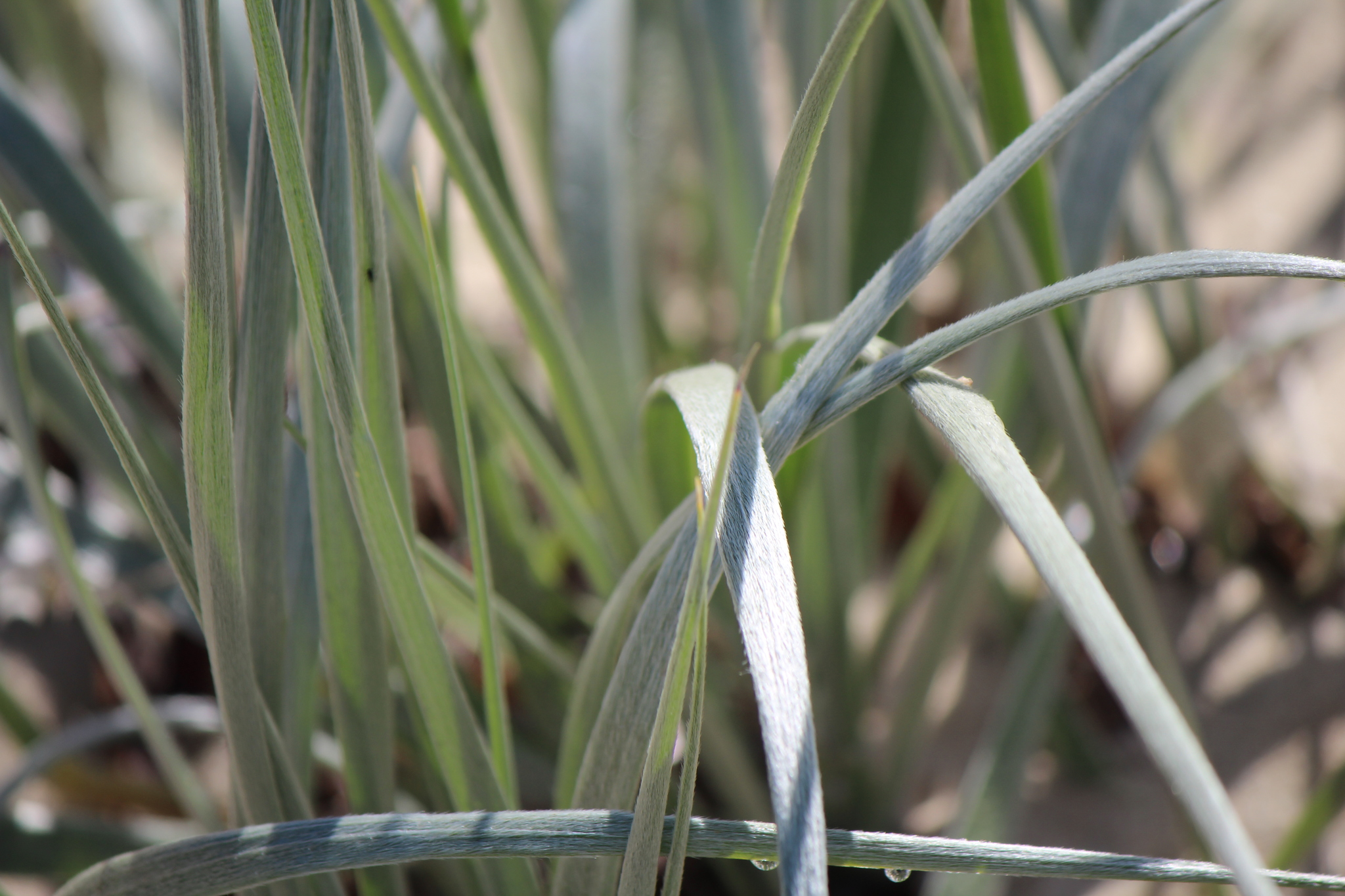
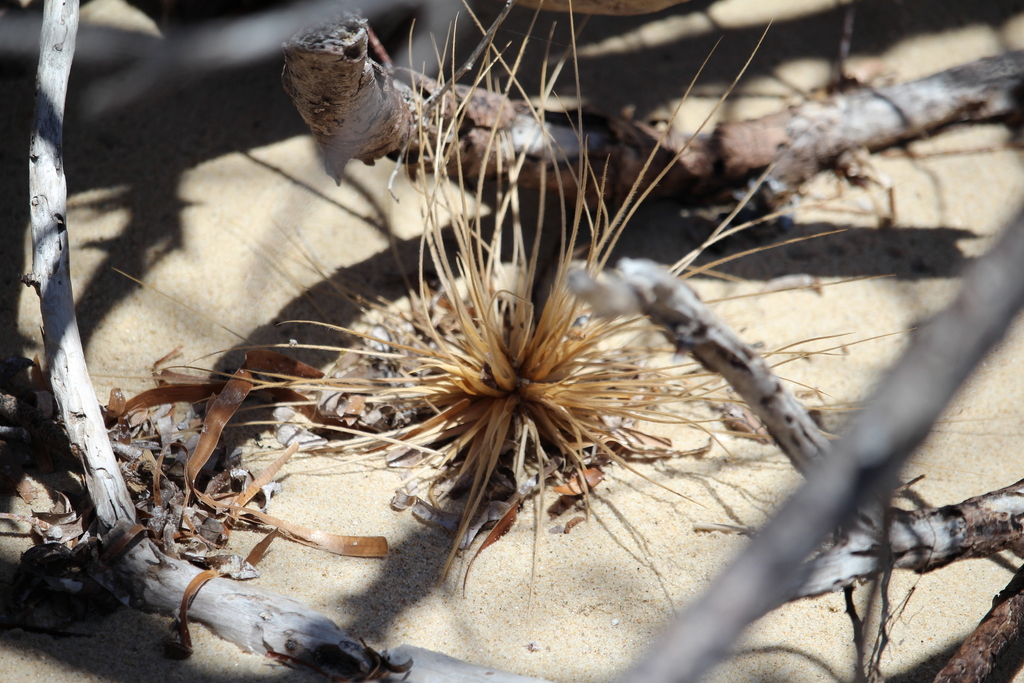
This stoloniferous, perennial grass is a primary coloniser and dominant native species of our coastal sand dunes; particularly the foredune where its long stolons can be readily observed gaining a foothold on mobile, bare sands. Leaves are densely hairy, flat to loosely inrolled and silvery in appearance.Flowers are dioecious with male and female flowers on separate plants. These appear in spring through to summer with the male flowers erect, narrow and brown whilst the female flowers produce a spherical structure which breaks free at maturity and are usually seen rolling down the beach

At a glance

Beach Spinifex at a glance

Habitat Strictly coastal where it is confined to sandy beaches It is usually found at the front of actively accumulating foredunes. Its does not tolerate stable dune systems and does not compete well with other introduced dune plants
Size Branched stolons and rhizomes extending from to 1 - 2 metres
Origin Native
Distribution Australia, New Zealand, New Caledonia, and Tonga
Descriptions
Distribution
Australia, New Zealand, New Caledonia, and Tonga
Habitat
Strictly coastal where it is confined to sandy beaches It is usually found at the front of actively accumulating foredunes. Its does not tolerate stable dune systems and does not compete well with other introduced dune plants
Size
Branched stolons and rhizomes extending from to 1 - 2 metres
Common Name Beach Spinifex
Aliases hairy spinifex, rolling spinifex, coastal spinifex,
Origin Native
Share
Distribution and map

Distribution provided by The Atlas of Living Australia

Classification

Classification

KingdomPlantae
SubclassMagnoliidae
SuperorderLilianae
OrderPoales
FamilyPoaceae
Synonyms

Synonyms

There are no known synonyms for this species
References and dates
Original No original text available
Bibliography View page references
Added Wed 3 Jun 2020 @ 00:00 AM
Updated Sun 15 May 2022 @ 00:00 AM
Files
Type Details Version Size Added Updated Links
There are no downloads or Files for this species at the moment

Disclaimer: A lot of work goes into trying to identify and ensure accurate identifications are made, and that the listed Descriptions, Sizes, Habitats and Distribution information is as accurate and valid as possible. Unfortunately, information in this arena is ever changing and as such no guarantee can be offered that it is correct or currently valid — the information is provided as a guide, and it is always suggested that you do a little research to ensure you have the latest and most accurate information. View the references or bibliography. Feedback and comments on the information provided are always welcome.