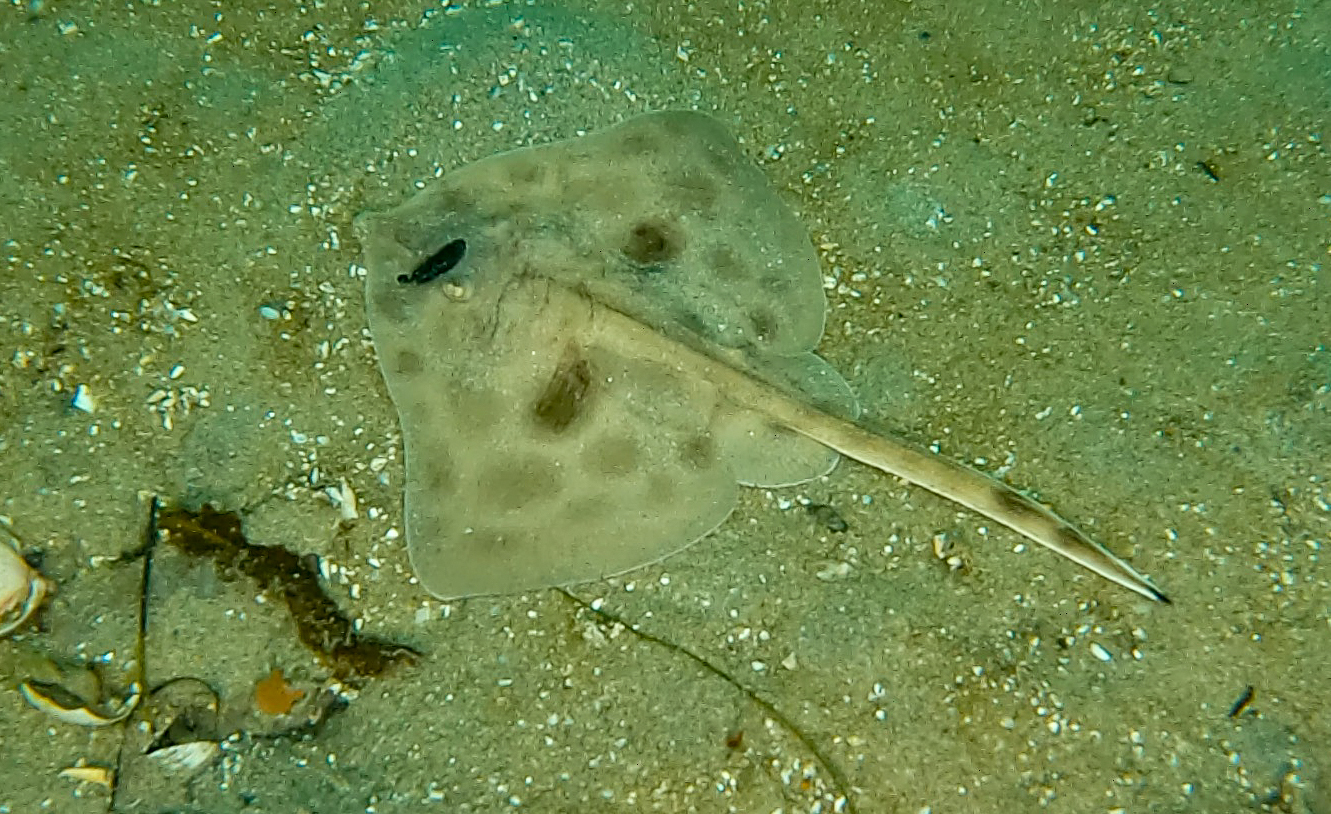
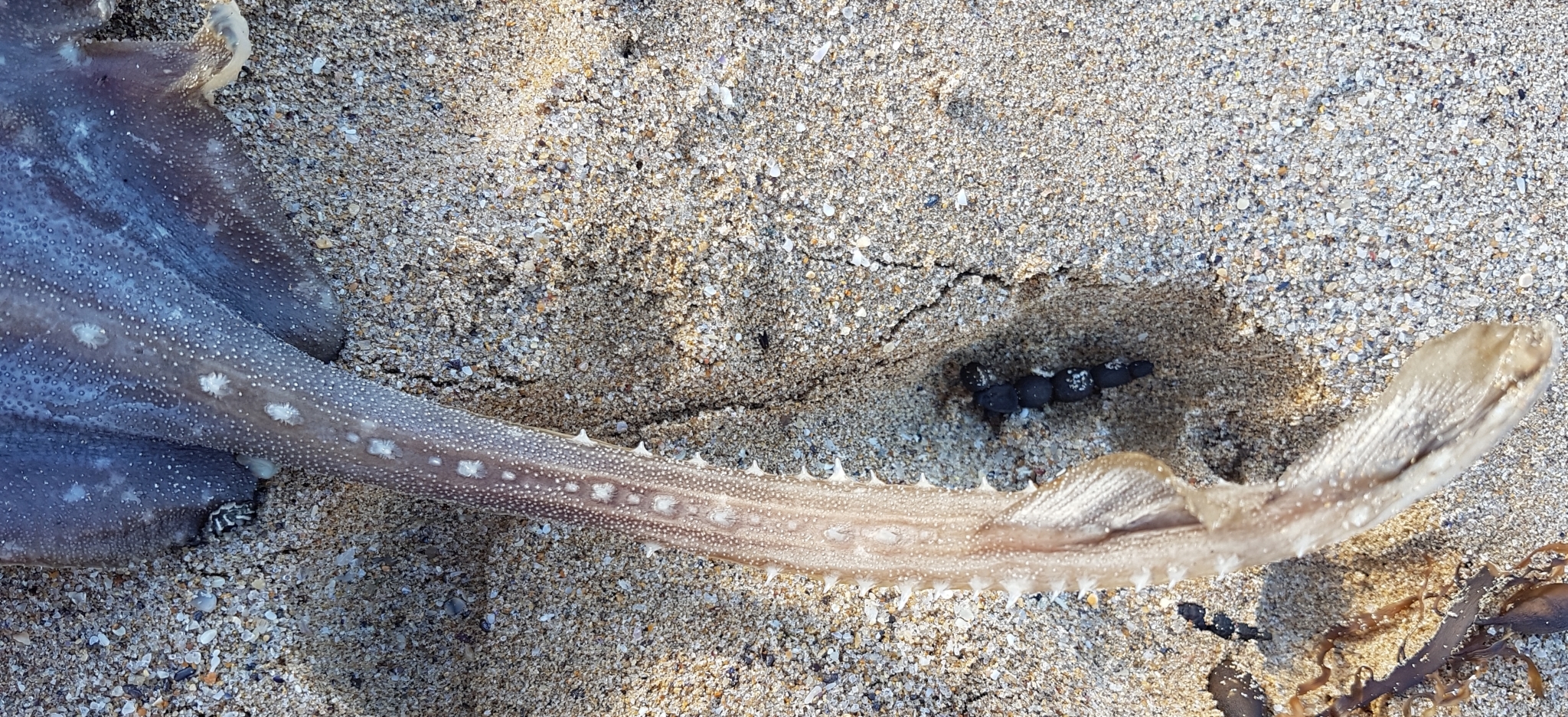
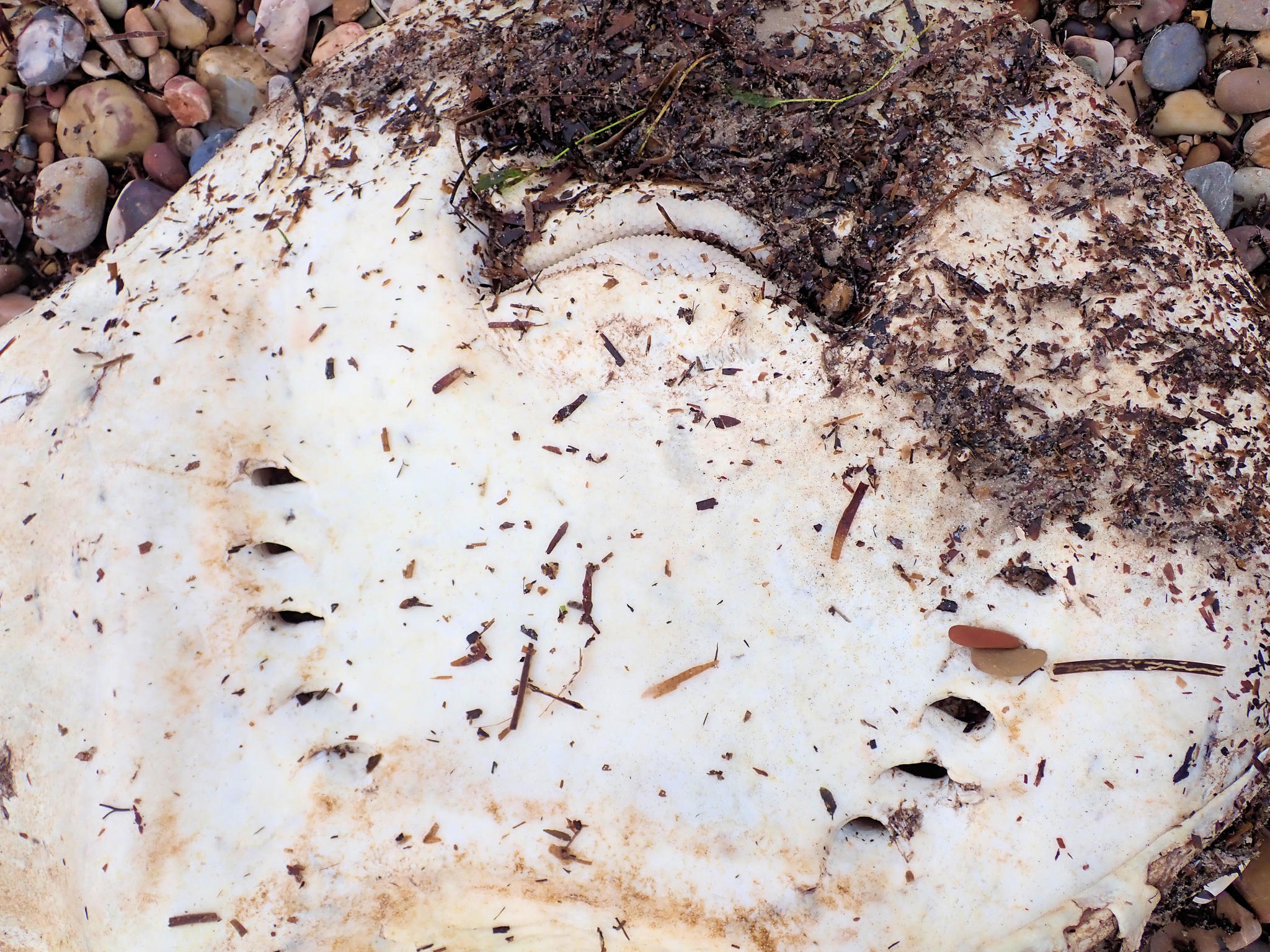
A large skate with an angled disc; snout broadly pointed with a central cartilaginous support; tail short, with 1-3 rows of thorns and two dorsal fins near the tip; 1-4 thorns along the middle behind the head; a patch of thorns on each wing. Grey or greyish-brown on top, scattered with white flecks, underside pale. Juveniles have a large dark blotch on each wing.

Images showing the key charateristics of this skate species
At a glance

Melbourne Skate at a glance

Habitat The Melbourne Skate is one of the few skates to live on hard bottoms around reefs, although it also occurs on soft bottoms from intertidal zones out to a depth of around 345m
Size Can grow to around 170cm long and up to around 50kg
Origin Endemic
Distribution Southern Australia widely distributed on the continental shelf from about Sydney, New South Wales, to about Albany, Western Australia, and around Tasmania
Descriptions
Distribution
Southern Australia widely distributed on the continental shelf from about Sydney, New South Wales, to about Albany, Western Australia, and around Tasmania
Habitat
The Melbourne Skate is one of the few skates to live on hard bottoms around reefs, although it also occurs on soft bottoms from intertidal zones out to a depth of around 345m
Size
Can grow to around 170cm long and up to around 50kg
Common Name Melbourne Skate
Aliases No Known Aliases
Origin Endemic
Conservation Vulnerable
Share
Distribution and map

Distribution provided by The Atlas of Living Australia

Classification

Classification

KingdomAnimalia
PhylumChordata
SubphylumVertebrata
SuperclassGnathostomata
FamilyRajidae
Synonyms

Synonyms

There are no known synonyms for this species
References and dates
Original No original text available
Bibliography View page references
Added Wed 8 Sep 2021 @ 00:00 AM
Updated Sun 25 Sep 2022 @ 00:00 AM
Files
Type Details Version Size Added Updated Links
There are no downloads or Files for this species at the moment

Disclaimer: A lot of work goes into trying to identify and ensure accurate identifications are made, and that the listed Descriptions, Sizes, Habitats and Distribution information is as accurate and valid as possible. Unfortunately, information in this arena is ever changing and as such no guarantee can be offered that it is correct or currently valid — the information is provided as a guide, and it is always suggested that you do a little research to ensure you have the latest and most accurate information. View the references or bibliography. Feedback and comments on the information provided are always welcome.