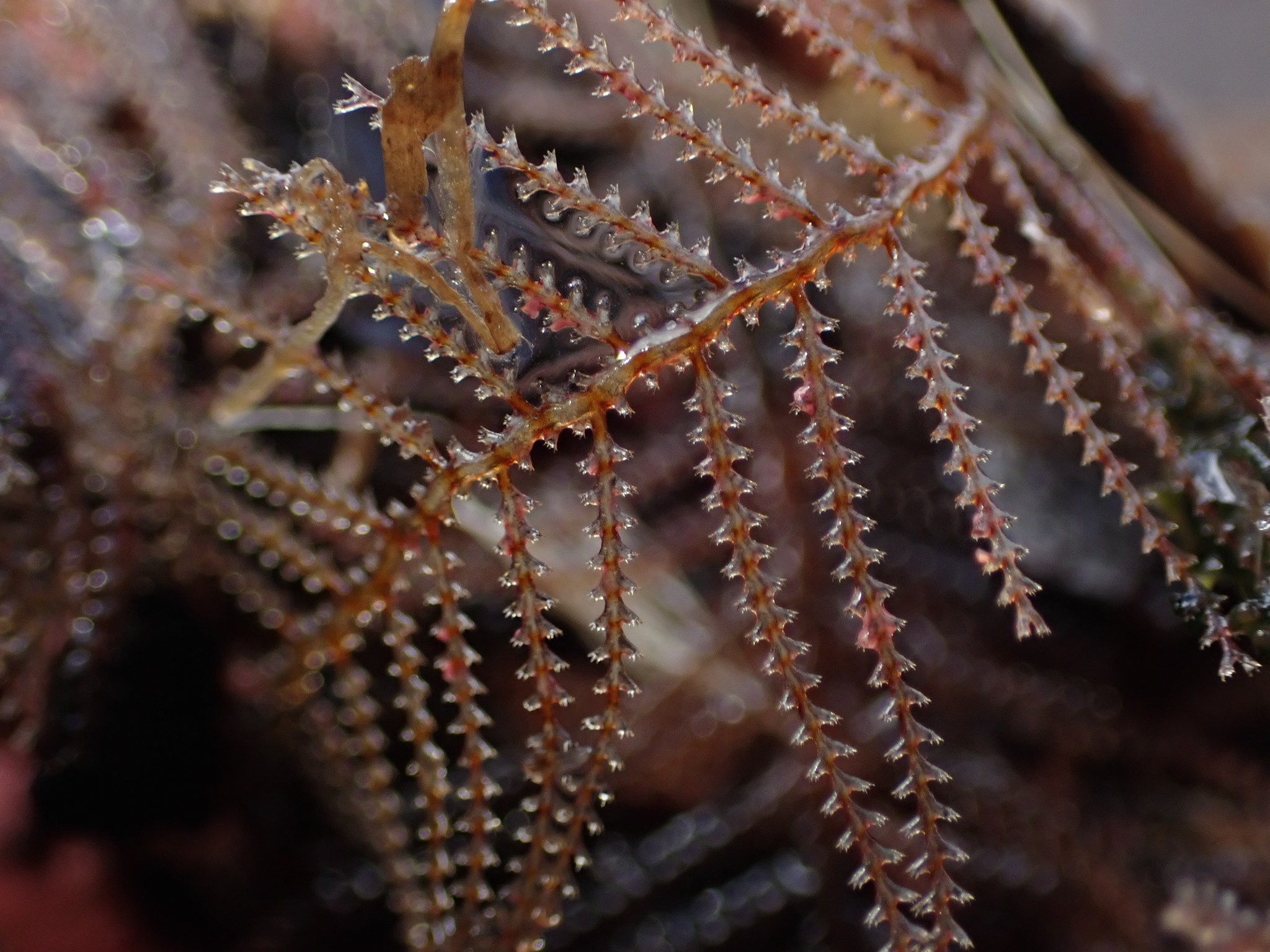
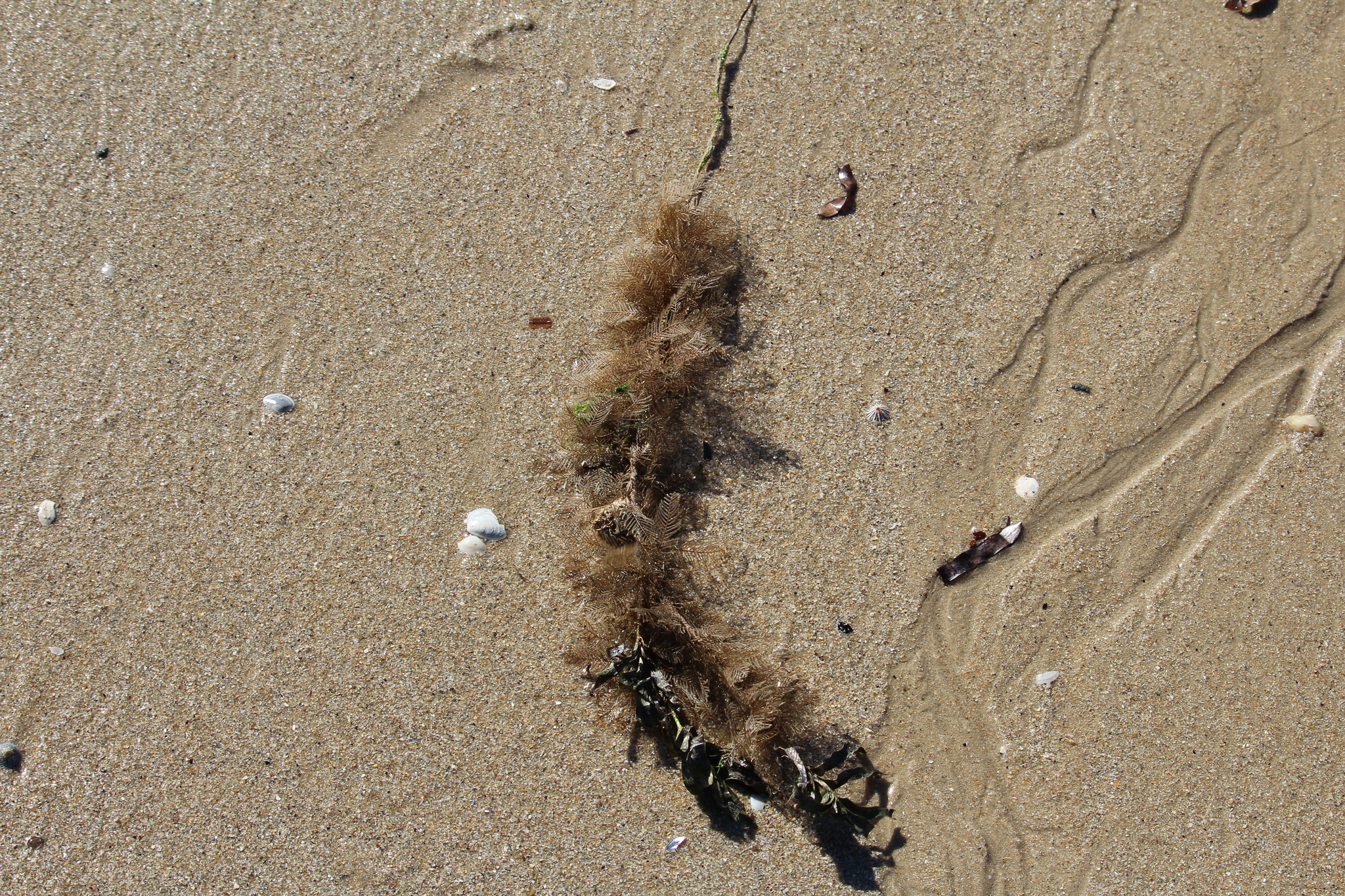
An epiphytal (or epiphytic) hydroid colony, a marine hydrozoan animal that grows attached to the surfaces of marine plants, such as seagrasses and macroalgae (kelp), rather than on rocks or artificial structures. 

Hydrozoa are closely related to jellyfish, not plants. They are actually a class of small, predatory aquatic animals within the phylum Cnidaria, which is the exact same biological group that includes true jellyfish, sea anemones, and corals and while some hydrozoans grow in branched colonies that resemble moss or ferns, they are fully animal organisms
At a glance

Hydroid Sp. at a glance

Habitat On holdfasts of seaweed, especially stems of seagrasses
Size Can grow to around 80mm long
Origin Native
Distribution Native to southern Australian and New Zealand waters
Descriptions
Distribution
Native to southern Australian and New Zealand waters
Habitat
On holdfasts of seaweed, especially stems of seagrasses
Size
Can grow to around 80mm long

Identification

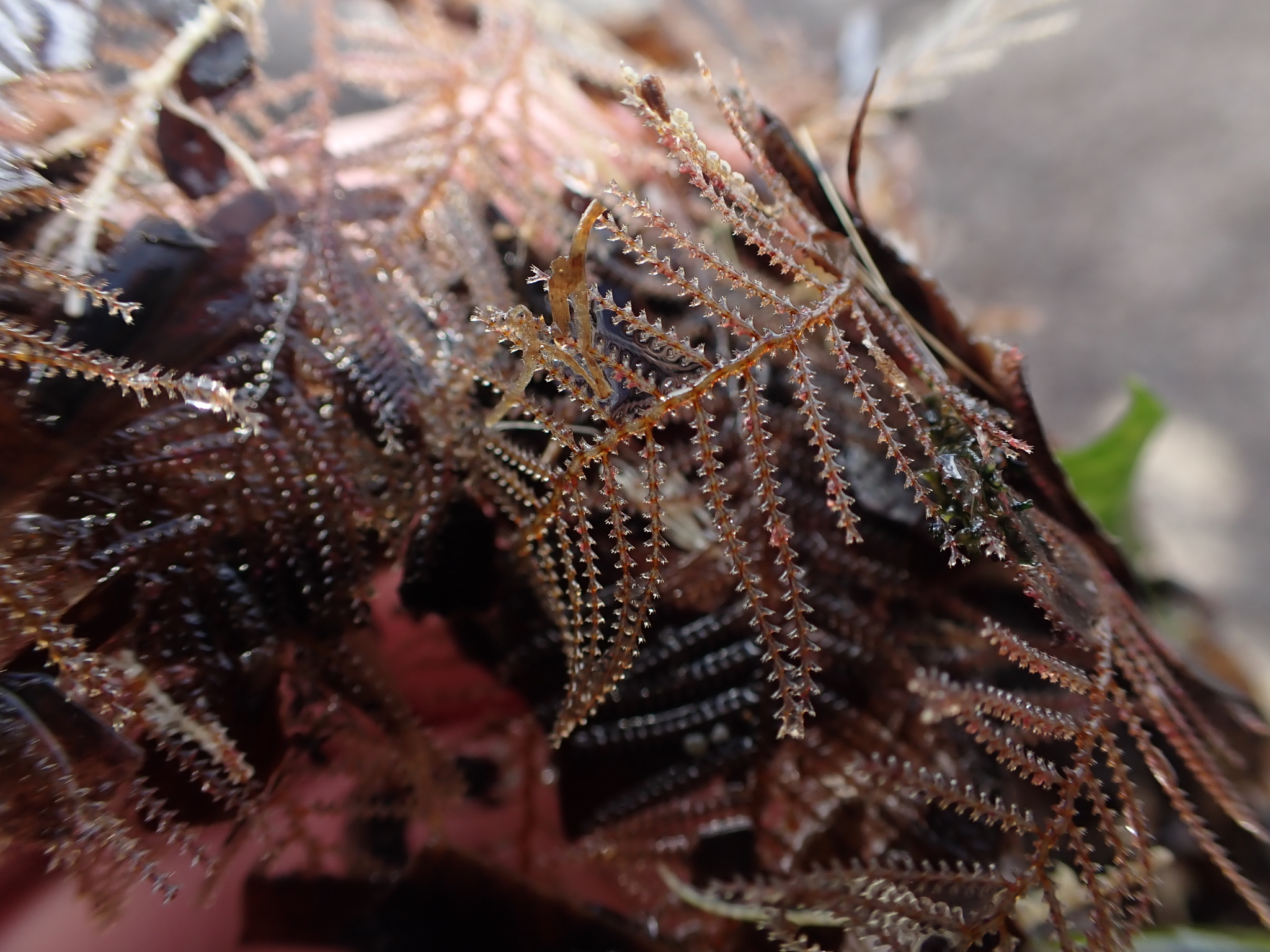
Growing on the stems of seagrasses such as Amphibolis antarctica and reported by some sources on the stems of brown algae species it grows outward from the stem with a feather like form its polyps the small cups along the branches are arranged in an alternating pattern with the polyp opening at the top featuring more than 4 sharp teeth on the margin.

The colour of this species is a brownish tan to a light brownish red

The features of this species are harder to see with the naked eye given their small size a good reference is if growing on the stem of Amphibolis antarctica and has the feather like appearance then it is more than likely this species  the images provided here will give some more help in understanding this species 

Common Name Hydroid Sp.
Aliases No Known Aliases
Origin Native
Share
Distribution and map

Distribution provided by The Atlas of Living Australia

Classification

Classification

KingdomAnimalia
PhylumCnidaria
SubclassHydroidolina
Synonyms

Synonyms

There are no known synonyms for this species
References and dates
Bibliography View page references
Added Fri 22 Oct 2021 @ 23:00 PM
Updated Sat 3 Oct 2026 @ 12:13 PM
Files
Type Details Version Size Added Updated Links
There are no downloads or Files for this species at the moment

Disclaimer: A lot of work goes into trying to identify and ensure accurate identifications are made, and that the listed Descriptions, Sizes, Habitats and Distribution information is as accurate and valid as possible. Unfortunately, information in this arena is ever changing and as such no guarantee can be offered that it is correct or currently valid — the information is provided as a guide, and it is always suggested that you do a little research to ensure you have the latest and most accurate information. View the references or bibliography. Feedback and comments on the information provided are always welcome.