Warning:The venomous barbs on the tail can cause a painful injury
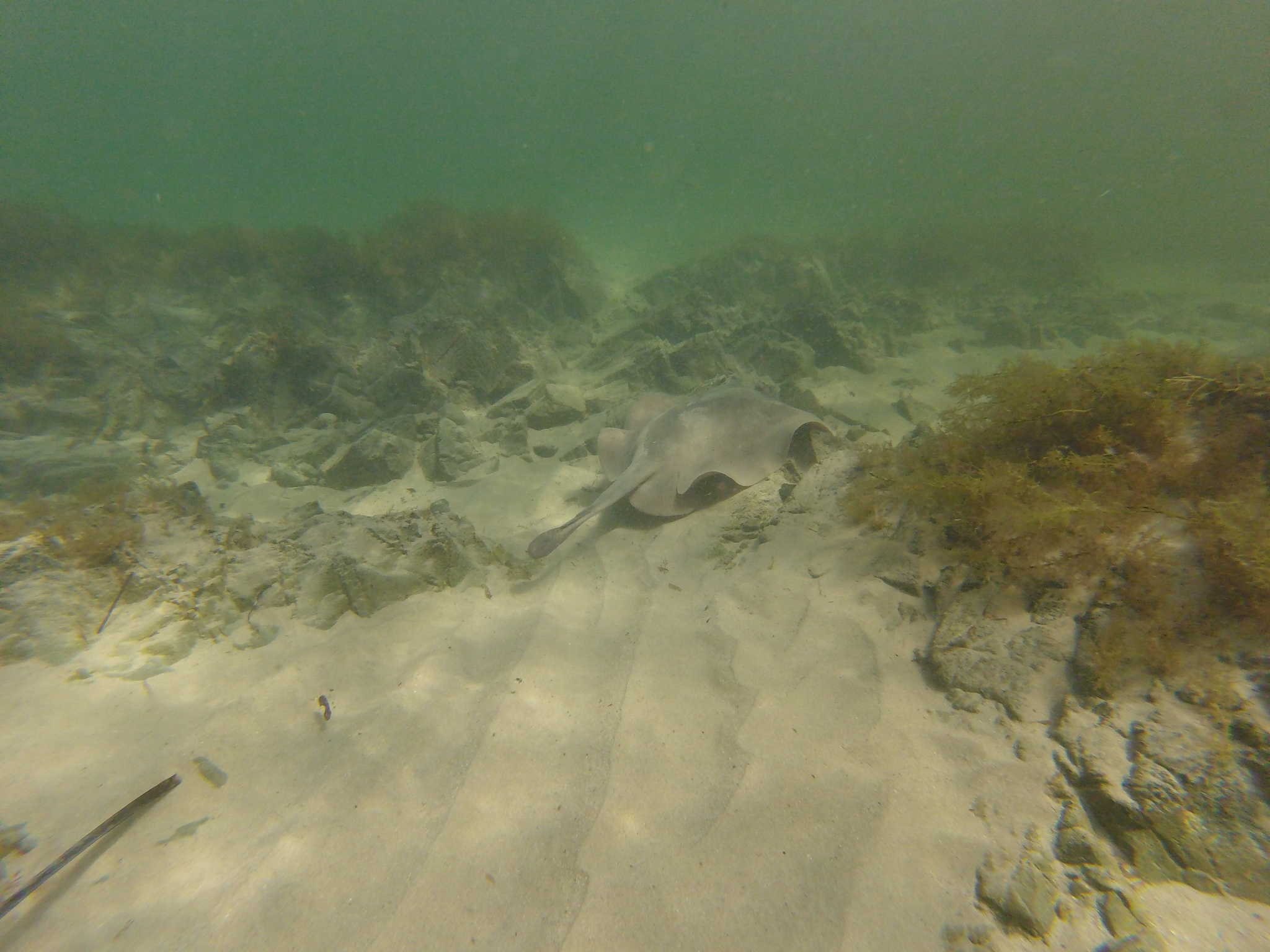
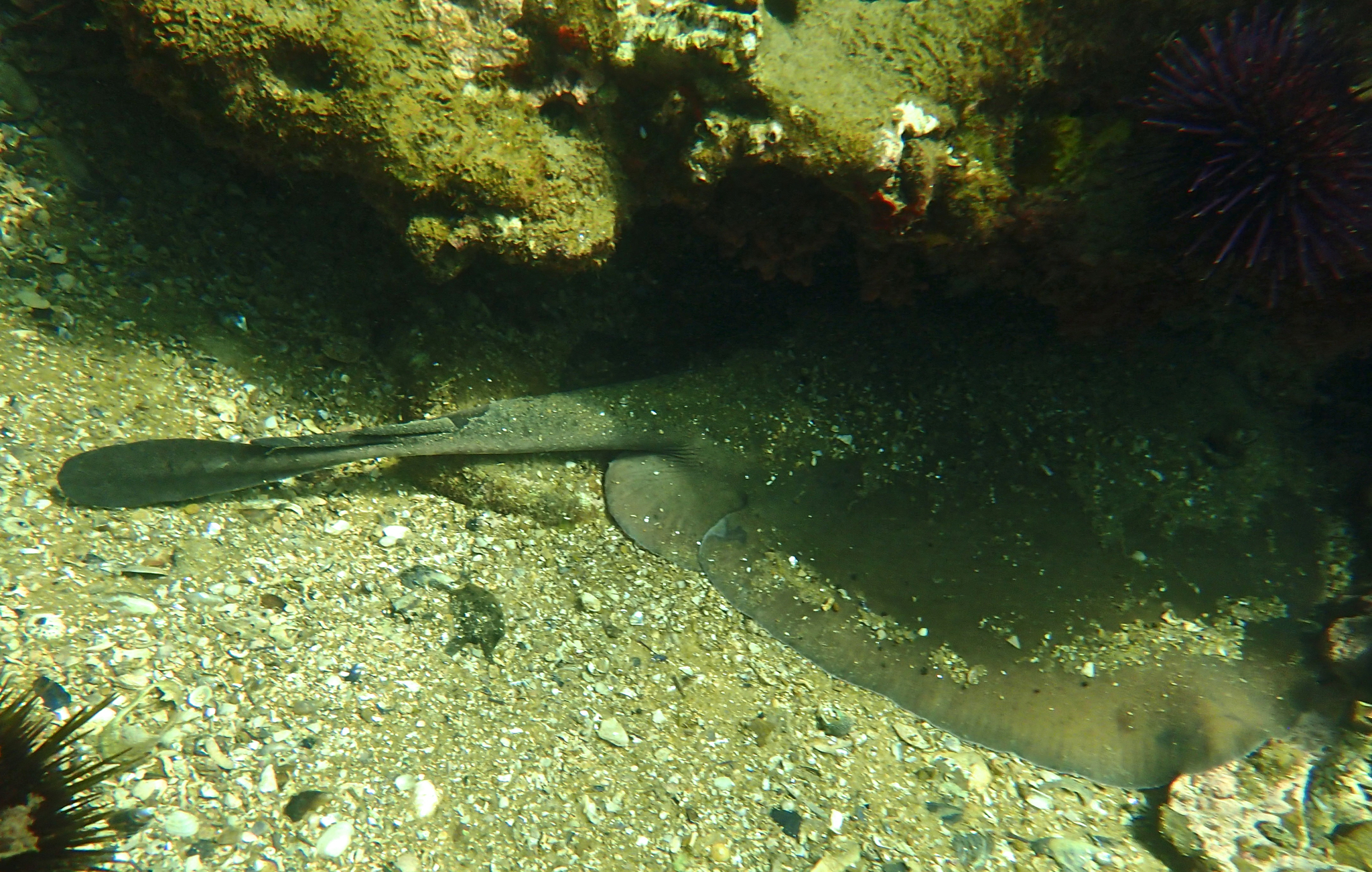
A large coastal stingaree with a relatively deep-body, a smooth rhomboidal to subcircular disc, two venomous spines and a long tail fin; no dorsal fin or skin folds along the tail. Upper surface brown to dark brown, sometimes scattered with darker and lighter spots; underside pale with broad darker margins.
At a glance
Eastern Shovelnose Stingaree at a glance
Habitat
On the bottom, in shallow estuaries, Although it is believed this species also exists in deeper waters off the shelfs around South Australia
Size
Can grow to around 80cm
Origin
Endemic
Distribution
South East Australian coastal waters including northern Tasmania
Descriptions
Distribution
South East Australian coastal waters including northern Tasmania
Habitat
On the bottom, in shallow estuaries, Although it is believed this species also exists in deeper waters off the shelfs around South Australia
Size
Can grow to around 80cm
Distribution and map
Distribution provided by The Atlas of Living Australia
Classification
Classification
KingdomAnimalia
PhylumChordata
SubphylumVertebrata
SuperclassGnathostomata
ClassChondrichthyes
SubclassElasmobranchii
OrderMyliobatiformes
FamilyUrolophidae
GenusTrygonoptera
SpeciesTrygonoptera imitata
Synonyms
Synonyms
There are no known synonyms for this species
References and dates
Original
No original text available
Bibliography
View page references
Added
Sun 21 Feb 2021 @ 23:00 PM
Updated
Sun 25 Sep 2022 @ 00:00 AM
Surveys
View Survey List
Photos
Files
External Links
5 External Links
View External
Links
Disclaimer: A lot of work goes into trying to identify and ensure accurate identifications are made, and that the listed Descriptions, Sizes, Habitats and Distribution information is as accurate and valid as possible. Unfortunately, information in this arena is ever changing and as such no guarantee can be offered that it is correct or currently valid — the information is provided as a guide, and it is always suggested that you do a little research to ensure you have the latest and most accurate information. View the references or bibliography. Feedback and comments on the information provided are always welcome.
From Our Tasmania · https://ourtasmania.au/species-guide/view-species/trygonoptera-imitata/