Warning:Painful sting, sometimes causing allergic reaction. This species likes to enter open drink cans
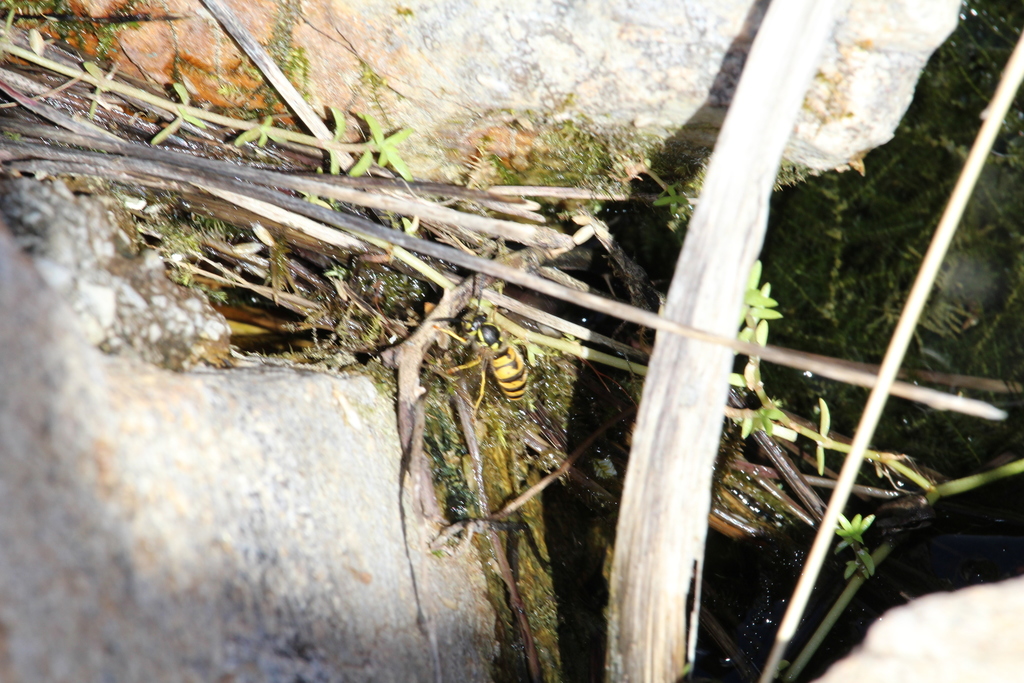
Body yellow with black triangular markings and paired black spots on the abdomen. Wings transparent, legs yellow and antennae black European Wasps form colonies and build round, grey paper nests. The workers feed on nectar and collect protein-rich foods to feed to the larvae. The queens hibernate through winter and may be found in curtain folds in homes.
At a glance
European wasp at a glance
Habitat
Urban areas, forests, woodlands, heaths.
Size
Can grow to around 20mm
Origin
Introduced
Distribution
Now known from WA to NSW including in Tasmania where it was first discovered in 1959
Descriptions
Distribution
Now known from WA to NSW including in Tasmania where it was first discovered in 1959
Habitat
Urban areas, forests, woodlands, heaths.
Size
Can grow to around 20mm
Distribution and map
Distribution provided by The Atlas of Living Australia
Classification
Classification
KingdomAnimalia
PhylumArthropoda
SubphylumHexapoda
ClassInsecta
SubclassPterygotes
OrderHymenoptera
SuperfamilyVespoidea
FamilyVespidae
SubfamilyVespinae
GenusVespula
SpeciesVespula germanica
Synonyms
Synonyms
There are no known synonyms for this species
References and dates
Original
No original text available
Bibliography
View page references
Added
Fri 29 Jan 2021 @ 23:00 PM
Updated
Sun 25 Sep 2022 @ 00:00 AM
Surveys
View Survey List
Photos
Files
External Links
2 External Links
View External
Links
Disclaimer: A lot of work goes into trying to identify and ensure accurate identifications are made, and that the listed Descriptions, Sizes, Habitats and Distribution information is as accurate and valid as possible. Unfortunately, information in this arena is ever changing and as such no guarantee can be offered that it is correct or currently valid — the information is provided as a guide, and it is always suggested that you do a little research to ensure you have the latest and most accurate information. View the references or bibliography. Feedback and comments on the information provided are always welcome.
From Our Tasmania · https://ourtasmania.au/species-guide/view-species/vespula-germanica/