As Written by (Lamarck, 1818)
Porcellane herissee. Porcellana hirta P. testa subovata, antice attenuata, hirta, chelis latis compressis superne margineque hirtis.
Latin to English
Porcellane herissee. Porcelain hairy "P. testa" is subovate, anteriorly attenuated, hairy, broad compressed chelae on the distal margin and hairy.
What Does It Mean?
So if we look at that description we can see the shape is loosely ovate and thinner towards the front of the crab than the posterior and covered in short hairs with broad chelae.
Identification
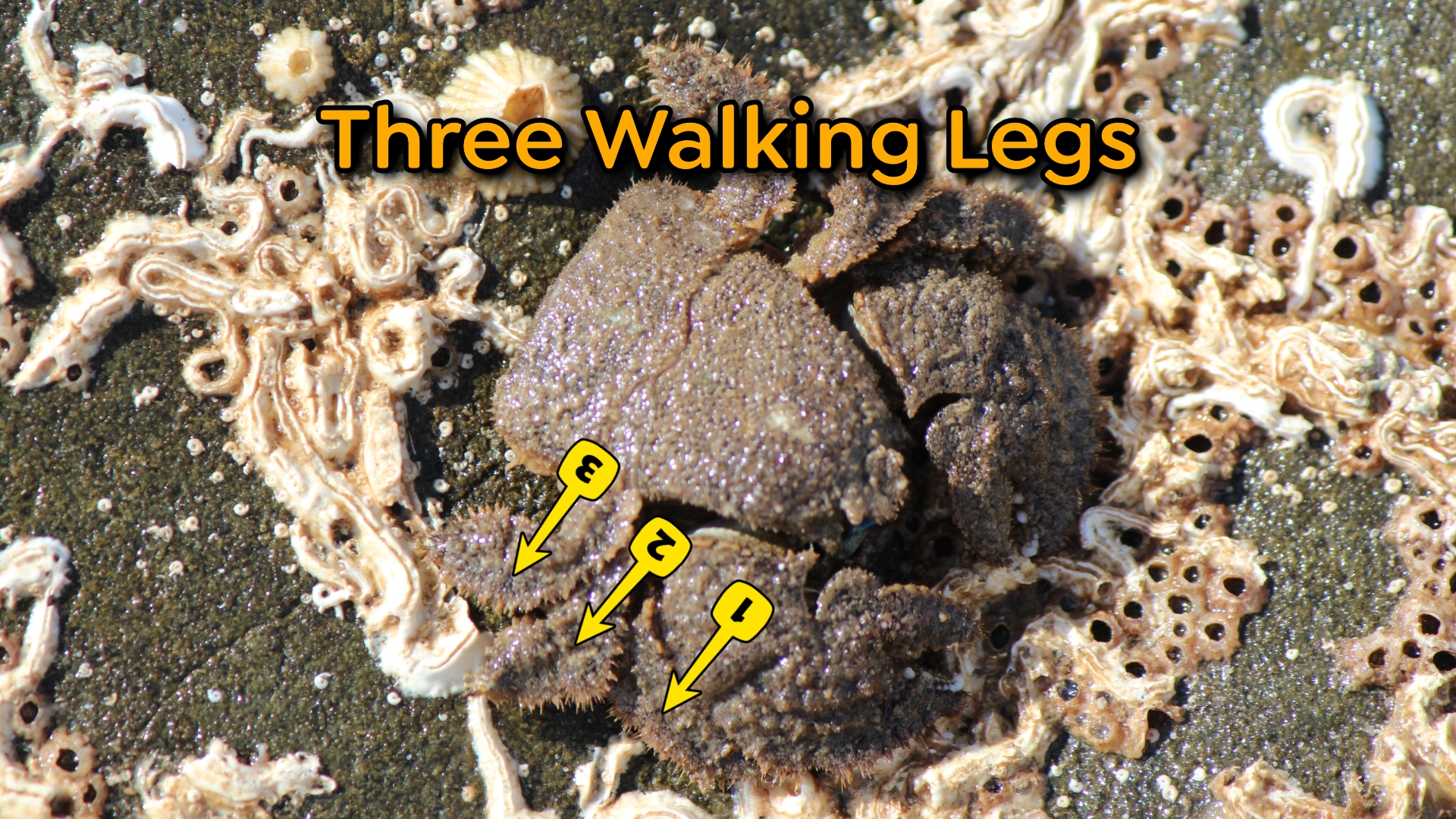
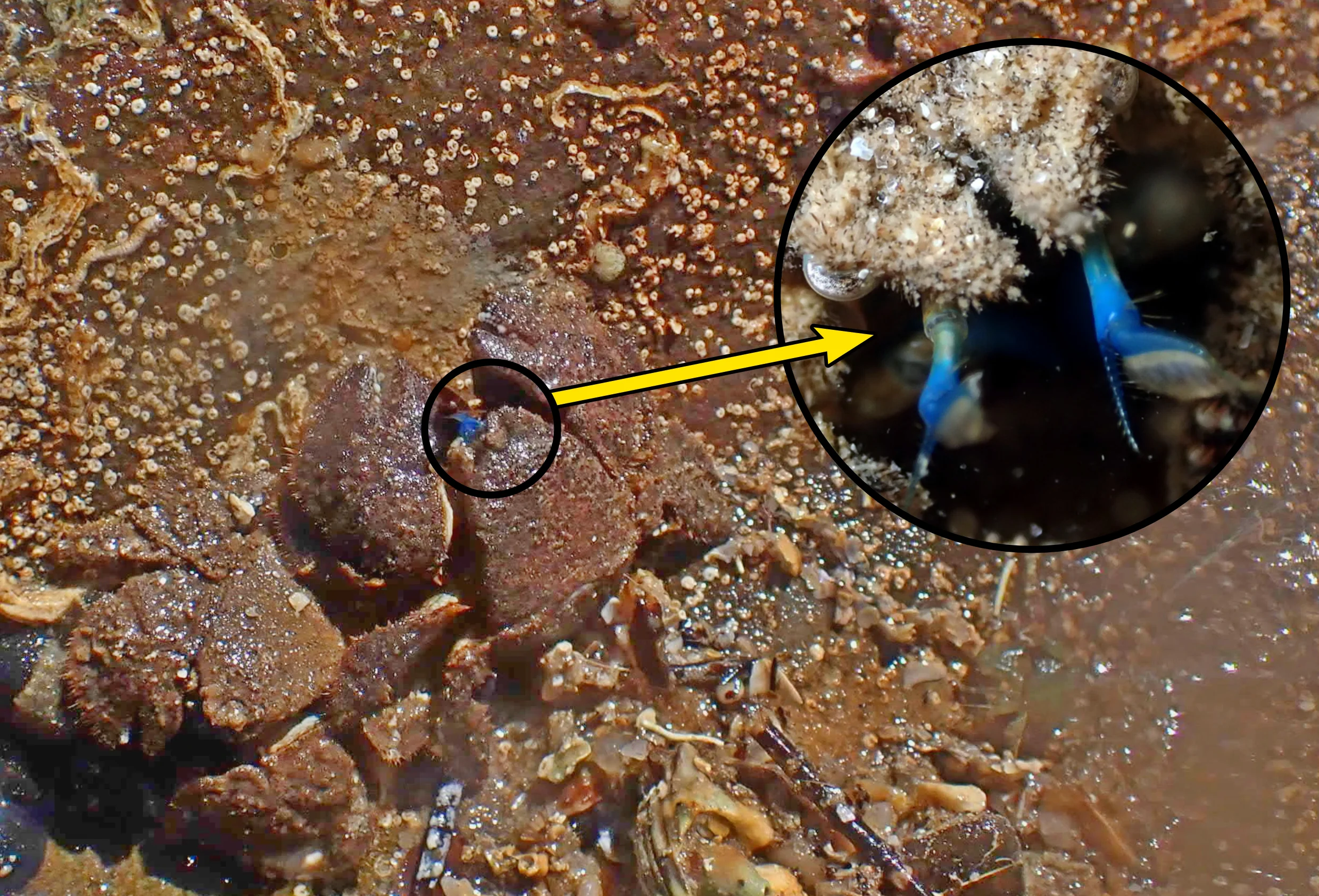
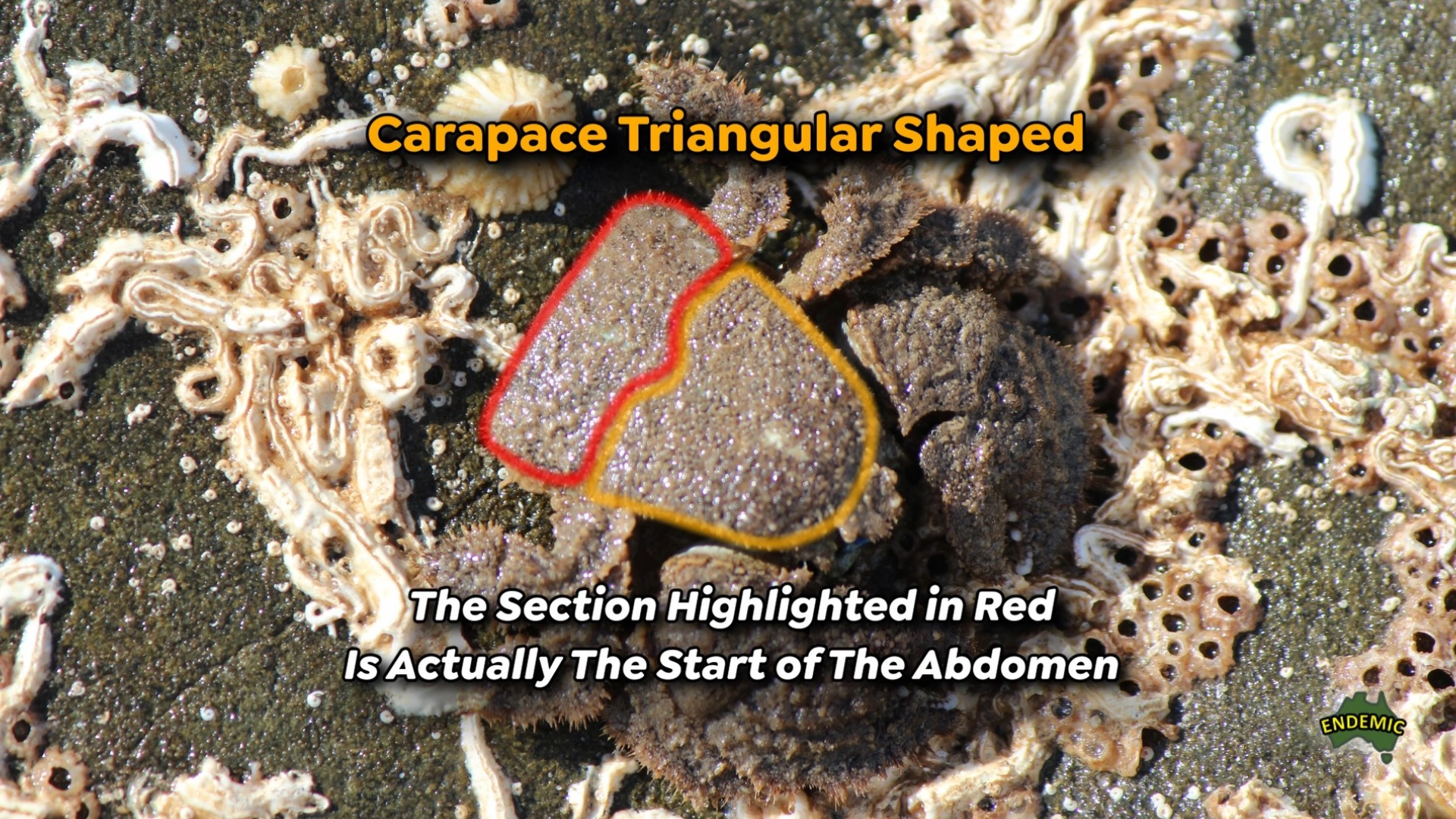
The crab's small hairs, or setae, capture silt and sand, enhancing its camouflage in its habitat. It features a flat, triangular carapace and with only three legs that fit snugly against its body and each other. Its claws (chelae) are large and flattened. While the crab typically blends in well, its bright blue antennae and mouth parts become visible when the claws are spread apart.

Disclaimer: A lot of work goes into trying to identify and ensure accurate identifications are made and that the listed Descriptions, Sizes, Habitats and Distribution information is as accurate and valid as possible. Unfortunately, information in this arena is ever changing and as such no guarantee can be offered that it is correct or currently valid — as a result the information is provided as a guide, and it is always suggested that you do a little research to ensure you have the latest and most accurate information.


